Last updated November 18, 2026







Free written scope consultation - allowances, timeline, and change-order rules on paper before a single trade is scheduled
Kitchen Remodeling Warning Signs Every Homeowner Should Know
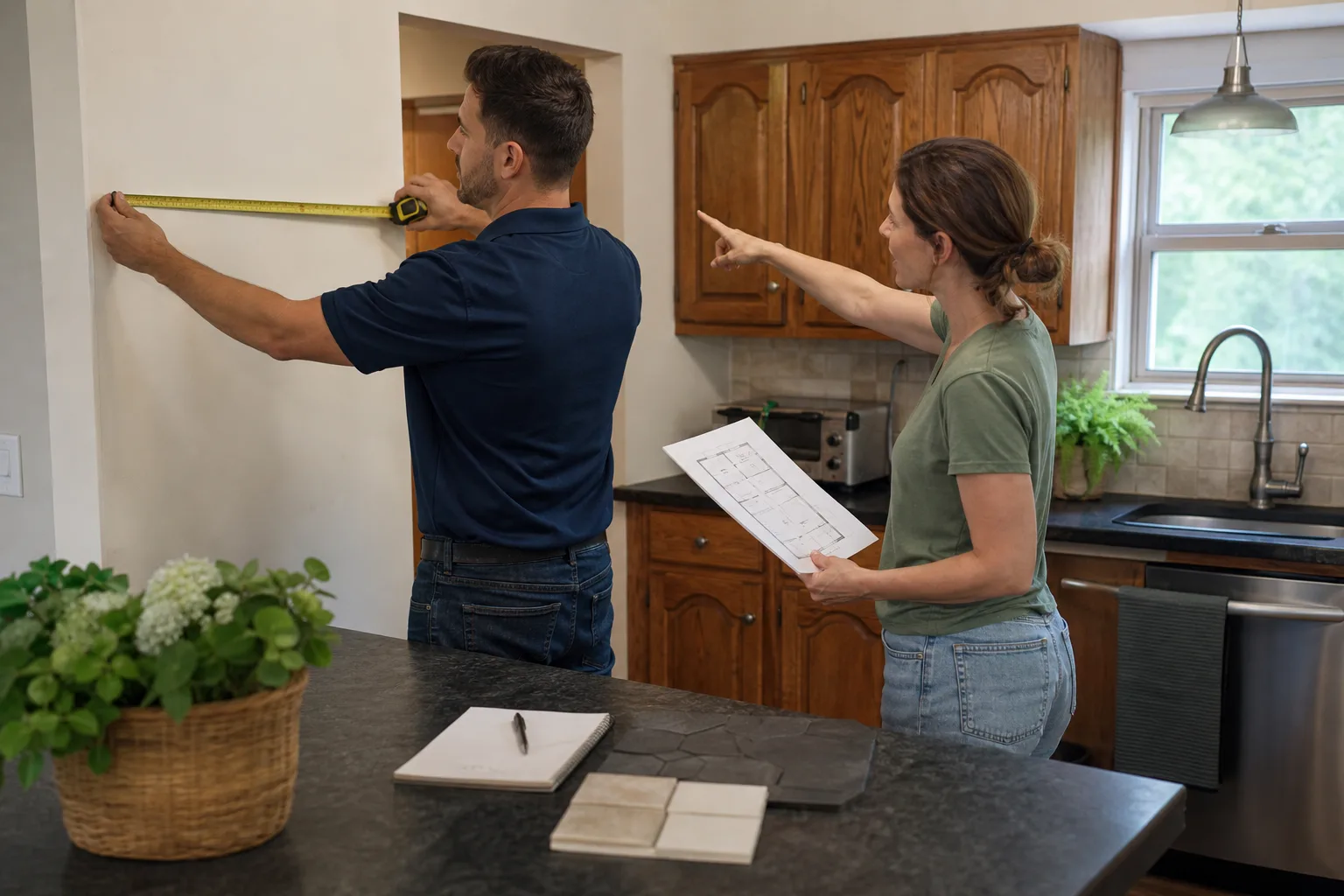
A contractor who quotes from memory, without measuring your kitchen, has already told you everything you need to know about how precisely he’ll manage your job. We’ve watched homeowners in Winchester hand over deposits to crews who never opened a tape measure, then spend eight months chasing a punch list. The warning signs that predict a bad kitchen remodel aren’t hidden. They show up in the first conversation, before any contract is signed, if you know what language to listen for. This guide translates the double-speak into plain warnings: the ballpark number that grows, the “we’ll skip the permit” shortcut, the deposit that shifts all the risk onto you, and the warranty that promises nothing specific.
Quick Answer
The biggest kitchen remodeling warning signs are a quote given without measuring the space, a deposit request above 10 – 15% of the project total, vague warranty language that names no specific defects or remedies, and any suggestion to skip a required permit. Each one signals that financial and legal risk is being moved onto you. In Winchester, a legitimate kitchen remodel starts with a written, itemized scope and a clear permit path before any money changes hands.
Styles & brands we work with
- Kitchen remodeling
- Bathroom remodeling
- Home additions & ADU
- Roofing
- Windows & doors
- Driveway & pavers
- Fence
Table of Contents
- The Ballpark Estimate Trap
- No Measure, No Quote
- What a Legitimate Permit Pull Looks Like in Clark County
- The Deposit Structure That Shifts Risk to You
- Vague Warranty Language vs. a Written Guarantee
- Who’s Actually Doing Your Electrical, Plumbing, and Tile?
- Phantom Schedules and No-Show Patterns
- Common Mistakes to Avoid
The Ballpark Estimate Trap
A ballpark number is not an estimate. It’s a placeholder, and placeholders grow. When a contractor walks into your Winchester kitchen, glances around, and says “somewhere around thirty-five to fifty,” what he’s actually told you is that he hasn’t priced the work. No line items, no allowances, no scope. That number exists to get him in the door and get a signature. By the time the drywall comes down, the placeholder has a way of turning into a real number you never agreed to.
A real estimate is a document. It has a written, itemized scope: cabinet specification, countertop material, square footage of tile, the fixture brands by name. It names the labor line items and the allowances, and it states plainly what happens if an allowance runs over. That’s the difference between a price and a promise that a price might show up later.
Here’s what a legitimate written estimate includes:
- Itemized scope – demolition, framing, rough-in, drywall, cabinetry, surfaces, fixtures, finish work, each with a line.
- Named materials – KraftMaid or Wellborn cabinetry, Cambria or Caesarstone surfaces, Kohler or Moen fixtures, not “builder-grade cabinets, TBD.”
- Allowances with limits – a stated dollar figure for items like lighting or backsplash, plus the process if you exceed it.
- Written price before work starts – the total, not a range, and a stated policy on change orders.
At Bradford, every price is in writing before a single tool comes out. That’s not a marketing line; it’s the difference between a homeowner who can plan and one who’s braced for a surprise. If you’re comparing bids in Winchester, ask each contractor to put the scope on paper. The ones who can’t, or won’t, have answered your question for you.
No Measure, No Quote
Precision starts with the tape measure. A contractor who quotes your kitchen without measuring cabinet runs, checking the distance from the range to the sink, or noting where the soffit sits has skipped the step that makes every other step possible. Cabinet ordering alone depends on exact dimensions, and a kitchen measured by eye is a kitchen ordered wrong. We’ve seen it here in Winchester: a run of cabinets that doesn’t clear the window casing, discovered only after delivery.
Watch what happens on the first visit. Does the contractor open the cabinets to check the substrate and the state of the rough-in behind the wall? Does he ask about the age of the electrical panel, the type of plumbing, the venting over the range? Does he actually measure, or does he talk? A thorough walkthrough takes time, and a contractor running a disciplined operation will make the time.
A proper first visit looks like this:
- Measure every wall, opening, and cabinet run to the inch.
- Check the panel for available circuits and the plumbing for shutoff condition.
- Note any load-bearing walls or structural questions that affect layout.
- Ask about your appliances and how you actually use the kitchen.
- Leave you with a written scope and a timeline, not a verbal round number.
If the visit takes ten minutes and ends in a number, you’ve learned something worth more than the quote: the job will be run the same way.
What a Legitimate Permit Pull Looks Like in Clark County
This is the warning sign homeowners miss most often. Here in Winchester, kitchen work falls under Clark County’s building and permitting authority, and a kitchen remodel that moves plumbing, adds or relocates electrical circuits, or changes a wall typically requires a permit and inspection. When a contractor suggests “we can skip that for a kitchen,” he’s telling you he plans to do regulated work without oversight. Regulated work without oversight is exactly how a homeowner ends up with a kitchen that fails an inspection years later, during a sale, with no recourse.
A legitimate permit pull is visible to you. You get the permit number, you see the job posted where required, and the inspection schedule is part of the project timeline. The contractor plans for the inspector to look at the rough-in and the electrical before the drywall goes up. That sequence matters, because once the wall is closed, nobody can see what’s behind it.
The alternatives you should treat as red flags:
- “We’ll handle it off the books” – a homeowner can’t verify work that was never permitted.
- “It’s just a small move, no permit needed” – small moves to plumbing or electric are still regulated.
- “The inspector will slow us down” – inspections are a quality checkpoint, not an obstacle.
In Winchester’s desert climate, kitchens run hard. Air conditioning and ventilation work is tested by 100-degree summers, and a permitted job gets inspected by someone who checks that venting and circuits meet code. Our own team has been through the Clark County process on countless kitchens, and a passed inspection is one of the documents that belongs in your hand at close, alongside the signed written guarantee.
The Deposit Structure That Shifts Risk to You
A contractor asking for more than 10 – 15% upfront has moved the financial risk entirely onto you. That’s the core problem with a large deposit: the money that should be buying progress is tied up before a single cabinet has been ordered, and your leverage vanishes with it. We’ve heard from Winchester homeowners who paid 50% down and then waited eleven weeks for a crew to show. The fair structure ties payment to milestones you can verify.
A reasonable schedule:
- 10 – 15% on signing – covers mobilization and initial material ordering.
- Progress payments tied to completed stages – demolition and rough-in, then drywall, then cabinetry and surfaces.
- Final payment on substantial completion – after the punch list is closed and the site is clean.
Watch for the pressure to “lock in your slot.” A contractor working on a disciplined operation doesn’t need urgent money to start; he needs a clear scope and a signed written price. At Bradford, payment milestones are stated in the contract and tied to work that’s been done and documented, not to a calendar pressure tactic. If a contractor demands cash, a personal check to his namesake with no receipt, or a deposit larger than the schedule allows, ask what the money is buying. If the answer is vague, keep looking.
Vague Warranty Language vs. a Written Guarantee
“We stand behind our work” is not a warranty. It’s a phrase that sounds reassuring and commits to nothing: no named defects, no timeframe, no remedy. A real guarantee has terms you can read. It says what’s covered, for how long, and what the contractor will do if the work fails. Without those specifics, the sentence on the proposal is decoration.
Look for the concrete elements:
- Specific defect categories – cabinet alignment, countertop seams, cabinet hardware that fails to operate, doors that don’t close true.
- A named timeframe – a full year is a firm term; “as long as you own your home” with no procedure attached is not.
- A stated remedy – the contractor returns and corrects the work at no charge, not “subject to review.”
Bradford’s 365-Day Done Right Promise is exactly this: every completed kitchen carries a full-year written guarantee, and if the work fails inside that window, we come back and correct it at no charge. The guarantee lives in your paperwork, not in a salesperson’s memory. When you close on a kitchen, you should be holding a clean site, a documented scope, and a signed written guarantee. That’s what squared away looks like.
Who’s Actually Doing Your Electrical, Plumbing, and Tile?
You have a right to know who is walking through your door and turning a wrench in your wall. A kitchen remodel usually involves more than one trade, and the electrical, plumbing, and tile work may be done by subcontracted crews. That’s normal and legitimate. What’s not normal is a contractor who won’t tell you who those crews are, or who treats the question as an insult. Subcontractor disclosure is part of how a disciplined operation runs.
Ask directly, in the first meeting:
- Which trades will be subcontracted, and who are the specific companies?
- Are those crews licensed for the work they’re doing?
- Who’s on the job site day to day, and who’s my point of contact?
- Are background checks run on everyone who enters my home?
Bradford’s crews are background-checked and wear uniforms, and the standards are set at the Garrison Partners level and applied here in Winchester, not left to whatever each job site decides. Identity and conduct aren’t details you ask about after the fact. They’re part of the contract conversation. If a contractor can’t tell you who’s doing the tile and whether those workers were vetted, that’s the warning sign, stated plainly.
Phantom Schedules and No-Show Patterns
Ask what happens if the crew doesn’t show. It’s a simple question, and a good contractor has a simple answer. A schedule is a commitment: a start date, a sequence, a completion window, and a stated process when the plan slips. A contractor who answers “we’ll get to you when we get to you” has told you the truth about how the job will run. We’ve watched homeowners in Winchester lose months to crews that started strongly and then drifted, showing up for a day or two a week without explanation.
The signs to watch in the first conversation:
- No written schedule, or one that names a start date and nothing after.
- No named point of contact for updates and questions.
- Dismissive answers to “what if something runs late?”
- A pattern in reviews or references you’ve checked yourself.
A legitimate operation gives you a sequence, names who you can reach, and answers the phone. Bradford answers with a live person 24 hours a day, seven days a week, because questions don’t keep business hours. When you’re weighing bids in Winchester, call each contractor on a Saturday afternoon. Whoever picks up has told you something. Whoever doesn’t has too.
Ready to compare written scopes? Start with a kitchen remodeling in Winchester consultation and see what a real itemized estimate looks like before you commit to anyone.
Common Mistakes to Avoid
- Signing before the scope is itemized. A one-page proposal with a total and no line items is a placeholder. Insist on the breakdown before you sign.
- Paying a large deposit to “hold your spot.” Above 10 – 15% upfront, the risk has moved to you. Tie payments to milestones instead.
- Letting the contractor skip a required permit. Clark County regulates plumbing and electrical changes, and unpermitted work surfaces during a sale.
- Accepting “we stand behind our work” as a warranty. Demand named defects, a timeframe, and a written remedy. A full-year guarantee belongs in your hand at close.
- Not asking who does the electrical and plumbing. Subcontractor disclosure is your right; unvetted strangers in your home are not something to guess about.
- Choosing a price without a measured kitchen. A quote that didn’t come from a tape measure didn’t come from the job.
- Skipping reference checks in your own neighborhood. A Winchester homeowner who’s been through a remodel recently will tell you more than any proposal.
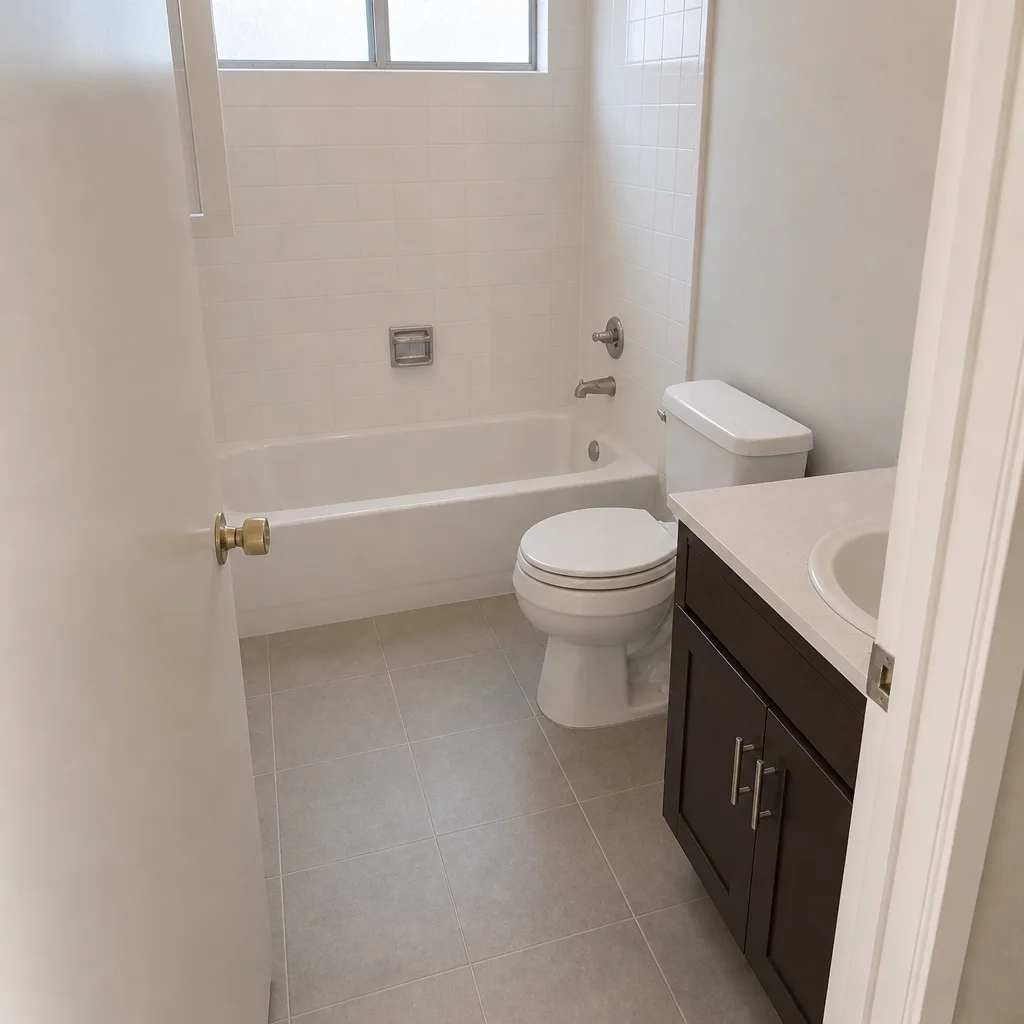
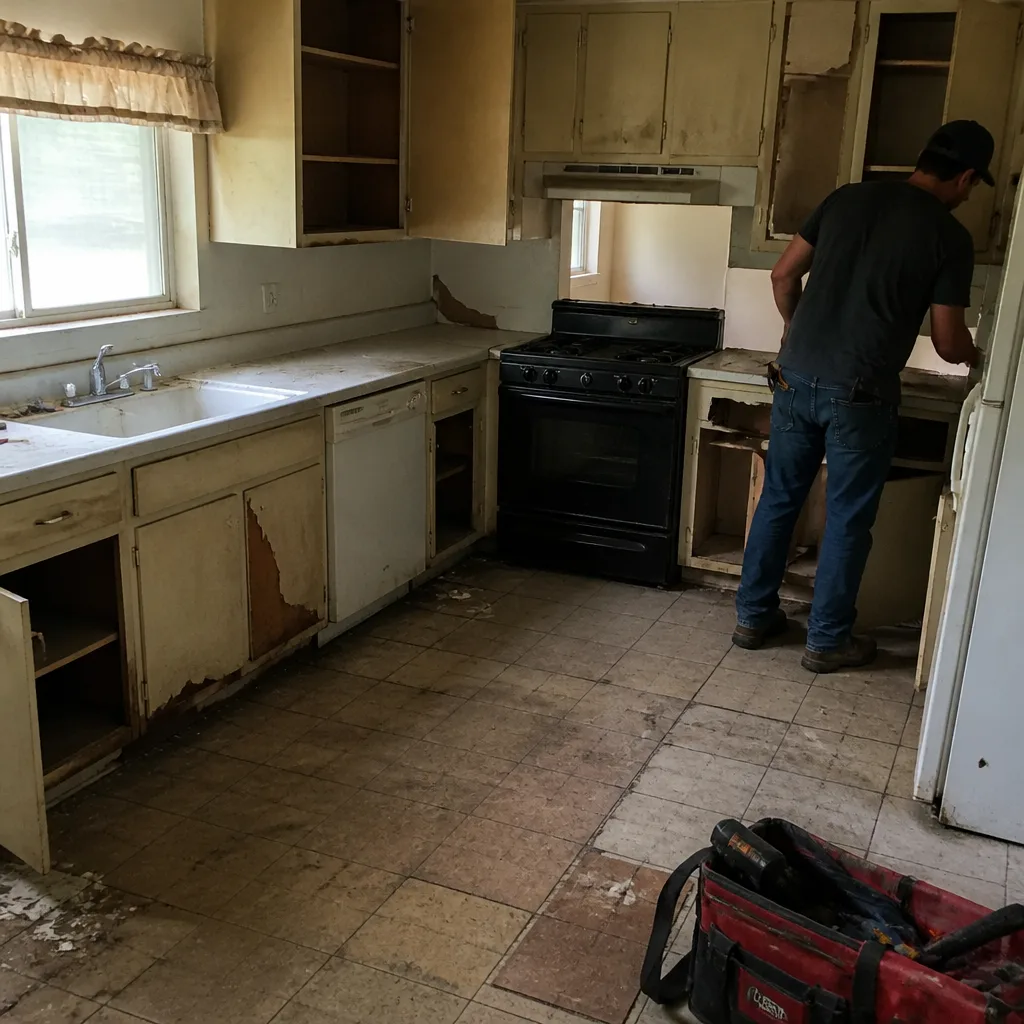
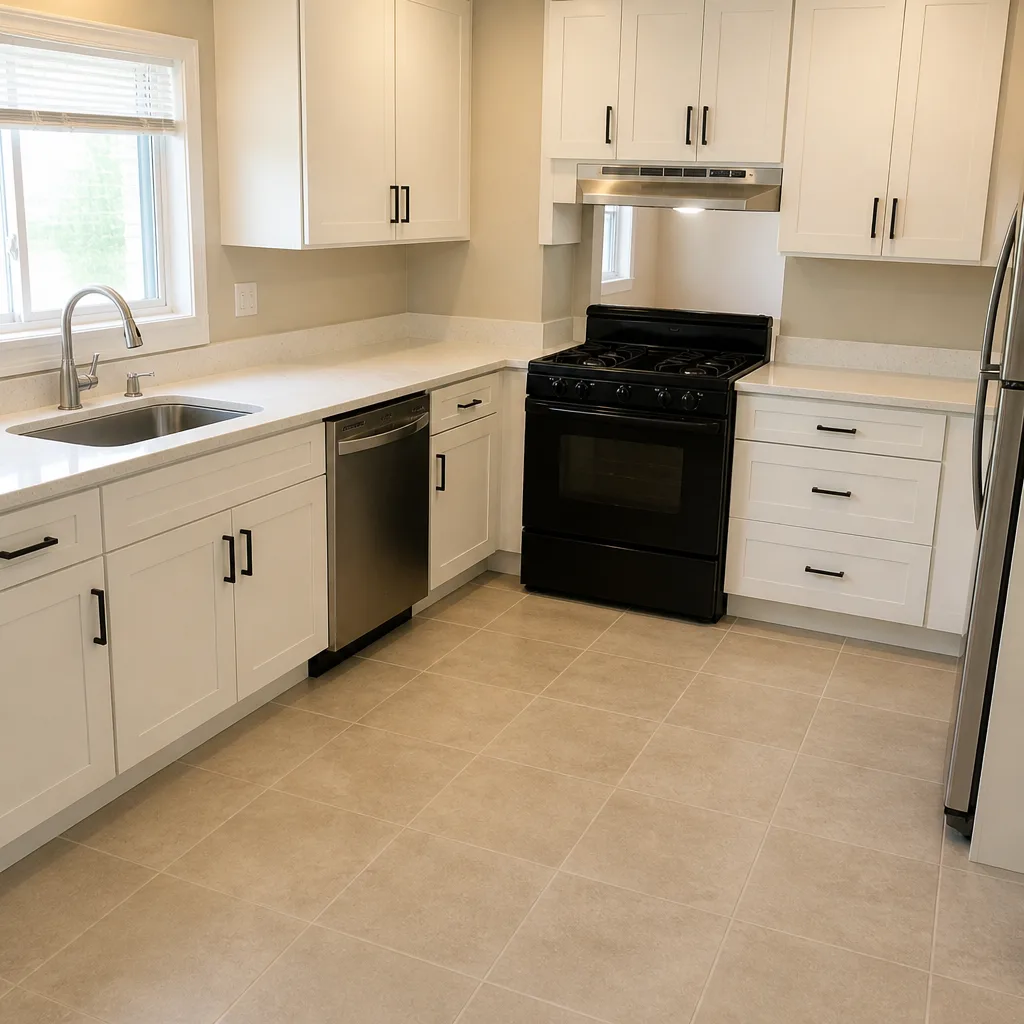
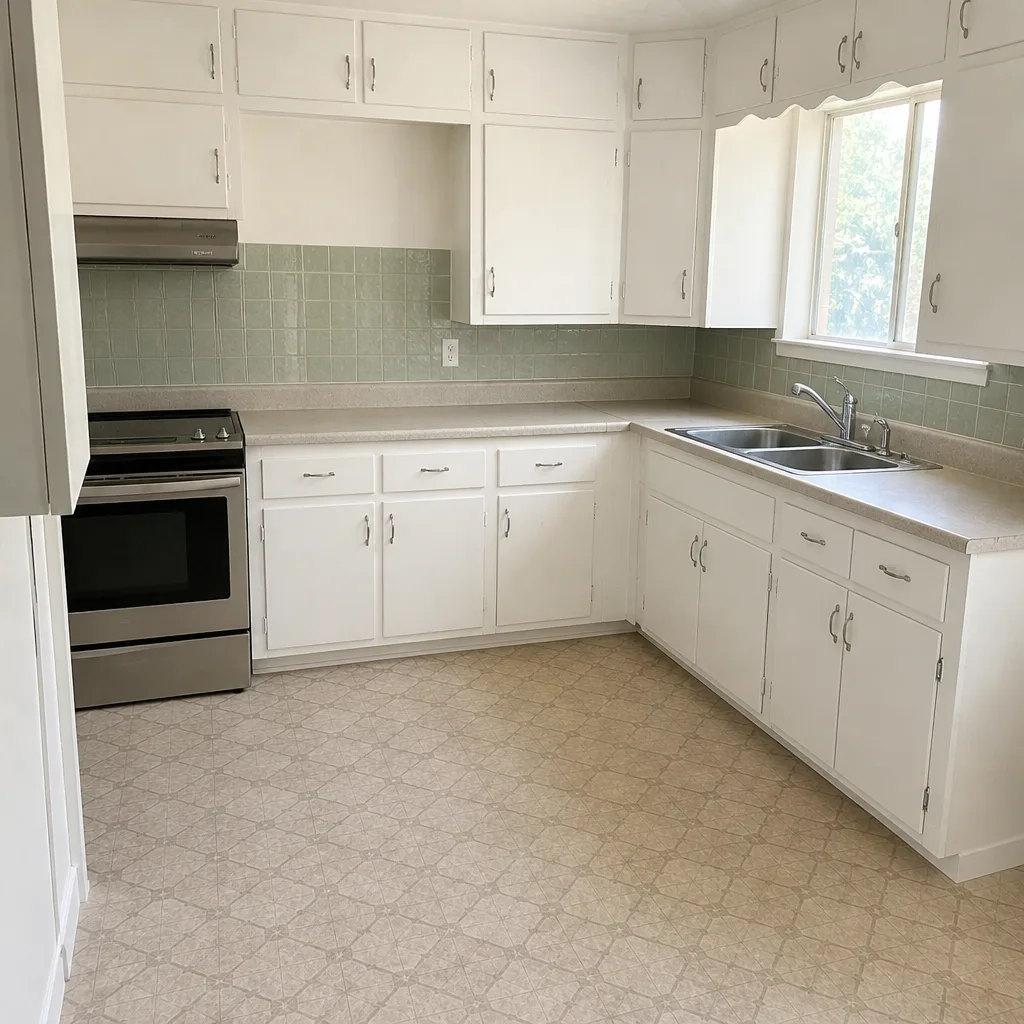
See the difference
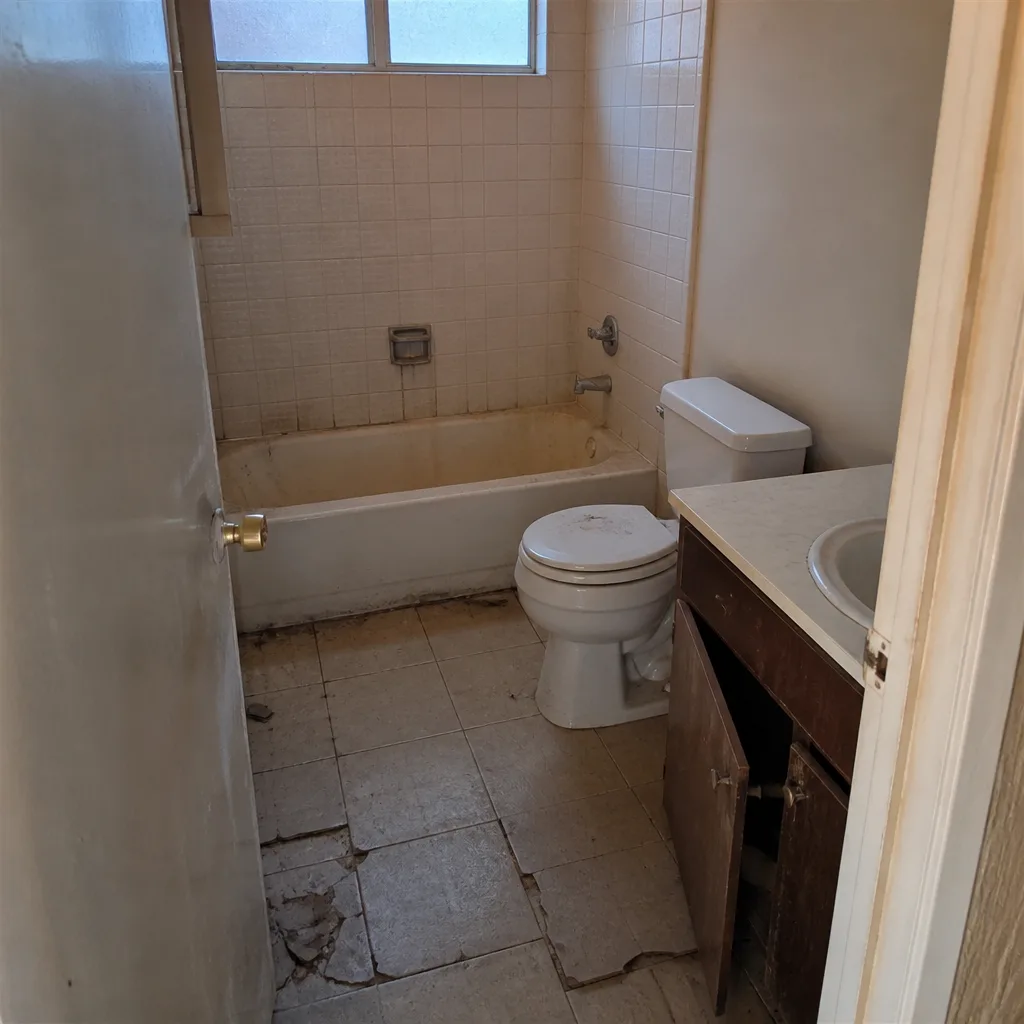 Before
 After
 Before
 After
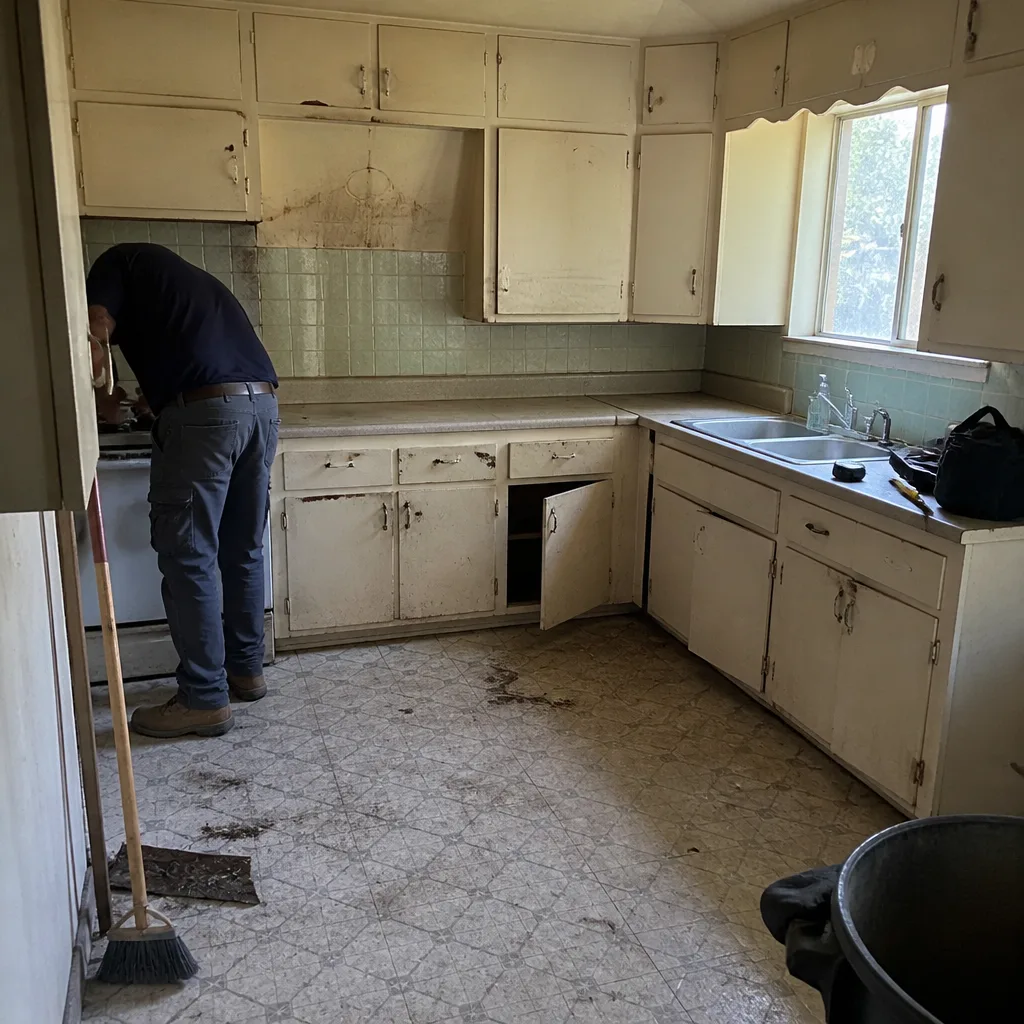 Before
 After
When to Call a Professional

Call a professional when the work moves beyond cosmetic: relocating a sink or range, adding circuits, opening a wall, or ordering cabinetry that must be measured to the inch. These jobs carry code requirements and, if handled wrong, real safety risk, especially electrical work at the panel and gas line rough-ins near a range. They are not jobs to hand off to a weekend crew or an uninsured handyman. Structural changes and anything that touches the panel or gas belong with trained, licensed professionals who pull the right permit and pass inspection.
Bradford Remodeling Co Winchester offers free estimates in Winchester – call (844) 972-4839 to schedule yours. You’ll get a written scope, a written price before work starts, and a straight answer about the permit path.
If your project reaches across the whole house, the same disciplined approach applies through our general contractor in Winchester work.
Frequently Asked Questions
A quote given without measuring your kitchen is the first and most reliable sign. Precision in the estimate reflects precision on the job. If the contractor never opened a tape measure, ask him to come back and measure before you consider the bid.
A deposit of 10 – 15% on signing is reasonable; more than that shifts financial risk onto you. Payments should then tie to completed stages you can verify. Call (844) 972-4839 for a written price and a clear payment schedule before you commit.
Yes, if the project moves plumbing, adds or relocates electrical circuits, or changes a wall. Clark County requires a permit and inspection for that regulated work. A contractor who suggests skipping it is telling you the work won’t be inspected.
A real warranty names specific defects, states a timeframe, and specifies the remedy. Bradford’s 365-Day Done Right Promise is a full-year written guarantee: if the work fails inside that window, we return and correct it at no charge. Call (844) 972-4839 and ask to see the written terms.
Yes. Subcontractor disclosure is your right, and a legitimate contractor names the trades and confirms they’re licensed. Vague answers about who’s in your home are a warning sign, not a small detail.
A straightforward kitchen typically runs several weeks to a few months, depending on scope, permit timing, and cabinetry lead times. What matters is a written schedule with a sequence and a named contact. Call (844) 972-4839 to get a timeline with your written estimate.
The Bottom Line
Every warning sign in this guide shows up before the contract, in the first conversation: the ballpark number with no measured scope, the deposit that shifts risk to you, the skipped permit, the warranty that names nothing, the vague answer about who’s doing the electrical. Watch for the language, because the language is the job. A contractor who measures, itemizes, pulls the permit, discloses his trades, and puts a written guarantee in your hand has told you how the remodel will go before it starts. When you’re ready to compare scopes in Winchester, the bathroom remodeling in Winchester and kitchen pages show how we put it in writing, and our home page starts with the Bradford Remodeling Co Winchester home overview. Call (844) 972-4839 for a free estimate, and get the price in writing before the first tool comes out.
Written by the team at Bradford Remodeling Co Winchester.