Last updated November 18, 2026






Free written scope consultation - allowances, timeline, and change-order rules on paper before a single trade is scheduled
Bathroom Remodeling Warning Signs Every Homeowner Should Know
Here’s the pattern we see most often: a homeowner in Winchester gets three bids on a bathroom remodel. One comes in at $9,000, one at $14,000, one at $19,000. The $9,000 bid wins. Six weeks later the same homeowner is calling us because the shower pan leaks into the garage ceiling and the low bidder has stopped answering his phone. The warning signs were there in writing, before a single tile was set. This guide is about reading that paper trail, not just the craftsmanship. By the end you’ll know how to spot a proposal that’s built to protect the contractor instead of you, and how to tell a real scope of work from a one-page guess.
Quick Answer
The clearest bathroom remodeling warning signs show up in the paperwork, before work starts: no itemized written scope, materials named as “builder-grade” with no manufacturer or SKU, no permit number or phone number to verify it, no written change-order process, and no warranty with terms you can hold someone to. A contractor who quotes your bathroom without asking about existing plumbing, tile substrate, or ventilation doesn’t have enough information to give you an accurate number – which means the number will move.
Styles & brands we work with
- Kitchen remodeling
- Bathroom remodeling
- Home additions & ADU
- Roofing
- Windows & doors
- Driveway & pavers
- Fence
Table of Contents
- The Proposal vs. the Scope of Work
- The “We’ll Handle the Permit” Dodge
- Missing Change Orders: Building a Dispute
- Inspection Avoidance Patterns
- The Warranty Handoff Problem
- Unlicensed Subs and Who’s Actually on the Hook
- Winchester-Specific Red Flags
- The Paper Trail Checklist
The Proposal vs. the Scope of Work
A proposal is a number. A scope of work is a document. Most homeowners never see the second one, and that gap is where remodels go sideways.
A real scope of work names materials by manufacturer and, ideally, by SKU or product line. It doesn’t say “tile: builder-grade, TBD.” It says “floor tile: [manufacturer] porcelain, model #, 12×24, laid on Schluter Ditra over a leveled 3/4-inch plywood substrate.” It doesn’t say “fixtures: standard.” It says “Kohler or Moen shower valve, specify model at selection.” That specificity is what makes a fixed price possible.
Why vague specs always favor the contractor
Vagueness is a lever, and it only pulls one direction. When the scope says “TBD,” the contractor isn’t committed to a price on the tile, the vanity, the light fixture, or the waterproofing. Every selection becomes a conversation about a change order. The homeowner has already signed, already pulled the old bathroom apart, and has no leverage.
A vague scope isn’t an accident. It’s a hedge. Write it that way in your head and the bids start reading differently.
What a real scope includes:
- Every fixture named by brand and model line
- Surfaces named by material and product line (not just “quartz”)
- Waterproofing method spelled out, since this is where most failures start
- Demolition, haul-away, and dumpster fees listed as line items
- A substrate (the layer the tile sits on) called out by thickness and type
- A stated labor breakdown or at least a clear lump-sum with inclusions
If the scope reads like a marketing flyer with three bullet points, you don’t have a scope. You have a price with an asterisk.
The “We’ll Handle the Permit” Dodge
Permit handling is one of the most common points where a contractor’s competence shows, or doesn’t. But “we’ll handle the permit” is not the same as “the permit is pulled.” Homeowners in Winchester should verify issuance directly with Clark County, not take a contractor’s word for it.
Here’s how it works in practice:
- Ask for the permit number in writing before demolition starts.
- Cross-check it against the Clark County Department of Building permit search, or call the office directly.
- Confirm the permit is tied to your property address, not a general contractor license in a different neighborhood.
- Ask who is scheduled to meet the inspector. If nobody can name a person, that’s a flag.
A bathroom remodel that moves plumbing or electrical is a permitted job in Winchester. Relocating a shower valve, adding a circuit for a heated floor, or changing the vent stack all require inspection. A contractor who waves at the paperwork and says “we’ll handle it” without an actual number is either going to pull it late (which delays you) or not pull it at all (which creates a problem when you sell the house, or when the first leak shows up).
Permits protect you, not the contractor. When the county inspects the rough-in, you get a second set of trained eyes on the work that will be under the tile for the next twenty years. That’s the whole point.
Missing Change Orders: Building a Dispute
A change order is a written document that adds or removes scope from a signed contract, with a stated price and a stated effect on schedule. It exists so both sides agree, in writing, when the job’s scope shifts. A contractor who makes changes verbally is building a dispute, not a bathroom.
Watch for the verbal change-order pattern:
- “I can add a bench to the shower, that’s about a grand, we’ll sort it at the end.”
- “We found some rot behind the tub – that’s extra, I’ll add it to the invoice.”
- “You wanted the tile to the ceiling, that’s a little more, I’ll just do it.”
None of those are automatically wrong. Surprises happen behind tile. But each one should generate a paper trail before the work is done: a written description, a fixed price, and a date. If you can’t produce that document when the invoice arrives, you can’t dispute it.
Our approach is simpler and it’s the standard we hold across every job: the written price comes before any work starts, and any scope change gets its own written change order with a fixed number before the tool comes out. That’s non-negotiable for us, and it’s the single best defensive habit you can bring to any contractor conversation, in Winchester or anywhere else.
Inspection Avoidance Patterns
Inspection avoidance is the quietest of all the warning signs. It happens when a contractor schedules finish work – drywall, cement board, tile – before the rough-in inspection has passed. Look at the timeline, and ask the question directly.
Rough-in inspection happens after the plumbing and electrical are run but before the walls are closed. If the crew is tiling the shower before that inspection is signed off, one of three things is true:
- The permit was never pulled.
- The contractor is hoping the inspector doesn’t look closely at what got covered.
- The inspection was waived, but no one told you.
None of those are good for you. The rough-in is where a plumbing leak or a bad electrical circuit gets caught. Once covered by cement board and tile, the only way to check is to tear it back out.
In Winchester, we’ve seen bathrooms where the previous install skipped the rough-in entirely, and the shower valve was soldered onto a line that hadn’t been pressure tested. That’s a failure inside two years, and the homeowner usually doesn’t know until the ceiling below is wet.
Ask for the inspection card and the sign-off date. It’s a reasonable, normal ask from a homeowner, and a contractor who has run this process properly won’t flinch at it.
The Warranty Handoff Problem
The warranty is where a lot of bathrooms quietly fail two or three years after the last check clears. Here’s the pattern: the general contractor (GC) subcontracted the plumbing to a licensed plumber, the tile to a tile crew, and the drywall to a handyman. When the shower pan leaks, everyone points a different direction. The plumber says the pan wasn’t built right. The tile guy says the waterproofing was fine before he laid tile. The GC says he only hires licensed subs and it’s their problem.
Then you find out the tile crew was unlicensed and working under the GC’s insurance. Or that the warranty in the contract covers labor only, not materials. Or that the “one-year warranty” runs from substantial completion, and substantial completion was eleven months ago.
What a real warranty looks like on paper:
- Written, not verbal
- A stated duration measured from the completion date
- Defined coverage for labor and materials, not just one or the other
- A named entity – a licensed contractor – with their signature on the document
- An actual return process, not “call us if you have an issue”
The Bradford promise on this is the 365-Day Done Right Promise: every completed project carries a full-year written guarantee, and if the work fails inside that window we come back and correct it at no charge. That’s on paper, handed to you at close, and it names us as the party on the hook. Any contractor who can’t put a similar document in your hand is telling you something about how the next two years are going to go.
Unlicensed Subs and Who’s Actually on the Hook
When a GC uses unlicensed subs and something leaks, homeowners often find out there’s no one with a license on record who is responsible for the repair. The GC will say the sub is a sub and the sub will say he was paid by the GC. The homeowner is stuck in the middle with a wet shower and a repair bill.
Ask three questions before signing:
- Who is the licensed general contractor of record on this permit? (It must be a name and a license number on the contract and the permit.)
- Who is physically going to do the plumbing and electrical work, and are they licensed under the appropriate trade?
- If something fails in year two, who is coming back, and under whose warranty?
Here in Winchester, we’ve seen this play out in the master-planned neighborhoods where the original build was done by subcontracted crews working under a GC’s license, and where the inevitable shower pan failure three years later is met with a shrug and an invoice.
There’s a related concern on remodel jobs specifically: the crew that walks through your door. Any contractor who can’t tell you who is going to be on site, whether they’ve been background-checked, and what uniform they’ll be wearing is a question mark every day you leave them in your house. Our standard is background-checked, uniformed technicians on every job, identity verified before the crew arrives. That’s part of what goes into The Garrison Standard, and it’s the kind of thing that should be stated in the contract, not handled informally.
Winchester-Specific Red Flags
Some of the warning signs in Winchester are specific to the market, the soil, and the summer climate. These are the ones that catch homeowners from out of state, or folks who bought a house based on the photos and didn’t ask about the plumbing era.
- Tile failures in 1990s subdivisions. Homes built in the mid-to-late 1990s in the southwest valley often used drywall behind the shower tile instead of a proper waterproofing membrane. That was legal and normal then. It fails now. A scope of work that doesn’t call out waterproofing on a 1990s-era bathroom is a scope that hasn’t thought about the substrate (the layer under the tile) at all.
- Hard water and shower fixtures. Winchester’s water is hard enough to shorten the life of a standard shower valve and cartridge. If the scope lists “standard fixtures” with no model, you can guess what’s going in.
- Summer construction heat. Tile and grout that get installed in a garage or a south-facing room in July in Winchester can dry too fast and crack. A written schedule that accounts for heat curing is a sign of a contractor who’s worked here.
- HoA oversight in master-planned communities. Many neighborhoods in Winchester require architectural review of exterior venting, window changes, or finish colors on a bathroom remodel that touches an exterior wall. A contractor who hasn’t asked whether the HoA needs to sign off has left a step out.
None of these are dealbreakers by themselves. What matters is whether the contractor’s scope reflects that they thought about them.
The Paper Trail Checklist
Before signing any bathroom remodeling contract in Winchester, run this checklist. If any line is blank, ask why.
- Brand and model documentation. Every fixture, cabinet, tile, and surface is named by manufacturer and model line. Ours read like KraftMaid vanity, Kohler shower valve, Moen trim, Cambria surface – by name, not “premium builder-grade.”
- Permit number and issuing office. A real permit number that you can verify against Clark County records, plus the name and license number of the licensed general contractor of record.
- Written change-order process. A sentence in the contract that says how scope changes are handled, in writing, with fixed pricing before work begins.
- Inspection schedule. A schedule that shows rough-in inspection before finish work, with a note about who meets the inspector.
- Warranty with terms. Duration, coverage, and who’s on the hook – meaning the licensed entity, by name.
- Crew identification. Who is arriving on site, whether they’ve been background-checked, and how the crew is identified.
- Written price. A number that does not move at the door. If the price is a “ballpark” or “subject to conditions,” it’s not a price yet.
Run that checklist on any bid and the differences between contractors become obvious in about ten minutes. You don’t need to be an expert in tile or plumbing to see which one has done the work of putting it in writing.
Common Mistakes to Avoid
- Hiring on the number alone. A bid $4,000 below the others isn’t a deal if three items are missing from the scope. In Winchester, most price gaps come from what’s not covered, not what is. Ask the lower bidder to itemize and the gap usually shrinks.
- Accepting a verbal permit promise. “We’ll handle the permit” without a number is a promise, not a permit. Verify with the county before demolition.
- Signing without a written change-order clause. The contract must specify how scope changes get priced. If it doesn’t, every surprise becomes a negotiation.
- Ignoring the substrate (the layer under the tile). This is where leak failures come from. Any scope that names tile without naming what it sits on is a scope with a blind spot.
- Not asking who’s actually on site. Unlicensed subs are common in any metro, including Winchester. Ask for names, for licenses on the trades, and for background-check status before the crew shows up.
- Taking a verbal warranty. A warranty that doesn’t exist on paper doesn’t exist. Ask for the document, read the terms, and confirm the entity behind it.
- Letting the finish work get scheduled before inspection. Once tile and cement board go up, the rough-in is a guess. Push for the inspection card and sign-off date.
See the difference
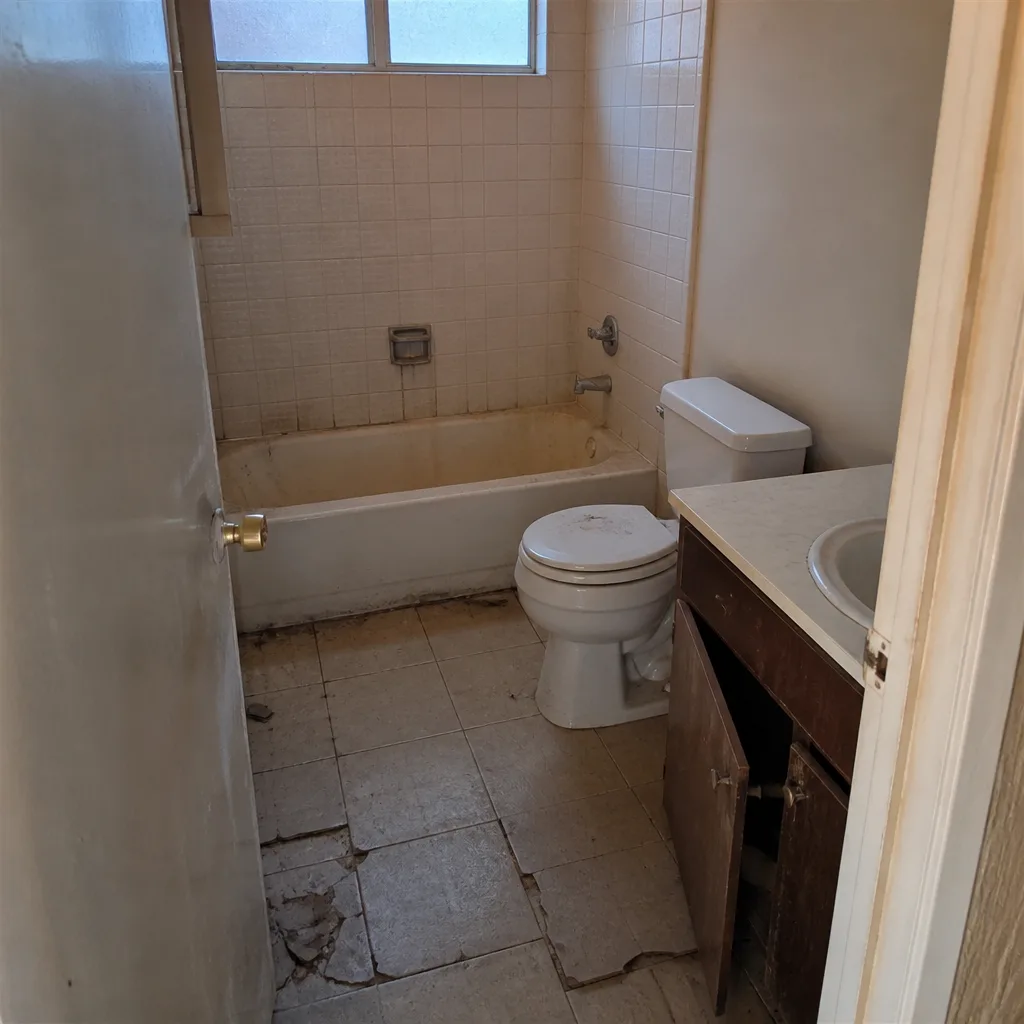 Before
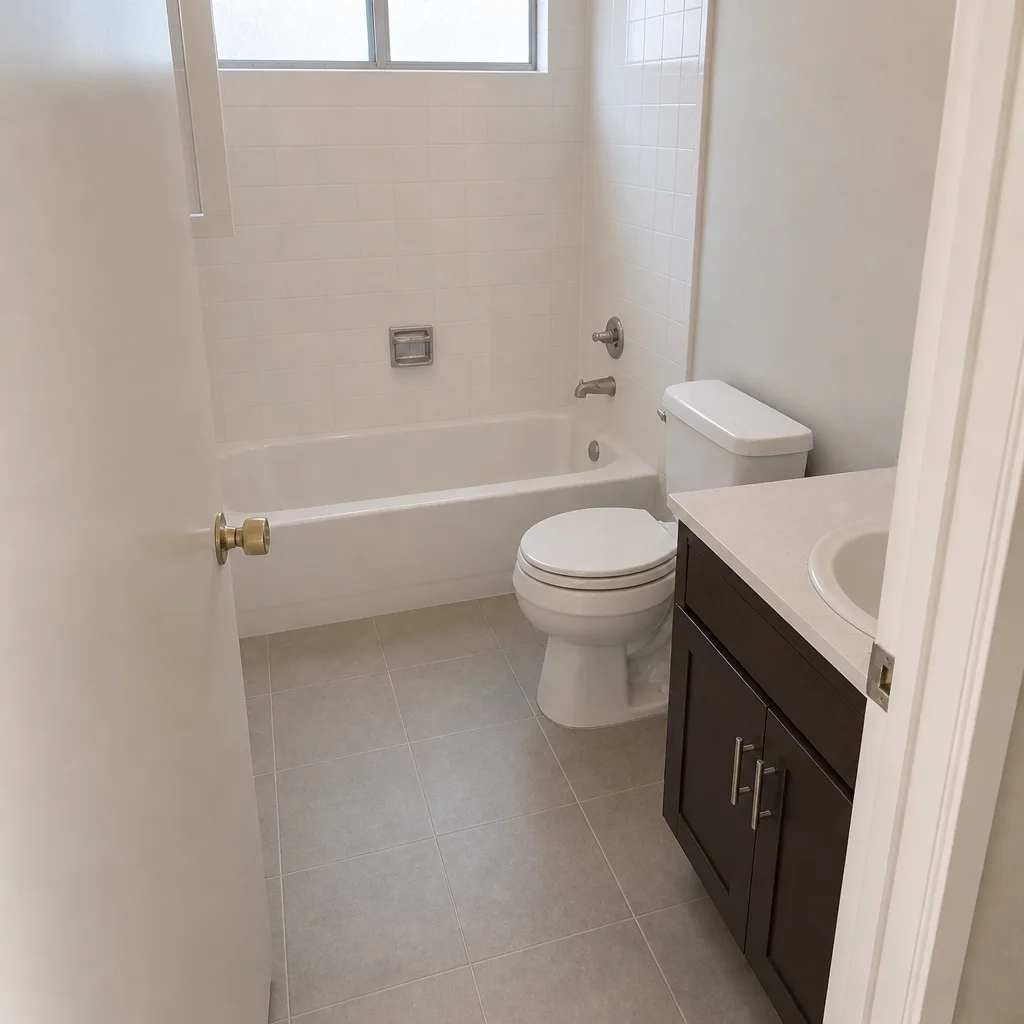 After
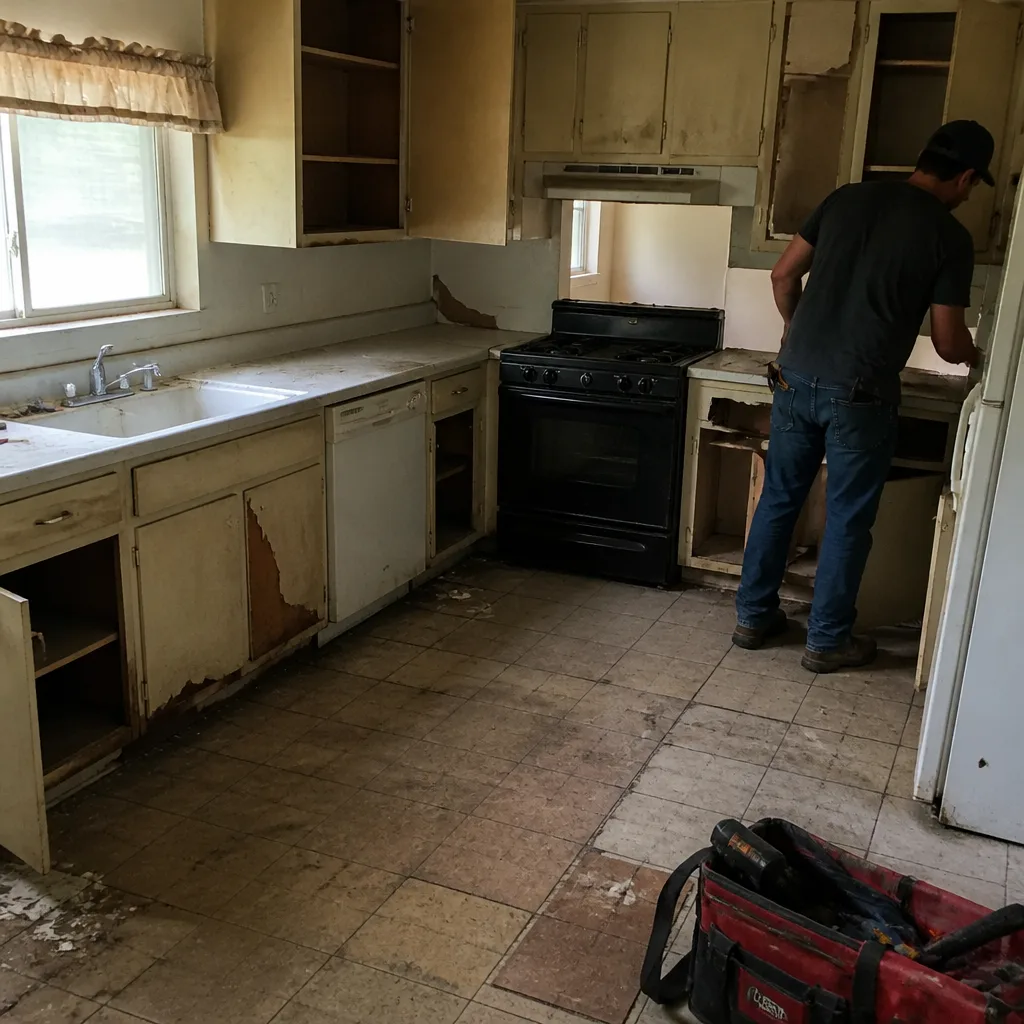 Before
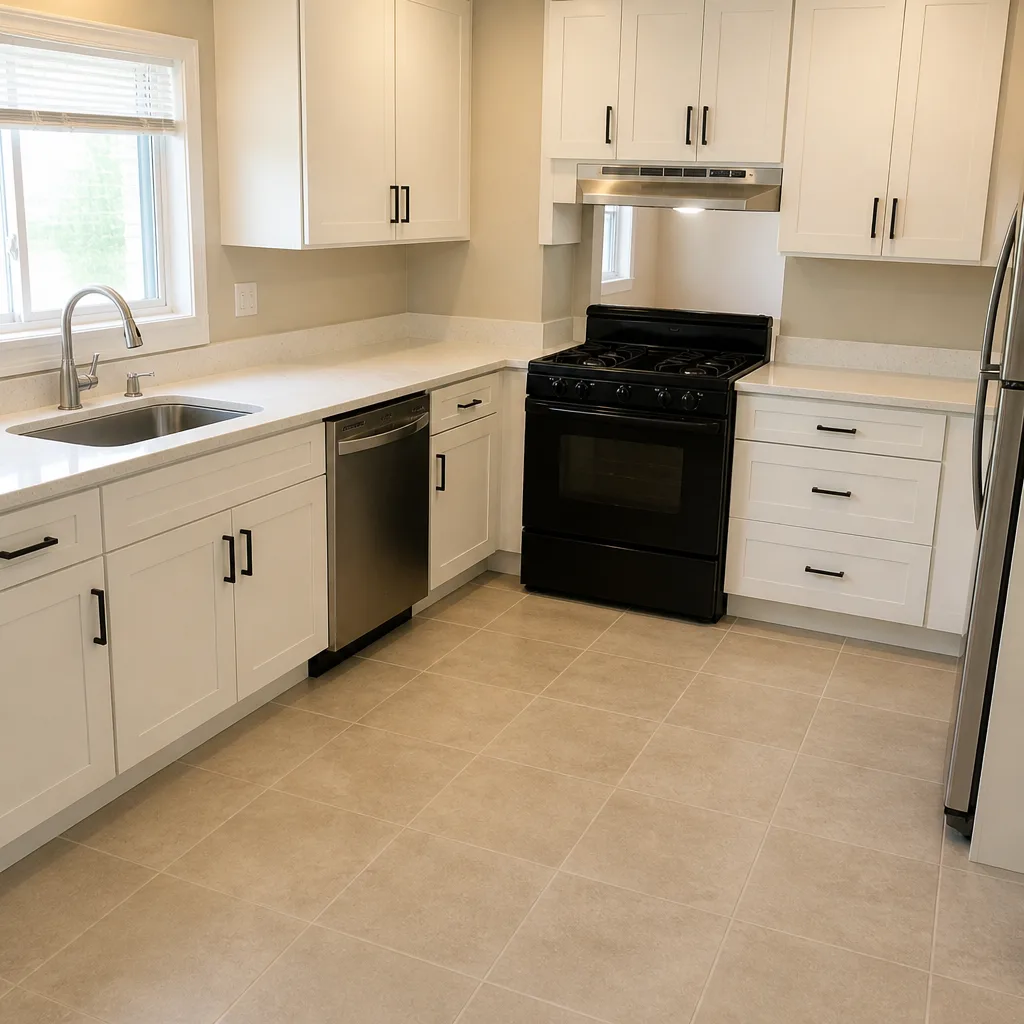 After
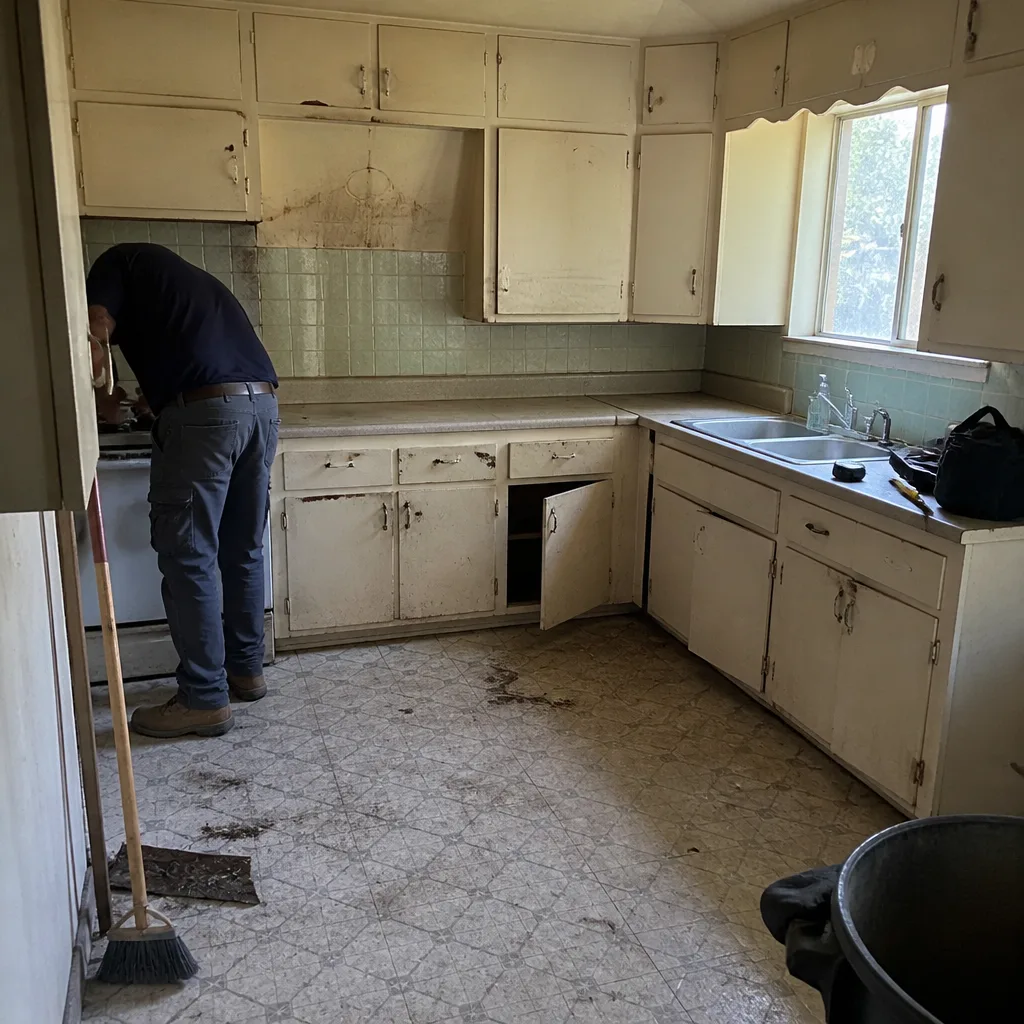 Before
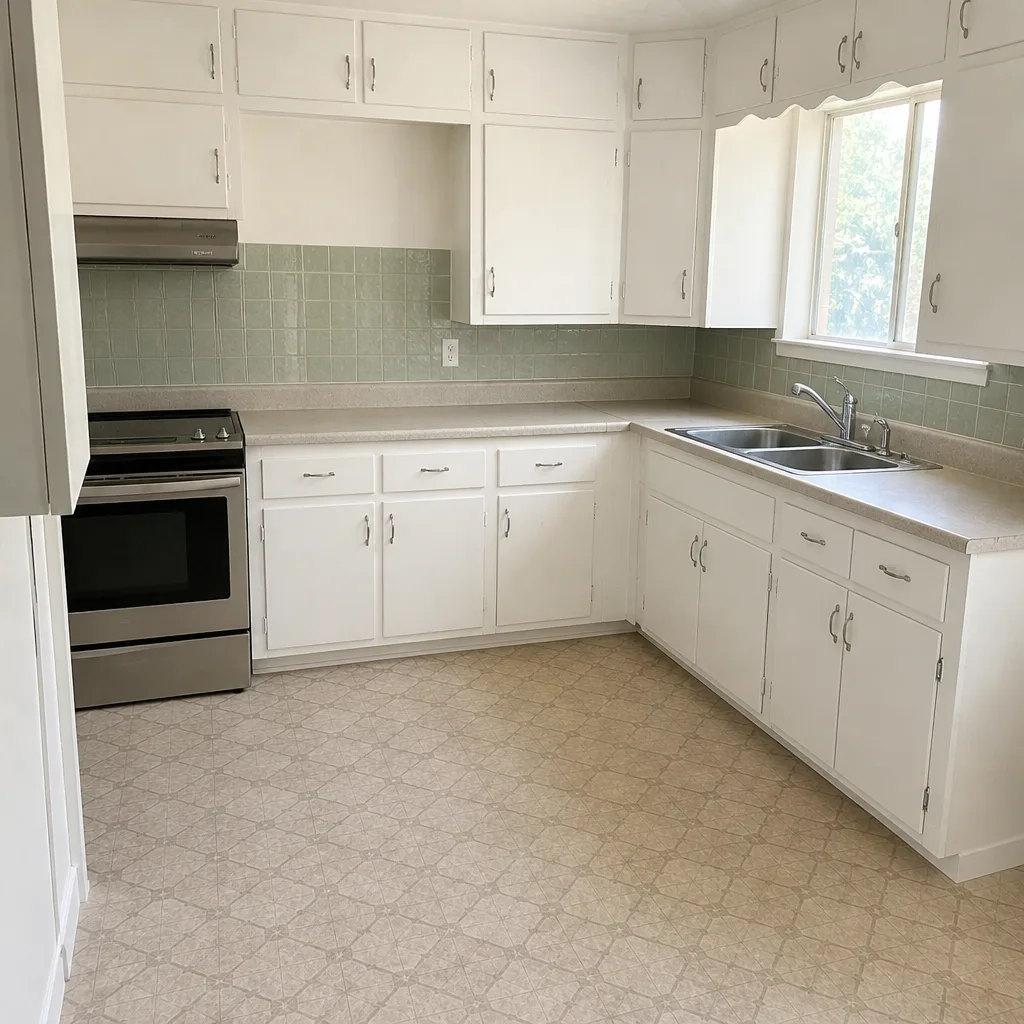 After
When to Call a Professional
Some bathroom conditions are not a warning sign about your next contractor – they’re a warning sign that the current one needs to stop. Call a professional immediately if you see water staining on the ceiling below the bathroom, soft spots in the floor near the shower or tub, active leaking at the shower valve or trim, or a shower that grinds or squeaks when it runs. Plumbing, electrical, and tile waterproofing are not the places to test a YouTube tutorial, and a water leak behind tile is a repair measured in thousands, not hundreds.
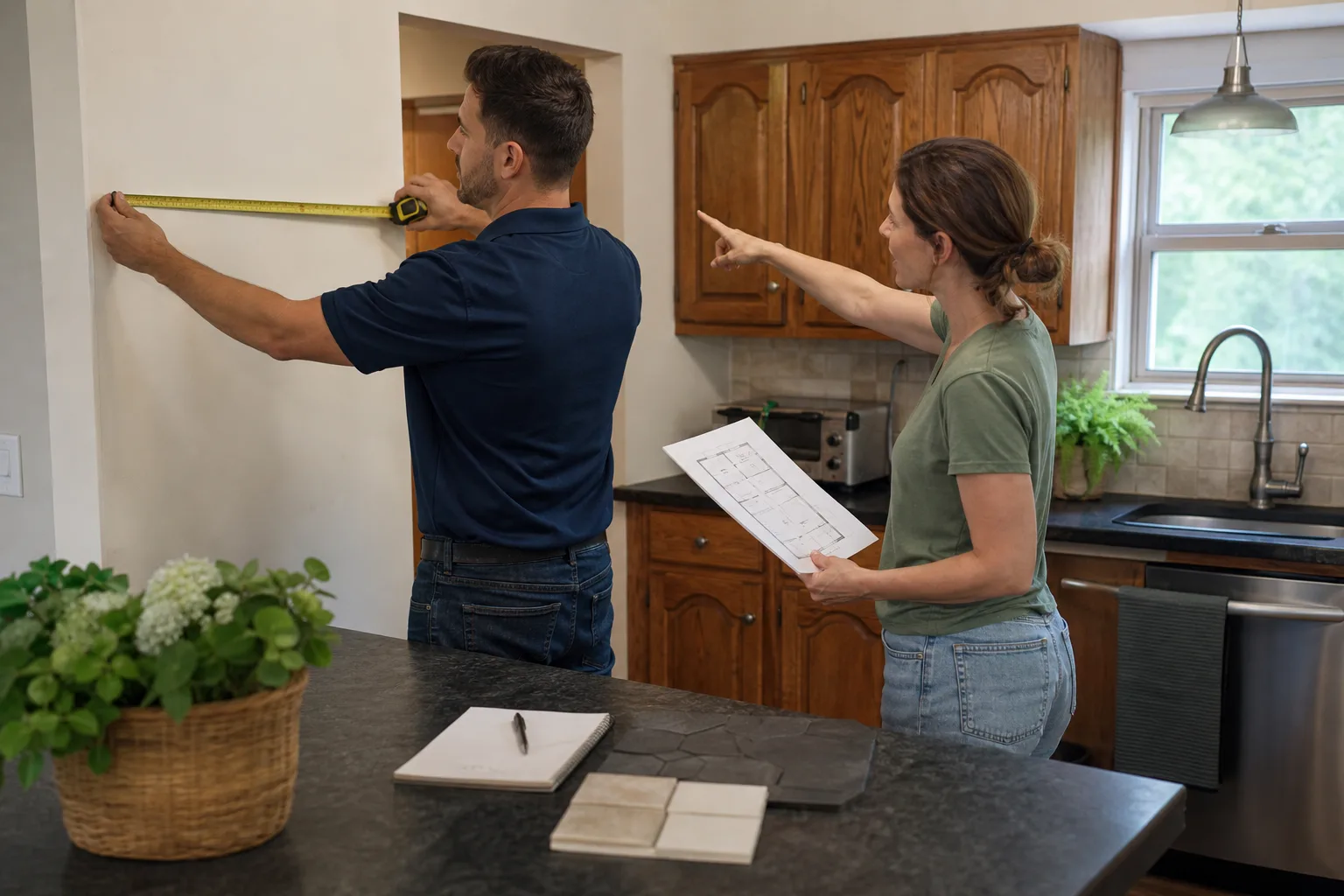
If you’re planning a bathroom remodel in Winchester and want the paper trail audited before you sign anything, that’s the moment to bring in a contractor who works from a written scope. Bradford Remodeling Co Winchester offers free estimates in Winchester – call (844) 972-4839. We’ll walk the bathroom with you, name materials by brand, and put a written price in your hand before the first tool comes out. Our technicians have up to 22 years of experience, and every completed project carries the 365-Day Done Right Promise. If you’d like the general-contracting side of what we do, the overview of our work as a Bradford Remodeling Co Winchester home explains the standard we hold every job to. For the parent service, see General Contractor in Winchester, and for adjacent projects, Kitchen Remodeling in Winchester and Bathroom Remodeling in Winchester cover the full scope.
Frequently Asked Questions
The biggest warning sign is a price given without a written scope that names materials by manufacturer and model. A contractor who quotes a bathroom remodel without asking about your existing plumbing configuration, tile substrate, or ventilation setup doesn’t have enough information to give you an accurate number, which means the number will change. In Winchester, we see this pattern most often when a bid is significantly lower than the others – the gap is usually the missing scope, not a better price.
Yes, for most bathroom remodels in Winchester that move plumbing, electrical, or ventilation, Clark County requires a permit and an inspection. Finishes-only work (paint, tile over existing tile, a new vanity in the same place) sometimes doesn’t trigger a permit, but moving a shower valve, adding a circuit, or relocating a drain does. Verify directly with the Clark County Department of Building rather than taking a contractor’s word. Call (844) 972-4839 if you’d like us to walk you through what your specific scope will trigger.
A typical hall bathroom remodel in Winchester runs roughly $12,000 to $28,000, with master bathrooms commonly landing between $28,000 and $65,000 depending on layout changes, tile, and fixtures. Those ranges are for full gut-and-rebuild work with a permit and inspections. The number that matters is not this range but the written scope that produces it – your actual price depends on the substrate, waterproofing, plumbing configuration, and finish selections. Call (844) 972-4839 for a written line-item price on your specific bathroom; estimates are free.
The written price should not move at the door. If scope changes during the work – rot behind the tub, an unexpected plumbing surprise, a finish upgrade – those changes should be handled with a written change order that states the new price before the work is done. A contractor who handles changes verbally is building a dispute. Our standard is a written price before work starts, with any change-order priced and signed before the tool comes out.
If water is showing up below the bathroom or the shower pan fails, it’s usually a waterproofing failure at the point where the shower base meets the tile and the wall board. In Winchester homes built in the 1990s, the common cause is drywall behind the tile instead of a proper membrane, which was legal at the time but doesn’t hold up. Repair is a full tear-out of the shower assembly. A licensed contractor should inspect before any repair is quoted. Call (844) 972-4839 for a free assessment.
Ask for the license number in writing, on the contract, from the licensed general contractor of record. Then verify it through the Nevada State Contractors Board directly, and cross-check the permit number against the Clark County building permit search. If the same name isn’t on the contract, the permit, and the license, that’s a flag. Any hesitation on those three asks is worth slowing down for.
All of our specifications are documented by manufacturer and model line, and we work from a written brand roster that includes KraftMaid and Wellborn cabinetry, Cambria and Caesarstone surfaces, Kohler and Moen fixtures, and GAF and James Hardie exterior products, among others. You’ll see the spec on the proposal, not as a promise to be defined after signing. That’s what our written-price standard requires.
The Bottom Line
Bathroom remodeling warning signs follow patterns, and the patterns show up in the paper trail before a single tile is set. A real scope names materials by manufacturer and model. A real permit has a number you can verify with Clark County. A real change-order process keeps the price from moving after the tool comes out. A real warranty names the licensed entity on the hook, in writing. Our standard, The Garrison Standard, exists because too many homeowners in Winchester have learned these lessons the expensive way. If you’re planning a bathroom remodel, start with the paperwork. Call (844) 972-4839 to schedule your free estimate – we’ll put a written price in your hand before the first tool comes out, and back every completed project with the 365-Day Done Right Promise.
Written by the team at Bradford Remodeling Co Winchester.