Last updated November 18, 2026





Free written scope consultation - allowances, timeline, and change-order rules on paper before a single trade is scheduled
DIY vs Professional Kitchen Remodeling: What’s Safe to Do Yourself
Installing your own cabinet hardware saves maybe $200 in labor. Connecting your own gas range without a licensed plumber can void your homeowner’s insurance, fail the final inspection, and land you in Class B misdemeanor territory under NRS 624. The DIY math in a kitchen is not what most YouTube tutorials suggest, and that gap between “I watched a video” and “I’m legal and covered” is where Winchester homeowners get hurt. This guide draws the actual line: which kitchen tasks you can safely and lawfully self-perform in Winchester, which ones belong to a licensed trade, and how to structure a hybrid remodel so your scope, your liability, and your final inspection all stay clean.
Quick Answer
Painting, cabinet hardware, backsplash tile, and cabinet assembly are safe DIY work in Winchester. Gas line work, electrical circuit changes, and drain or vent modifications require a licensed contractor under Nevada law (NRS 624) and should never be self-performed. The dividing line isn’t skill – it’s code, insurance, and warranty terms.
Styles & brands we work with
- Kitchen remodeling
- Bathroom remodeling
- Home additions & ADU
- Roofing
- Windows & doors
- Driveway & pavers
- Fence
Table of Contents
- Where the Safe-DIY Line Actually Sits
- What You Can Legally Do Yourself in a Winchester Kitchen
- What Requires a Licensed Trade in Nevada
- How DIY Plumbing and Electrical Affect Your Insurance
- The Hybrid Model: Licensed Rough-In, Self-Performed Finish
- The Punch List: What to Check Before Final Payment
- Red Flags in a DIY-Heavy Kitchen
Where the Safe-DIY Line Actually Sits
A lot of homeowners think the line between DIY and licensed work is set by how difficult a task is. That’s wrong. The line is set by three things that have nothing to do with your skill level: Nevada code, manufacturer warranty terms, and the fact that a kitchen concentrates gas, water, and electricity in one room.
Chapter 624 of the Nevada Revised Statutes governs who can legally perform construction work for hire. It also sets parameters around work that must be performed by a licensed contractor regardless of compensation. Gas line connections, most electrical circuit work, and drain/vent modifications fall on the licensed side of that line. Not because you can’t physically turn a wrench – because the work creates a safety risk and a liability transfer that only a licensed professional can lawfully carry.
Manufacturer warranty terms add a second layer. KraftMaid and Wellborn cabinetry warranties, for example, don’t cover failure caused by improper installation. If you hang a cabinet out of plumb and it separates from the wall eighteen months later, the warranty won’t help you. Same story for a Kohler or Moen fixture installed on a supply line that wasn’t properly sized and torqued.
The kitchen makes this tighter than any other room. A bathroom has water and electricity. A bedroom has electricity. A kitchen has gas, water, high-amperage electrical circuits, and ventilation all routed through the same wall cavity. A mistake in one system can compromise the others. That’s why the safe-DIY line in a Winchester kitchen sits further back than most homeowners expect.
What You Can Legally Do Yourself in a Winchester Kitchen
Here’s the definitive list of kitchen tasks that are legal, insurable, and inspection-safe for a Winchester homeowner to self-perform. These are the trades you can take on without pulling a permit, without voiding a warranty, and without jeopardizing your homeowner’s insurance coverage.
- Painting walls, ceilings, and trim – prep, prime, two coats. No permit, no warranty impact, no safety risk. Winnemucca Valley’s dry air means your paint will cure faster than coastal guides suggest, so plan a two-day window rather than three.
- Cabinet hardware installation – knobs, pulls, and soft-close hinges on already-hung cabinet boxes. As long as you’re drilling into an installed cabinet face, you’re fine.
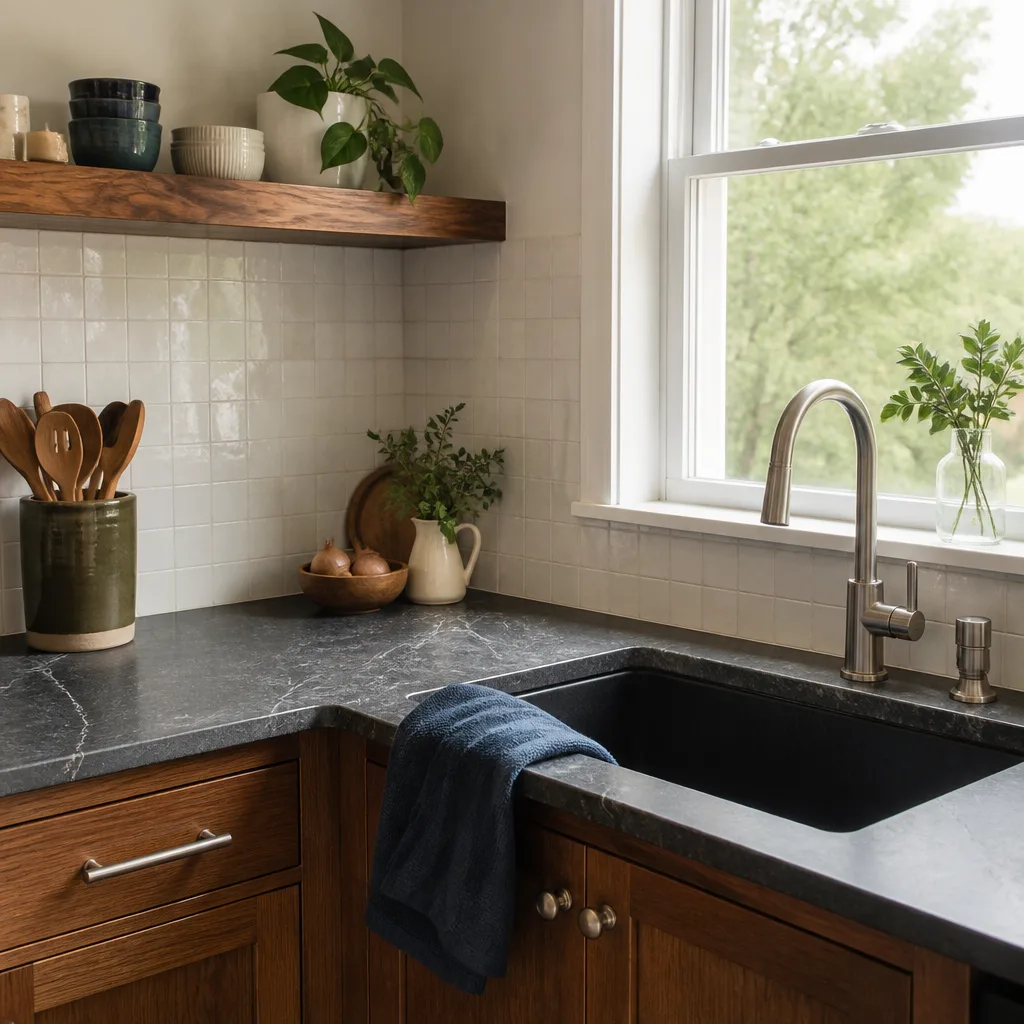
- Backsplash tile – setting tile on a prepped substrate, grouting, and sealing. This is finish work. It touches no gas, water, or electrical system.
- Cabinet assembly and box mounting – if you’re using RTA (ready-to-assemble) units. Safest when the wall backing and stud layout already exist; if you need new blocking, that’s a framing question.
- Cosmetic fixture swap-outs that don’t involve the water line – replacing a cabinet pull, swapping a decorative light shade on an existing fixture (with the breaker off), or refinishing a cabinet face with paint or a veneer kit.
- Countertop demolition once the trades are disconnected – removing old laminate or tile after a licensed plumber has capped the water and disconnected the disposal circuit.
- Site protection and cleanup – plastic sheeting, floor protection, daily sweeping, and hauling your own demo debris to the dump.
If the task is on that list, it’s yours. And in our experience, the finish work is where a homeowner’s labor actually delivers value. Painting, hardware, and backsplash tile can save real money on a Winchester remodel – easily into the low thousands when you tally the labor rates those tasks would otherwise carry. The mental math most people get wrong is thinking that saving is comparable on the other side of the line. It isn’t.
What Requires a Licensed Trade in Nevada
These are the kitchen tasks that require a licensed trade contractor under NRS 624. This isn’t a suggestion. Doing this work yourself, or hiring an unlicensed handyman to do it, is a legal exposure on top of a safety one.
- Gas line work of any kind – moving a range, converting a cooktop, adding a gas line for a new appliance, capping a gas stub. Every one of these is a licensed plumbing scope item. A gas leak is odorless at low concentrations and can pool in a cabinet cavity before you detect it.
- Electrical circuit work – adding a dedicated circuit for a microwave, running a new outlet for a coffee station, upgrading a range hood circuit, replacing a panel breaker. A kitchen counter circuit is 20 amps for a reason. Wiring it wrong is a fire risk that lives inside your walls.
- Drain and vent modifications – moving a sink, relocating a dishwasher drain, reconfiguring a vent stack. Vent stack reroutes require permits and licensed plumbing; a bad vent creates sewer gas intrusion that doesn’t show up until you smell it in January.
- Structural changes of any kind – removing a wall, opening a header, cutting a beam. Load-bearing wall changes in Winchester require a permit and engineering sign-off. There is no “small” structural change.
- Exterior door or window replacement that involves rough opening changes – cutting the envelope for a new rough opening is a permit item in Winchester. Sizing changes to a Therma-Tru or ES Windows unit within an existing opening are a different category, but always confirm with your GC or the permit office.
- HVAC modifications – relocating a range hood vent out of the wall or roof, changing the exhaust path. Ducting through the envelope is a mechanical permit item.
The reason Nevada draws this line isn’t bureaucratic. Gas, electrical, and drain/vent work all share a trait: a mistake is invisible at the time and dangerous later. That’s what licensing exists to catch. A licensed plumber pulls the permit, calls the inspection, and carries liability if something goes wrong. When you self-perform, you carry all of it.
If you’re weighing how much of the kitchen to hand off versus how much to keep, our guide to Kitchen Remodeling in Winchester walks through the scope of a full remodel and where trade handoffs occur. It’s a useful frame for making the DIY/GC decision.
How DIY Plumbing and Electrical Affect Your Insurance
Most homeowners don’t realize how thoroughly a DIY electrical or plumbing mistake in a kitchen can compromise their insurance coverage. Here’s how it actually plays out.
Standard homeowner policies carry an exclusion for damage caused by faulty workmanship performed by the insured. If you run your own electrical circuit and a loose neutral connection causes a fire, the adjuster’s first question is who performed the work and under what permit. If the answer is “me, with no permit,” you may find that the claim is denied in whole or in part – and worse, that the denial extends to damage that started on your circuit but spread to other parts of the house.
Water is the more common problem. A slightly loose compression fitting on a supply line behind a new cabinet can weep for months before it shows. By the time it’s visible on the drywall below, you’re looking at a subfloor replacement, a cabinet replacement, and a mold remediation. Those are five-figure consequences from a $6 fitting. And if the adjuster determines the fitting was installed outside a permit scope, the coverage position gets complicated fast.
There’s also the resale dimension. A Winchester homeowner who sells a house with unpermitted electrical or plumbing work in the kitchen has to disclose it. Most buyers walk. The ones who don’t will negotiate hard on the price. Either way, the DIY savings evaporate.
The clean way to think about it: licensed work transfers liability. Licensed trades carry their own insurance and bond. When the plumber connects your gas line and it leaks a year later, the claim goes against their policy, not yours. That transfer is not a small thing – it’s the entire point of hiring a licensed trade.
The Hybrid Model: Licensed Rough-In, Self-Performed Finish
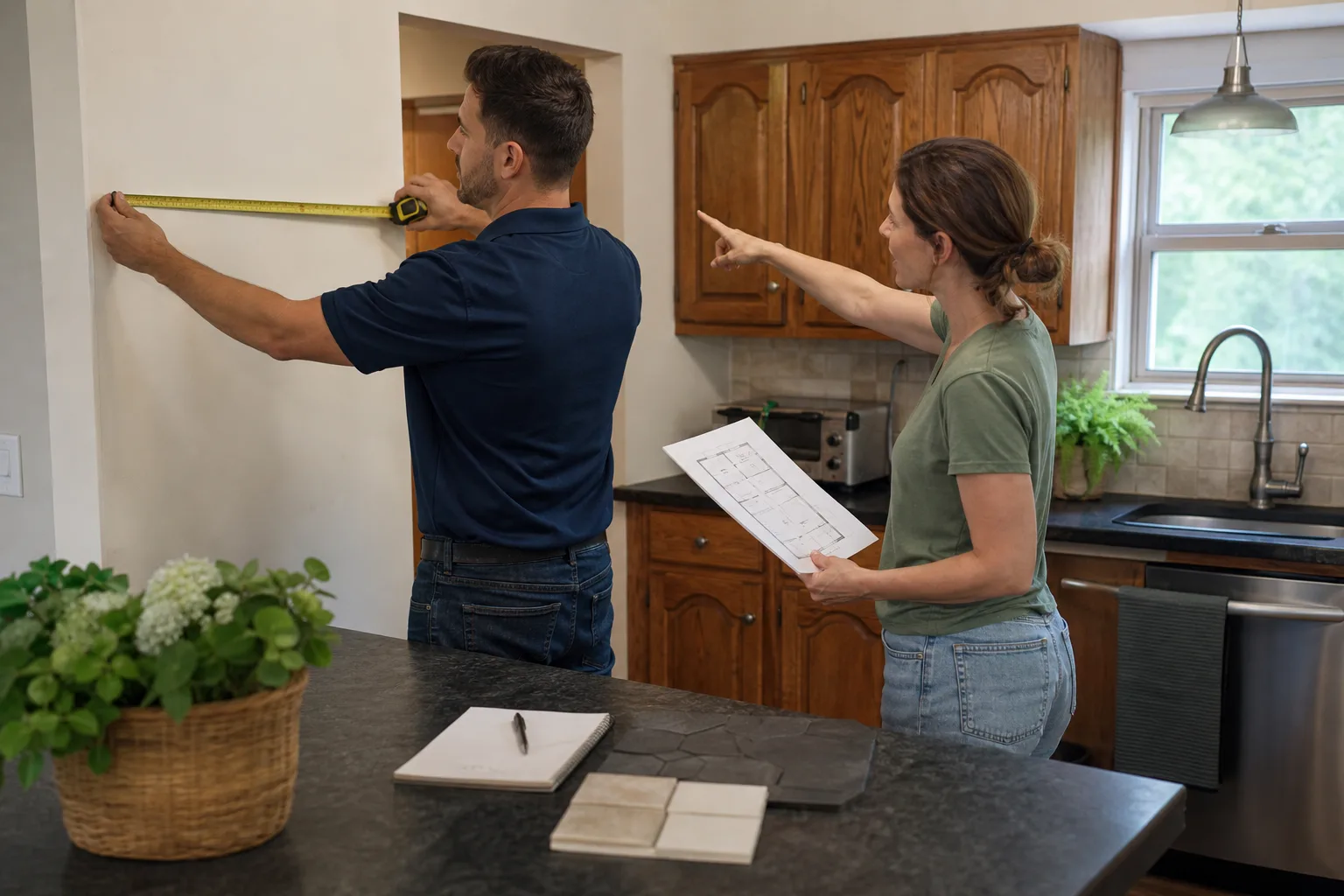
The smartest financial structure for a Winchester kitchen remodel is a hybrid. You hire a licensed general contractor for the trade rough-in and the inspections, and you self-perform the finish work yourself. You save the finish labor, the liability and code exposure stays with the licensed professionals, and the final inspection passes because every system behind the wall was installed under a permit.
Here’s how to structure it in a contract so scope and liability stay clear:
- Define the GC scope in writing line by line – gas connection, electrical rough-in, drain and vent work, structural changes, permit pulls, and inspections. Each item gets its own line with its own price. If the GC won’t put each scope item on its own line, that’s a red flag.
- Define your self-performed scope in writing – painting, hardware, backsplash, cabinet assembly, cleanup. Specify where your scope starts and where the GC’s scope ends. “GC installs cabinet boxes, homeowner installs doors and hardware” is a clean handoff. “Owner finishes cabinets” is not.
- Specify the sequencing and the handoff date – the plumber disconnects the old gas range on Day 2, the GC frames and roughs electrical by Day 5, the inspection happens Day 8, your tile scope starts Day 10. Written dates, not “next week.”
- Assign permit responsibility to the GC – the licensed contractor should pull the permit and manage the inspection schedule. Do not pull an owner permit for gas or electrical work and then perform it yourself. That’s the exact scenario NRS 624 exists to prevent.
- State the completion condition – the GC’s scope is complete when the inspection passes and the written guarantee is delivered. Your finish scope is complete when the punch list is signed off. Both in writing.
- Get the written guarantee term in the contract – the 365-Day Done Right Promise from Bradford covers every completed project for a full year. If a scope item the crew installed fails during that period, we come back and correct it at no charge. That protection applies to the GC’s scope, not yours; that’s why getting the boundary in writing matters.
This structure is how a homeowner actually saves money on a Winchester kitchen without crossing the licensed-trade line. The full scope of what a licensed kitchen remodel covers is laid out in our kitchen remodeling service page, which helps you see which pieces of the project are best hired and which are yours to keep.
If you’re also considering a bathroom as part of the same phase of work, the same hybrid model applies. Our Bathroom Remodeling in Winchester guide covers the equivalent DIY line for wet rooms, where the plumbing stakes are even higher.
The Punch List: What to Check Before Final Payment
The punch list is where most homeowner-GC disputes go sideways. Not because the work is wrong, but because nobody agreed in writing what “done” looks like. Before you release the last payment draw on a Winchester kitchen, walk the project with this list in hand and sign off line by line.
- Cabinet doors and drawers – every door closes flush to the frame, no gaps over 2mm at reveal, every drawer glides without binding, every soft-close damper engages. Run each drawer through three cycles; the failures show up in the last 10% of travel.
- Countertop seams and edges – Cambria and Caesarstone surfaces should have seams that you can’t feel with a fingernail. Any visible gap or unequal color at a seam is a callback item.
- Cabinet-to-wall and cabinet-to-ceiling gaps – a caulk bead hides a crooked install for about six months. Check the reveal with a level.
- Fixture function – Kohler and Moen faucets: run hot and cold to full, check for drips at the base and supply line, test the sprayer, test the disposal. Every fixture that touches water gets run.
- Electrical and gas inspection sign-off – the town inspector’s final sign-off paperwork should be in your hand. If the GC owes you the inspection, do not release the final draw until you have the signed release.
- Paint and touch-up – every nail pop, drywall seam, and corner covered. In our experience, the punch list on a Winchester kitchen almost always includes two or three touch-up spots that only show up under the kitchen’s under-cabinet lights.
- Written guarantee delivered – the 365-Day Done Right Promise paperwork signed and in your hand before you write the final check. A guarantee that never arrives isn’t a guarantee.
- Clean site – tools out, debris hauled, floors swept, and the work area returned to move-in condition. A squared-away job close is part of the project, not a favor.
The general rule: no final payment until the punch list is complete, the inspection paperwork is in hand, and the written guarantee is signed. That’s standard practice for any project run on The Garrison Standard, and it’s the standard the Winchester crew holds itself to.
Red Flags in a DIY-Heavy Kitchen
If you’re buying a Winchester home with a recently remodeled kitchen – or deciding how much DIY to do on your own – these are the signals of work that may not be insurable. They’re the things a home inspector and an insurance adjuster both check.
- No permit trail for a gas range move or added electrical circuit. Ask the seller for the permit numbers; the town can confirm them.
- Electrical outlets at the counter that have a non-standard or missing GFCI. Kitchen counter circuits are required to be GFCI-protected in Winchester; a missing one is a straightforward red flag.
- Cabinet boxes out of plumb or level beyond a few millimeters. This usually means the installer skipped wall blocking.
- Backsplash tile that was set over drywall with no substrate prep. Cosmetic in the short run, a mold problem behind the cabinets in the long run.
- A gas range installed on a flexible connector with no shutoff valve at the wall. Shutoff valve presence and function is one of the first things a plumber checks.
- Fixtures swapped in with visible thread sealant from a handyman, not a licensed plumber or plumber’s subcontractor. Silicone on a compression fitting is a tell; tape and dope on a union is another.
For broader context on the licensed-contractor scope, our General Contractor in Winchester page walks through what a permit-pulling, inspection-passing GC actually covers on a full remodel.
Common Mistakes to Avoid
- Doing electrical rough-in yourself to save a permit fee. The permit fee is a rounding error against the denial risk on a fire claim. In our experience, the homeowner who self-wires a microwave circuit and later sells the house ends up paying more than the original GC bid.
- Assuming cabinet hardware is always simple. Hardware is safe DIY, but if you drill a knob hole into a KraftMaid door where the pull was pre-drilled, the door is done. Measure, tape, measure again.
- Installing a tile backsplash over prepped drywall without a substrate. In dry Winchester air the tile will look fine for a year. Behind the cabinets it will not.
- Connecting a gas range from a YouTube video. A licensed plumber soaps a gas joint and tests for leaks. A homeowner tightening a fitting by feel is not a test.
- Skipping the pre-drywall inspection. Once drywall goes up, the electrical and plumbing rough-in is inaccessible. The inspection has to happen before that wall closes.
- Handing off finishes without a written scope boundary. “We’ll finish the cabinets” is how a homeowner ends up paying twice for the same task and arguing about it after the fact.
- Releasing the final draw without a punch list. The last payment is your leverage on the punch list, the inspection paperwork, and the written guarantee. Hold it until you have all three.
See the difference
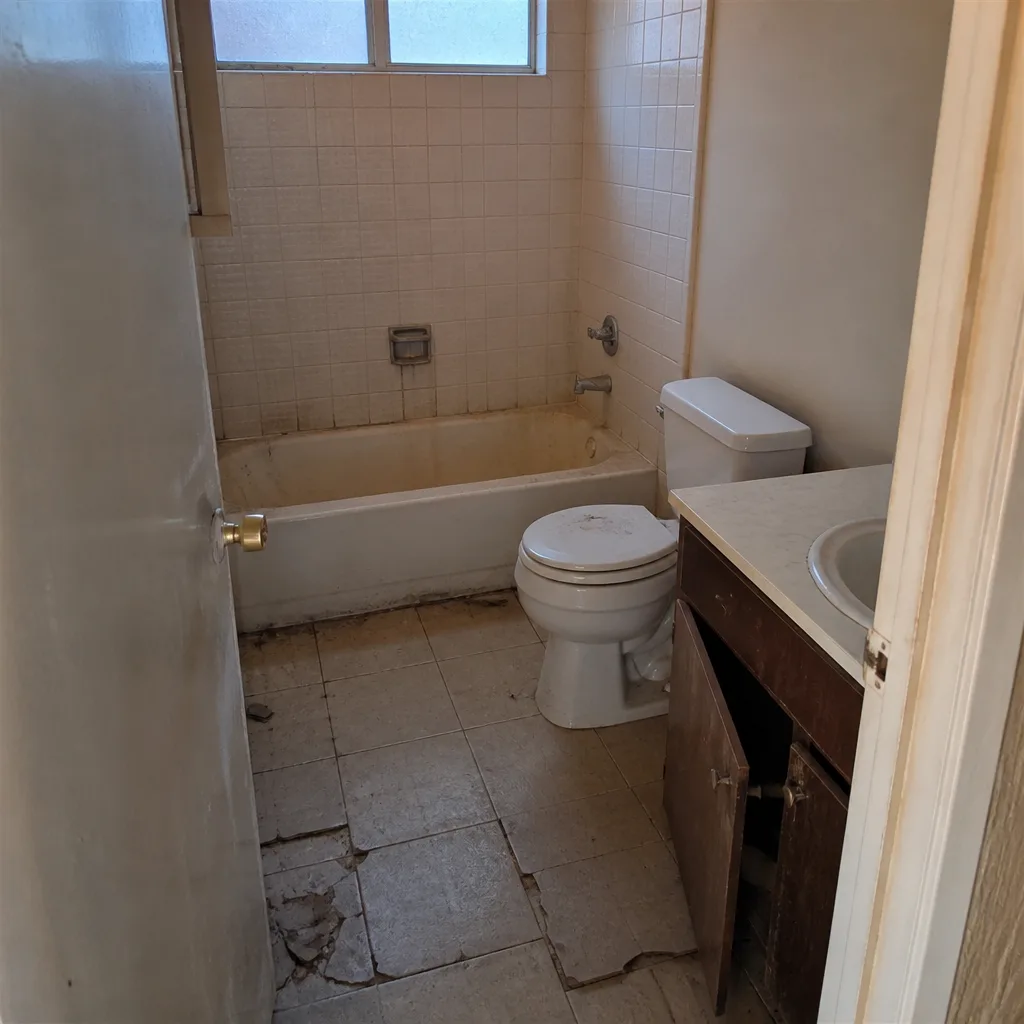 Before
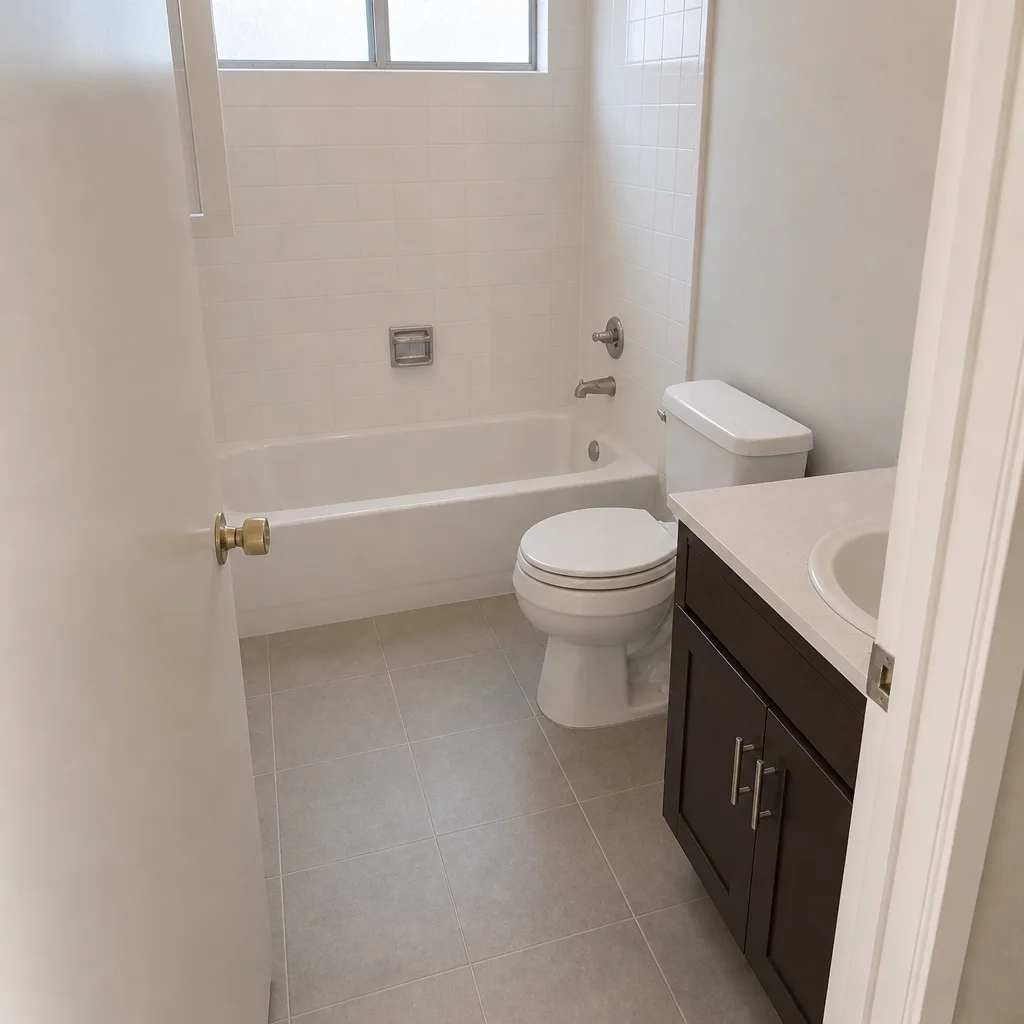 After
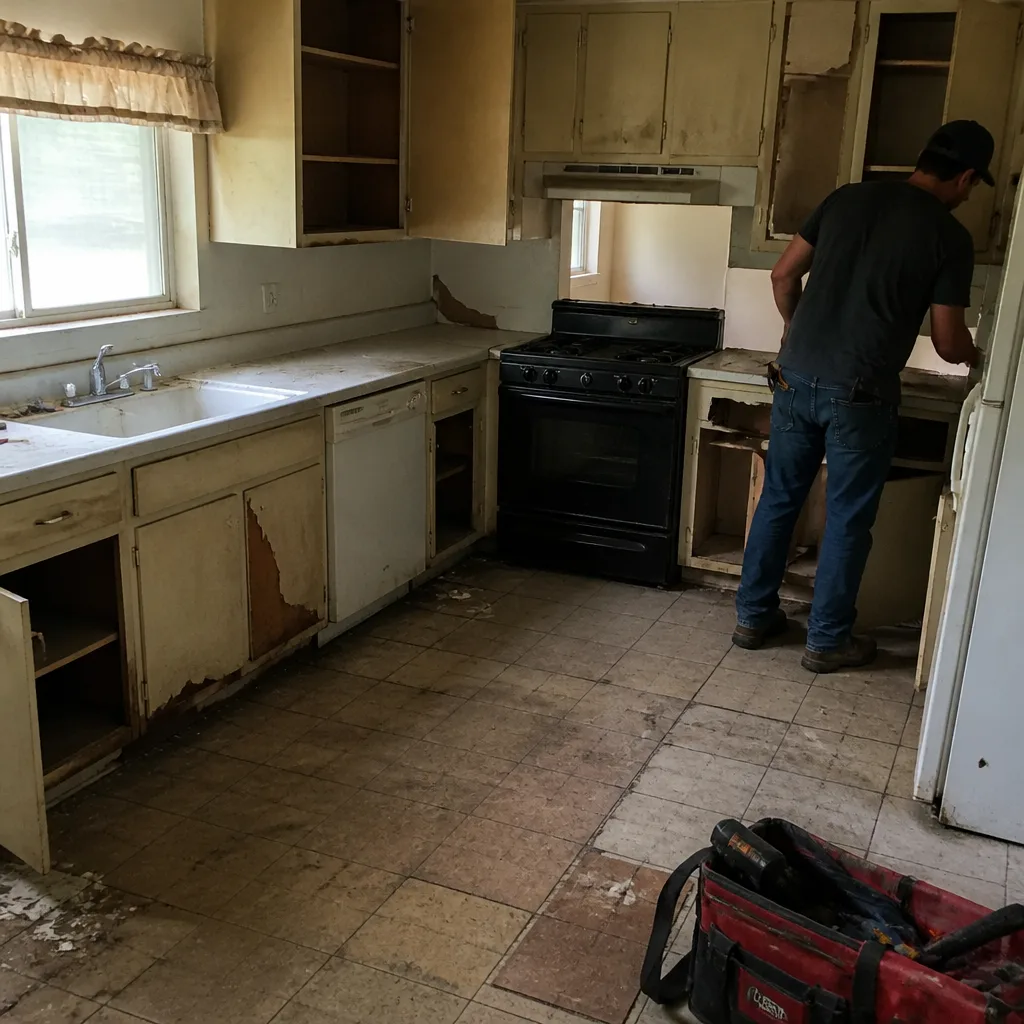 Before
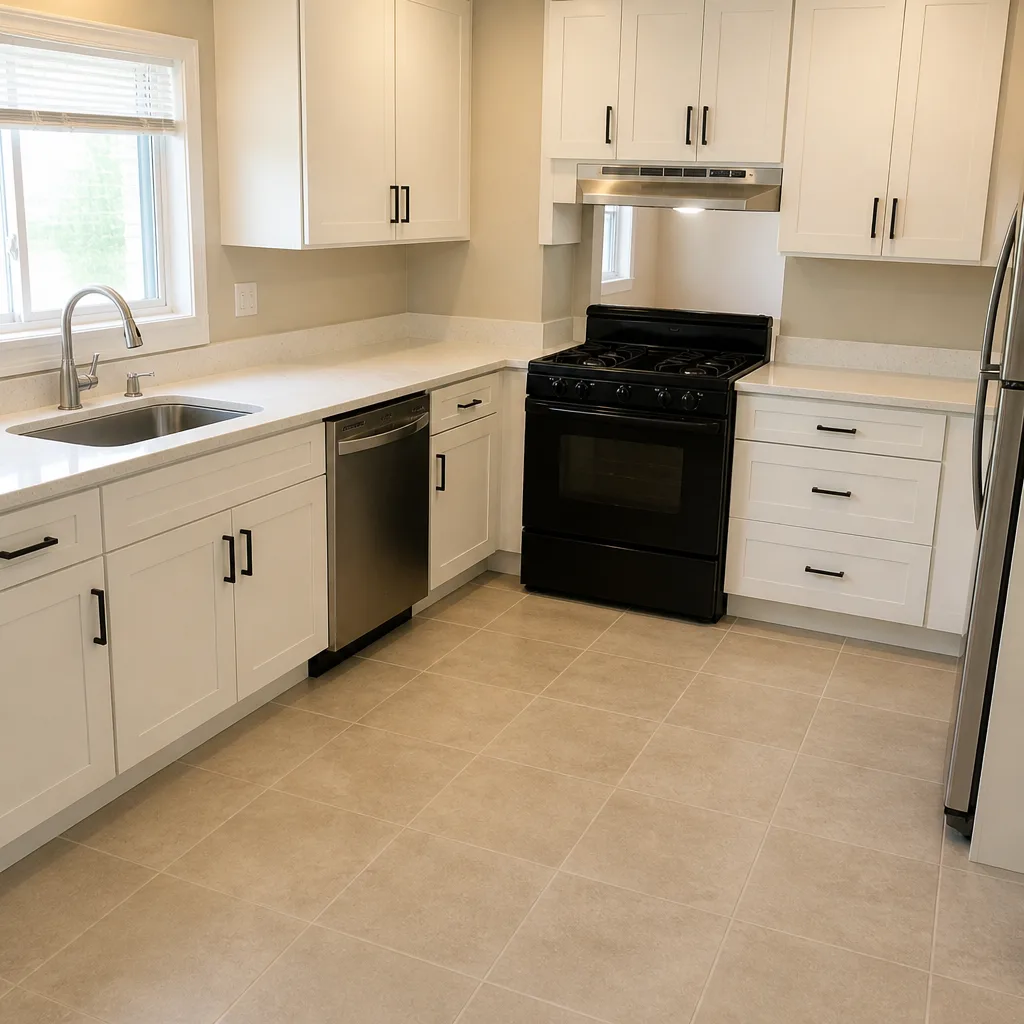 After
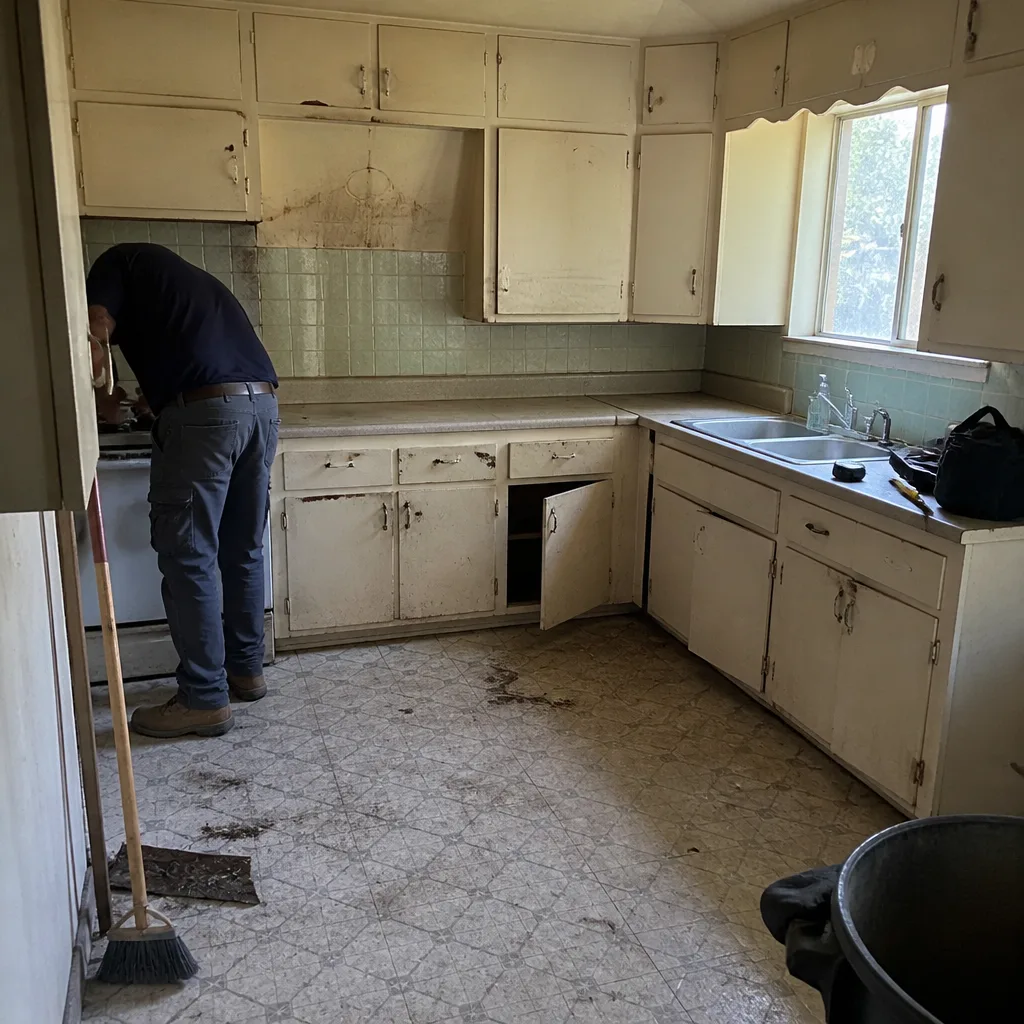 Before
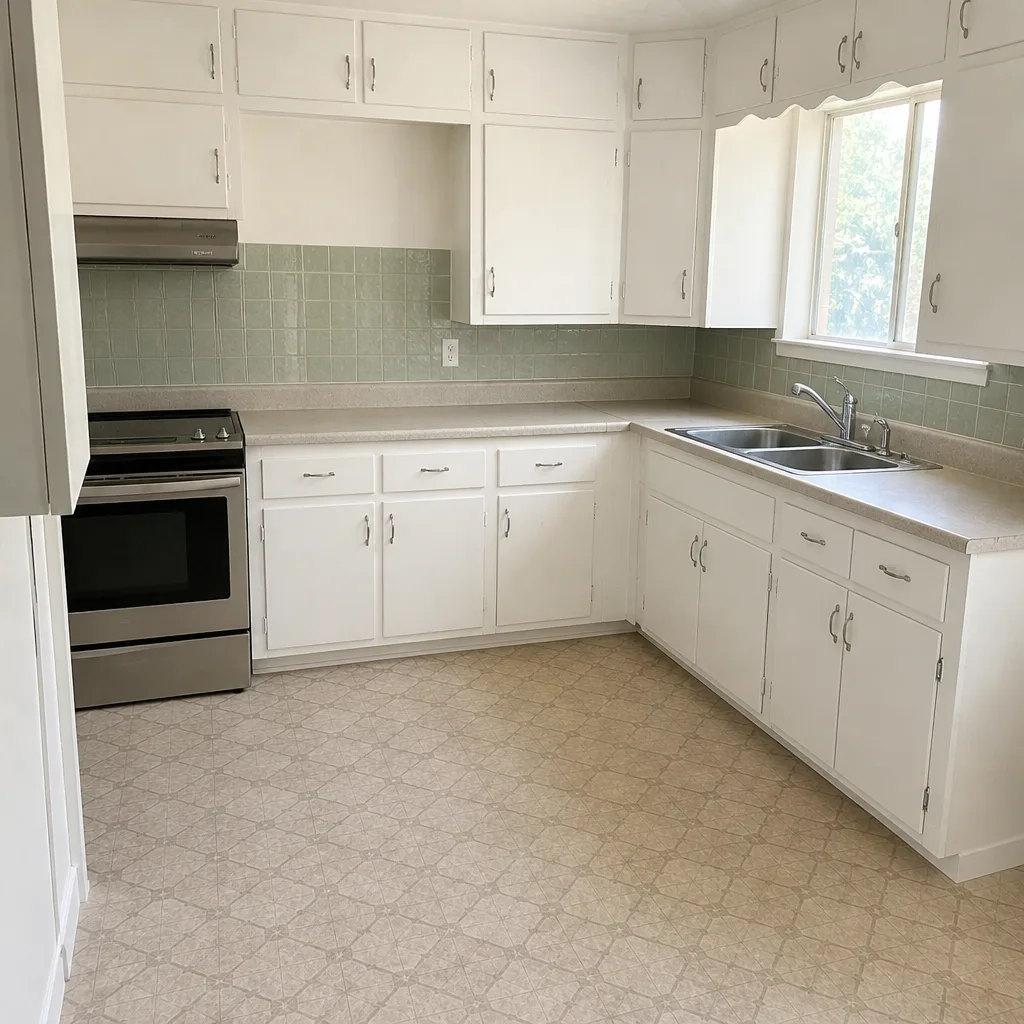 After
When to Call a Professional
Call a licensed contractor the moment any of the following is in your kitchen plan: a gas range or cooktop move, any new electrical circuit, any relocated sink or dishwasher drain, any wall removal, or any change to the range hood vent path. Also call if you’re buying a Winchester house where the kitchen shows signs of unpermitted work, or if you’re structuring a hybrid remodel and need a GC who will put scope on line items in writing.
Bradford Remodeling Co Winchester offers free estimates in Winchester – call (844) 972-4839. Every estimate comes with a written price before any work starts, and every completed project carries the 365-Day Done Right Promise – a full-year written guarantee; if the work fails inside that window, we come back and correct it at no charge. The crew is background-checked and uniformed. The phone is answered by a live person 24/7. Start with the estimate; the scope decision comes after.
Frequently Asked Questions

Painting, cabinet hardware, backsplash tile, cabinet assembly, and site cleanup are legal DIY work in Winchester without a permit or licensed contractor. Gas line work, electrical circuit changes, drain and vent modifications, and any structural changes require a licensed contractor under NRS 624. The line is set by code, not skill. Call (844) 972-4839 for a free estimate on the licensed portion.
Yes, in most cases. Any gas, electrical, plumbing, mechanical, or structural change requires a permit and a final inspection in Winchester. Cosmetic work – paint, hardware, backsplash tile – does not. If you’re unsure whether a task crosses the permit threshold, call the town and ask before the task starts; the cost of the call is zero.
It can. Most policies carry an exclusion for damage caused by faulty workmanship performed by the insured. If an adjuster determines that a kitchen electrical fire or plumbing leak was caused by unpermitted DIY work, coverage on the resulting damage can be denied in whole or in part. Licensed trades carry their own insurance, which transfers the liability away from your policy.
A mid-range Winchester kitchen remodel typically runs roughly $35,000 to $85,000 depending on cabinet line, countertop surface, and layout changes; a cosmetic refresh without layout changes runs lower. DIY finish work – paint, hardware, backsplash – reduces labor costs on those line items only. Gas, electrical, and plumbing scope pricing does not drop because you’re doing the finish yourself. Call (844) 972-4839 for a written line-item estimate on your Winchester kitchen.
Yes, with two conditions. First, a licensed plumber has to disconnect and cap the gas and water before you touch anything. Second, the disposal and any hardwired appliance has to be de-energized at the panel. After those two things, cabinet and countertop demolition is a legitimate DIY scope item – it’s messy, but it’s safe and unpermitted.
Yes, if the contract scope is written line by line to establish where your scope stops and theirs begins. Bradford Remodeling Co Winchester builds every estimate with line-item scope and a written price before any work starts – so the boundary between GC scope and homeowner scope is documented. Call (844) 972-4839 to schedule the free estimate and talk through the hybrid structure.
The Bottom Line
In a Winchester kitchen, the line between safe DIY and licensed trade work is drawn by Nevada code, manufacturer warranty terms, and the fact that a kitchen concentrates gas, water, and electricity in one room. Painting, hardware, backsplash tile, and cabinet assembly are yours to keep. Gas, electrical, drain and vent work belong to a licensed contractor – not as a suggestion, but as a legal exposure on top of a safety one. The hybrid model lets you capture the finish labor savings while the licensed trade carries the liability, as long as the scope is written in the contract. And nothing gets signed off until the punch list is done, the inspection paperwork is in hand, and the written guarantee is delivered.
If you’re ready to price the licensed portion of your kitchen remodel, call (844) 972-4839 to schedule your free estimate with Bradford Remodeling Co Winchester. You’ll get a written line-item price before any work starts, a crew of background-checked, uniformed technicians, and a live person on the phone 24/7 to answer questions as the scope comes together.
Written by the team at Bradford Remodeling Co Winchester.