
Last updated November 18, 2026








Free written scope consultation - allowances, timeline, and change-order rules on paper before a single trade is scheduled
Kitchen Remodeling Maintenance Schedule: What to Do and When
Cabinet door hinges are rated for roughly 50,000 open-close cycles. That sounds like a lifetime until you do the math on a busy family kitchen: four people, twenty door pulls a day, and suddenly your soft-close hinges are due for adjustment in about two years, not ten. Most remodel warranties expire long before a homeowner ever turns that adjustment screw, which is exactly why we wrote this guide. Below you’ll find a room-specific maintenance calendar that matches what actually got installed in your Winchester kitchen, from quartz sealing schedules to grout intervals to the hard-water problems that hit homes in Winchester harder than most. We’ll show you what to check, when to check it, and how to log it so your warranty and your resale value both hold up.
Quick Answer
A remodeled kitchen needs routine maintenance on four fronts: surfaces (quartz, granite, grout) resealed or cleaned on a 6-to-24-month cycle, cabinet hardware and hinges adjusted every 18 to 24 months, plumbing fixtures and drains checked every 6 months given Winchester’s hard water, and exhaust fans or range hoods degreased every 6 to 12 months to keep airflow and fire safety intact. Logging each task with a date protects your manufacturer warranty and documents upkeep at resale.
Styles & brands we work with
- Kitchen remodeling
- Bathroom remodeling
- Home additions & ADU
- Roofing
- Windows & doors
- Driveway & pavers
- Fence
Table of Contents
- The 12-Month Kitchen Maintenance Calendar
- Quartz vs. Granite vs. Grout: Sealing and Cleaning Schedules
- Cabinet Hinges, Drawer Glides, and Hardware Adjustment Cycles
- Winchester’s Hard Water: What It Does to Faucets, Disposals, and Dishwashers
- Undermount Sink Clips, Caulk Lines, and Under-Sink Leak Checks
- Range Hood and Exhaust Fan Maintenance: CFM, Grease, and Code
- What Voids a Cabinet Warranty vs. Normal Owner Maintenance
- How to Log Kitchen Maintenance for Warranty and Resale
The 12-Month Kitchen Maintenance Calendar
Here is the schedule we hand to homeowners when we close out a kitchen project. It assumes a fairly typical install: quartz or granite counters, painted or stained cabinetry on soft-close hinges, an undermount sink, and a ducted or recirculating range hood. Adjust the intervals if your kitchen sees heavy daily cooking.
- Monthly: Wipe down cabinet faces with a damp microfiber cloth and mild soap. Check under the sink for moisture or discoloration. Run the disposal with cold water for 30 seconds to clear residue.
- Every 3 to 6 months: Remove and soak faucet aerators in white vinegar to dissolve mineral scale. Vacuum the refrigerator coils if they’re accessible. Wipe the range hood filter.
- Every 6 months: Inspect the caulk line where the backsplash meets the counter and where the sink meets the counter. Re-caulk any failing seam. Test the exhaust fan by holding a tissue to the grille to confirm it’s pulling air.
- Every 12 months: Deep-clean the range hood filter in hot water and degreaser. Re-seal any natural stone that isn’t quartz. Check cabinet hinge screws and tighten as needed.
- Every 18 to 24 months: Adjust soft-close hinges and drawer glides. Replace worn bumpers or dampers. Re-seal grout in heavily used zones if it looks chalky or absorbs water.
- Every 3 to 5 years: Full grout reseal, appliance gasket inspection, and a walkthrough of the whole room for developing issues you may have missed.
If that list seems long, keep it in perspective. None of these tasks takes more than twenty minutes, and all of them together protect a renovation that costs tens of thousands of dollars. Winchester homeowners who let the schedule slide usually discover the neglected items the expensive way: a swollen cabinet box, a warped counter seam, or a fan that stopped pulling air long before the cooking smoke told them so.
Quartz vs. Granite vs. Grout: Sealing and Cleaning Schedules
Not all counter surfaces age the same way, and the sealing schedule depends entirely on what was installed. Here’s how the three most common kitchen surfaces in Winchester homes behave, and what each one actually needs.
- Quartz (Cambria, Caesarstone, Silestone): Non-porous, so it never needs sealing. It does need a pH-neutral cleaner and no abrasive pads. Heat tolerance is limited, so always use a trivet under hot pans.
- Granite: Porous. Sealing every 12 to 18 months is standard, though some stones hold tighter and can go 24 months. Test by dripping a few drops of water on the surface; if they soak in within minutes, reseal.
- Tile grout (backsplash or floor): Reseal every 12 to 18 months in high-traffic zones. Grout above a cooktop collects grease and needs deeper cleaning than grout elsewhere in the room.
Cleaning products matter more than most people think. Vinegar, citrus cleaners, and anything acidic will dull quartz and slowly etch natural stone. A simple dish-soap and water mix is the safest daily cleaner for all three surfaces, and it’s what we recommend to every homeowner in Winchester.
Cabinet Hinges, Drawer Glides, and Hardware Adjustment Cycles
A soft-close hinge isn’t just a comfort feature. It’s a mechanical part with a service interval. Every cycle of the damper wears it slightly, and the hinge gradually loses tension. Over time a door that closed cleanly starts to swing or sit heavy. You’ll notice it as a door that no longer lines up with its neighbor or a drawer that pulls unevenly.
Most European concealed hinges used in KraftMaid and Wellborn cabinetry come with two or three adjustment screws: one for left-right alignment, one for depth, and sometimes one for height. A quarter turn on the right screw solves 90% of alignment problems. The trick is knowing which screw, which is why it pays to have a technician walk you through your specific cabinet brand once.
Drawer glides should be checked at the same interval. Tighten the mounting screws (they work loose on painted cabinet boxes), clean the track with a dry cloth, and replace plastic roller wheels if they start to squeak or drag. Under-mount slides from Blum or similar are usually rated for tens of thousands of cycles too, but they’re not indestructible. A twenty-minute adjustment at the two-year mark saves you the four-figure cabinet box repair at the ten-year mark.
If you’re still choosing cabinetry for a pending project, our Kitchen Remodeling in Winchester service page covers the brands we install and what their warranties actually cover.
Winchester’s Hard Water: What It Does to Faucets, Disposals, and Dishwashers
Here’s what many homeowners don’t realize about kitchen maintenance in Winchester: our municipal water runs hard, in the 250-to-350 ppm range depending on the season. That number matters because hard water is the single biggest driver of fixture failures we see on callback visits.
Scale accumulates fastest in three places:
- Faucet aerators and pull-down sprayer screens. Mineral scale blocks flow, then the homeowner assumes the faucet is failing when it just needs a soak. Unscrew the aerator and soak it in white vinegar once a quarter.
- Dishwasher heating elements. Scale coats the element, reducing heat transfer. The machine runs longer, uses more energy, and eventually fails to fully dry dishes. Run a dishwasher cleaner cycle once a month and check for visible scale on the heating element.
- Garbage disposals. Scale and heavy sediment shorten motor life. Run the disposal with cold water for 30 seconds after every use to keep residue from hardening, and never pour grease down the drain.
Installing a whole-house water softener or under-sink softener is often the single most impactful maintenance decision for a Winchester kitchen. If you’re not ready for that, stay disciplined with the routine cleaning. A Kohler or Delta faucet will last far longer with quarterly aerator cleanings than with the “run it until it breaks” approach so many kitchens get.
Undermount Sink Clips, Caulk Lines, and Under-Sink Leak Checks
Undermount sinks are held in place by epoxy and clips, and they’re supported underneath by a frame or wood straps in the cabinet. The failure mode is subtle: a clip loosens, the epoxy seal degrades, and a slow leak starts beneath the counter where nobody looks until the cabinet door starts to swell.
- Open the cabinet below the sink and look up at the underside of the counter.
- Check for dark discoloration or soft spots in the cabinet floor and walls. Either one is a sign of a leak.
- Wipe the caulk line where the sink meets the counter. If it’s peeling or thinner than it should be, re-caulk with a kitchen-rated silicone.
- Feel around the sink clips. Any that wiggle more than a millimetre need to be re-tightened with the proper tool.
- Run water for a minute and watch the drain collar and supply lines for drips.
Do this twice a year, in spring and fall. A ten-minute check prevents a thousand-dollar cabinet floor replacement. If you find soft wood or an active leak, stop and call a professional – this is not the spot to start practicing plumbing repairs.
Range Hood and Exhaust Fan Maintenance: CFM, Grease, and Code
Range hoods and exhaust fans are the most neglected mechanical equipment in a remodeled kitchen, and the most dangerous when they fail. Grease buildup on the fan blades cuts airflow dramatically, and a hood that’s no longer pulling air is a fire risk. Most building codes call for airflow that matches the cooking fuel and appliance output, and a clogged filter can quietly drop performance below the code-required range.
Here’s how to keep CFM (cubic feet per minute) where it belongs:
- Monthly: Wipe the exterior of the hood with a degreaser to remove the film you can’t see but that builds on every range.
- Every 3 months: Clean the filter in hot soapy water, or run it through the dishwasher if the manufacturer permits. Ducted hoods have metal mesh filters; recirculating hoods have charcoal filters that can’t be washed and must be replaced.
- Annually: Deep-clean the fan blades and the hood interior. Test airflow with the tissue test. If airflow seems weak after cleaning, the ductwork may be restricted and a technician should inspect it.
- Every 3 to 5 years: Have the duct run inspected. Ducts collect grease too, and this is a fire risk most homeowners never think to check.
If you smell cooking odors lingering after a meal, your fan is already under-performing. That’s the signal to clean now, not at the next scheduled interval.
What Voids a Cabinet Warranty vs. Normal Owner Maintenance
Every cabinet manufacturer draws a line between “maintenance the owner should do” and “damage that voids the warranty.” Knowing the line is the difference between a covered claim and an out-of-pocket repair.
Normal owner maintenance (does not void the warranty):
- Cleaning with mild soap and water
- Adjusting hinges and drawer glides
- Replacing worn bumpers and dampers
- Re-caulking at sink and backsplash seams
- Replacing filters on hoods
Voids or limits the warranty:
- Using abrasive cleaners, waxes, or polish on cabinet faces
- Installing cabinets in a room that has active moisture problems (unsealed leaks, chronic humidity)
- Painting or refinishing cabinets yourself
- Modifying the cabinet box in any way – cutting for a new appliance, drilling new holes, etc.
- Improper cleaning of natural stone that leads to staining
Read the paperwork that came with your cabinets when we install them. KraftMaid and Wellborn both publish their warranty terms in writing, and those documents should live in your maintenance binder from day one.
How to Log Kitchen Maintenance for Warranty and Resale
A maintenance log is boring until the day you need it. Then it’s worth its weight in gold. Two scenarios where it pays off: a manufacturer’s warranty claim where you need to prove the failure wasn’t from neglect, and a home sale where documented maintenance is worth real dollars at the negotiating table.
Here’s the log structure we recommend:
- Keep a simple spreadsheet or notebook labeled “Kitchen Maintenance Log – Winchester Home.”
- Date every entry. Include what was done, who did it (owner or contractor), and any parts replaced.
- Keep the receipts for filters, dampers, caulk, or any parts purchased.
- Photograph anything unusual – a spot under the sink, a hinge failure, a grout line that looks off.
- File the manufacturer warranty documents alongside the log.
- Store the whole thing in a known location with the kitchen design and material specs from your original install.
When you sell, a well-kept log is proof that the kitchen was maintained, not just that it was originally impressive. That’s a tangible resale benefit for a room remodeled with the kind of materials we install at Bradford Remodeling Co Winchester home.
Common Mistakes to Avoid
- Using vinegar or citrus cleaners on quartz. Both slowly etch the surface. Use pH-neutral soap instead.
- Skipping the under-sink check because “it looks fine.” Leaks start in places you can’t see without opening the cabinet door.
- Assuming a slow-draining sink is the plumbing. In Winchester, it’s often scale in the aerator or trap. Soak the aerator before calling a plumber.
- Running the disposal with hot water. Hot water breaks down what’s meant to be flushed. Always use cold.
- Cleaning the range hood filter but not the fan blades. The blades are where grease really builds, and they’re what kills your airflow.
- Ignoring a hinge that’s misaligned. A loose hinge turns into a stripped screw hole and a drilled-out repair in a year.
- Never logging anything. When a warranty claim comes up, or a buyer’s inspector asks questions, the paper trail is what makes the conversation go smoothly.
See the difference
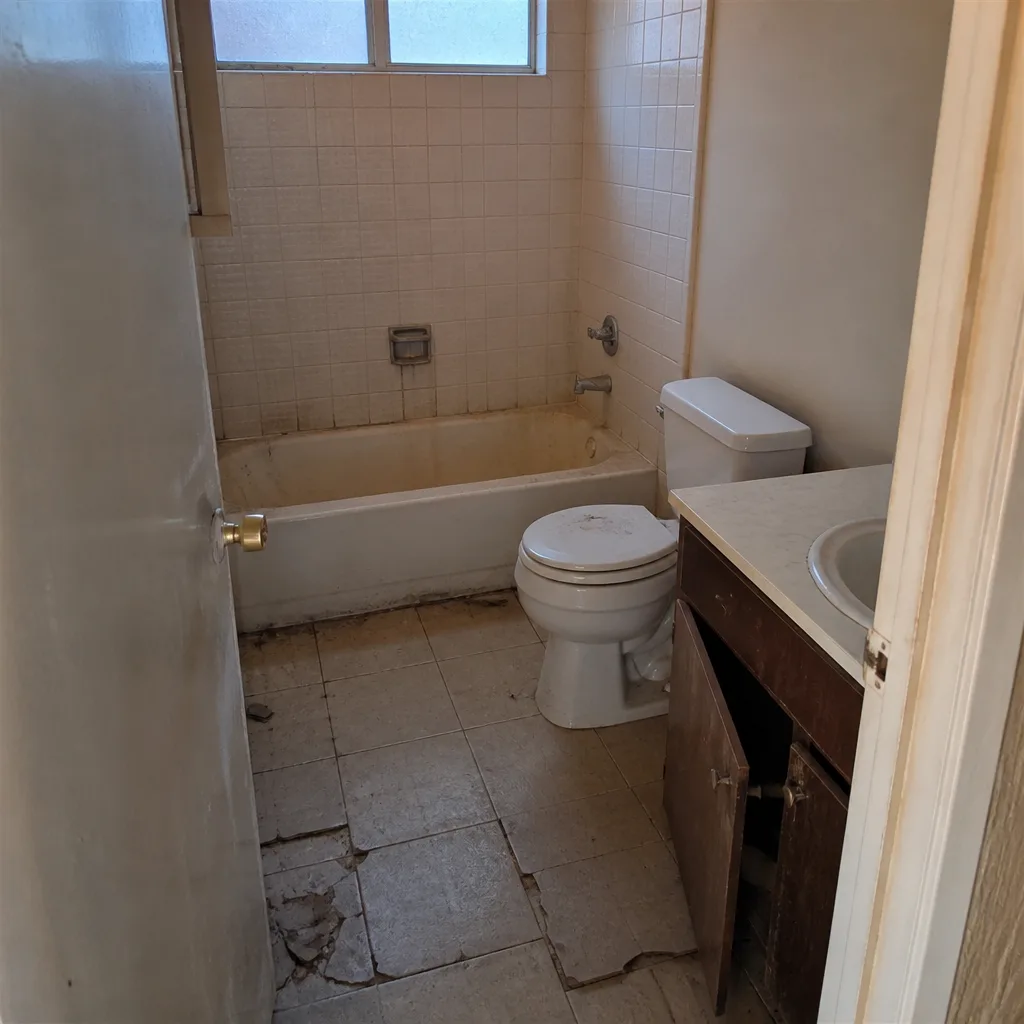 Before
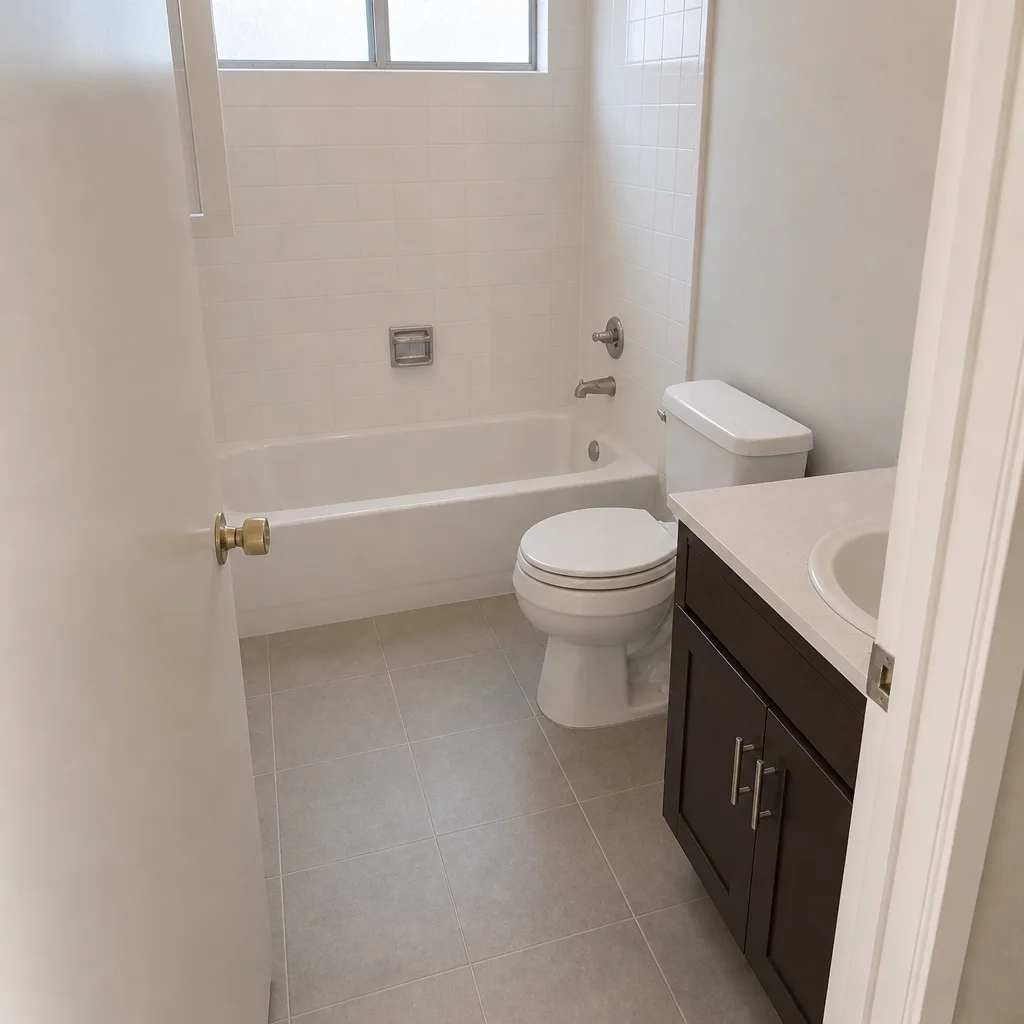 After
 Before
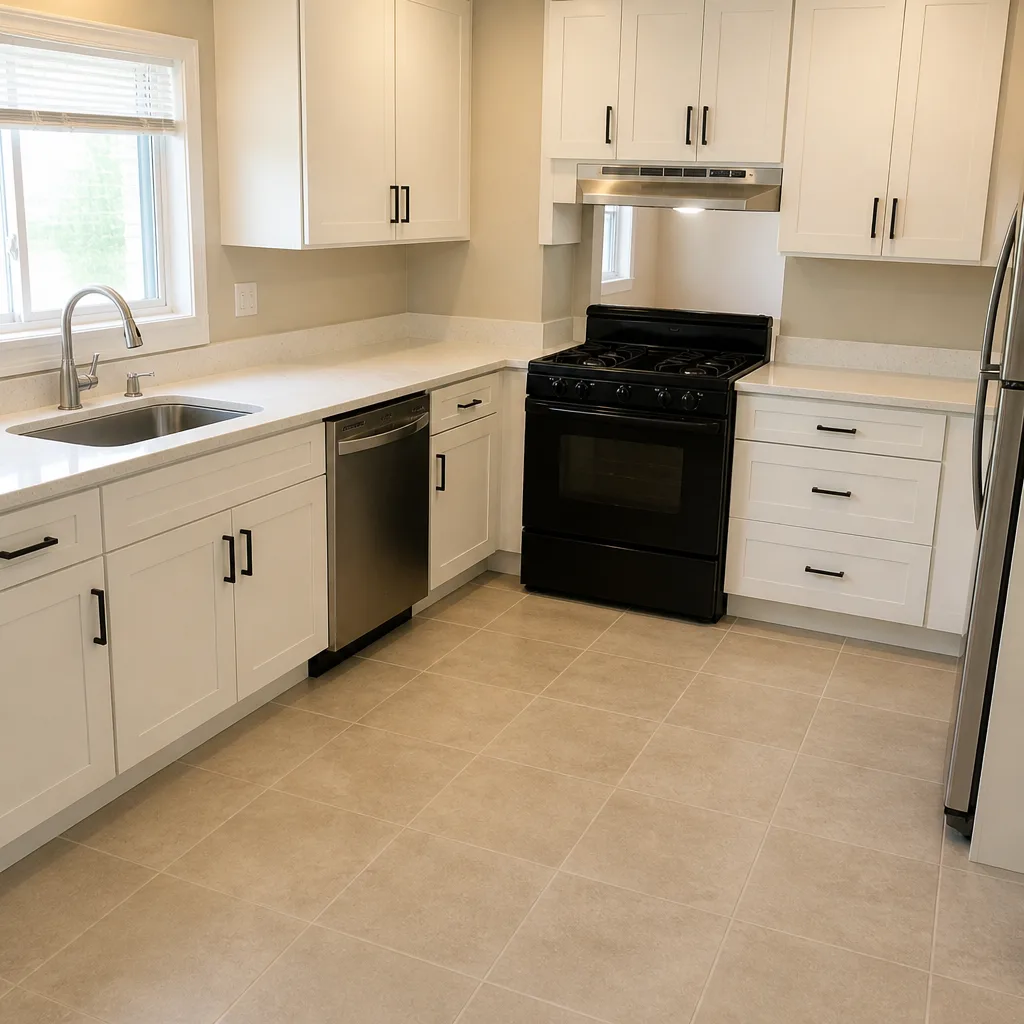 After
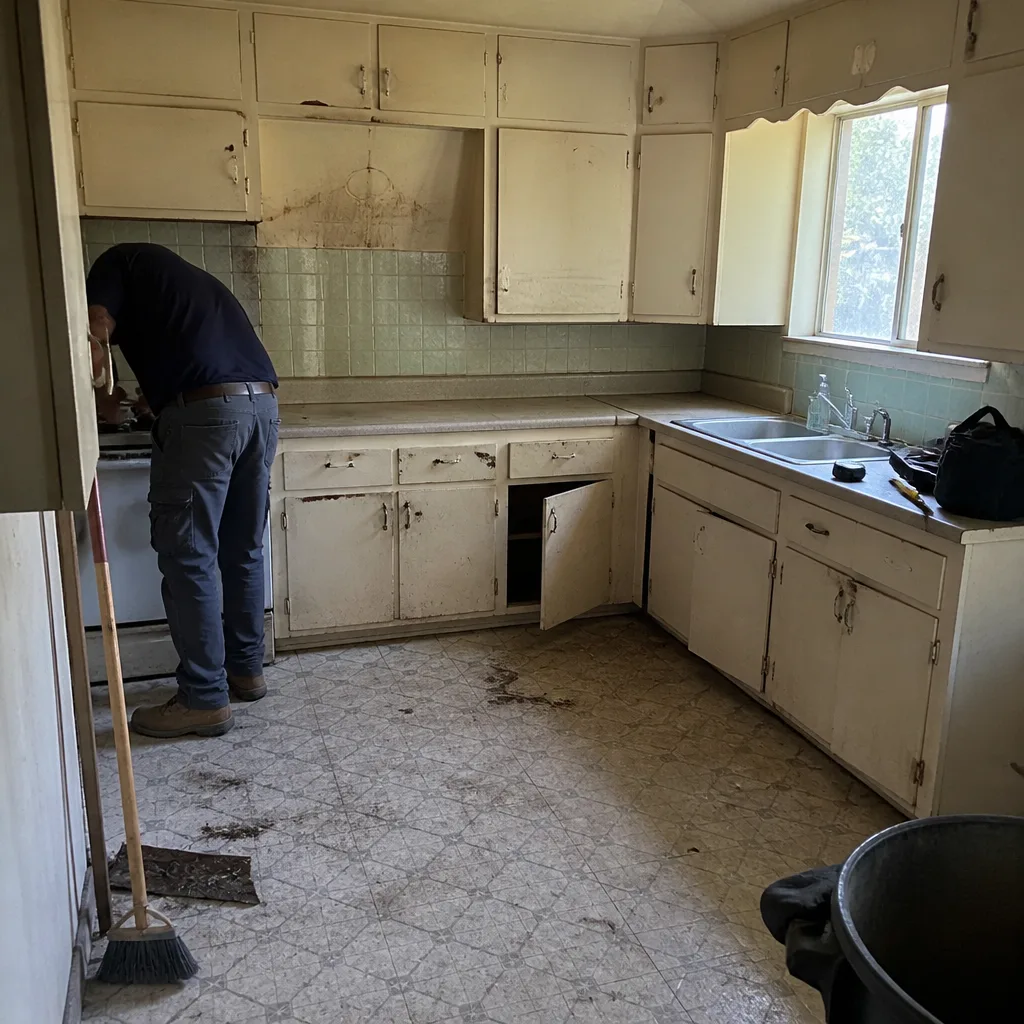 Before
 After
When to Call a Professional
Most of the routine schedule above can be handled by any homeowner with a screwdriver and twenty minutes. Some of it shouldn’t be. Call a professional when you find soft spots or dark staining under the sink (water damage), when a hood’s airflow drops noticeably after cleaning (possible duct restriction), when a hinge or drawer slide has stripped its mounting hole in the cabinet box (repair, not adjustment), or when any appliance is tripping a breaker. If you’re in the middle of planning a kitchen project and want the schedule built into the install, we offer free estimates in Winchester with a written price before any work begins – call (844) 972-4839. If you’re renovating elsewhere in the home too, our General Contractor in Winchester page covers the wider project scope, and the Bathroom Remodeling in Winchester page covers the same maintenance logic for baths.
Frequently Asked Questions

They shouldn’t be sealed at all. Quartz from brands like Cambria, Caesarstone, and Silestone is non-porous and never needs sealing – what it needs is a pH-neutral cleaner and a trivet under hot pans. If a contractor has offered to seal your quartz, that’s a sign they don’t work with quartz often.
Drip a small amount of water on the surface and wait 10 to 15 minutes. If the water beads up, the seal is holding. If it soaks in or leaves a dark spot, it’s time to reseal. For most granite, that interval runs 12 to 24 months.
Almost always hard water scale in the aerator. Winchester water runs in the 250-to-350 ppm range, and scale builds up quickly. Unscrew the aerator, soak it in white vinegar for 30 minutes, and rinse before reinstalling. If flow stays weak after that, call for a professional look. Call (844) 972-4839 for a free estimate if you’d like a technician to check the fixture and any softener options.
Yes – and the interval matters for more than cooking odor. Grease accumulation on the fan blades reduces airflow and creates a fire risk. Clean the filter every three months and deep-clean the fan blades once a year. If you notice lingering cooking smells after a meal, it’s already overdue.
No. Hinge and drawer-glide adjustment is considered normal owner maintenance by KraftMaid, Wellborn, and most other manufacturers. Painting, refinishing, or cutting the cabinet box in any way does void it. Keep the distinction in mind before you tackle a DIY project on cabinet faces.
About 45 to 60 minutes for a thorough annual pass covering surfaces, cabinets, plumbing, and exhaust. A monthly touch-up takes 10 to 15 minutes. There’s no obligation to book it with us, but if you want a professional walkthrough of your Winchester kitchen, call (844) 972-4839 – estimates are free.
The Bottom Line
A remodeled kitchen is a system, not a set of independent surfaces. Quartz never needs sealing but hates acid, granite needs resealing every year or two, hinges need adjustment around the two-year mark, and Winchester’s hard water will quietly degrade aerators, disposals, and dishwasher elements unless you stay disciplined about quarterly cleanings. Write down every task with a date. Keep the manufacturer warranty documents with your log. And treat the exhaust fan as the fire-safety device it actually is, not an afterthought. That’s the whole system, and it costs less to run than a single repair visit when something finally gives.
Written by the team at Bradford Remodeling Co Winchester.
If you’re planning a kitchen remodel in Winchester or want a professional maintenance walkthrough of an existing one, call (844) 972-4839 to schedule a free estimate. We’ll give you a written price before any work starts, install from a documented roster of name-brand materials, and stand behind every job with the 365-Day Done Right Promise. If the work doesn’t hold within a full year, we come back and correct it at no charge.