Last updated November 18, 2026







Free written scope consultation - allowances, timeline, and change-order rules on paper before a single trade is scheduled
General Contractor Maintenance Schedule: What to Do and When
Here’s a number most homeowners never hear: a finished addition in the Nevada high desert can move two to three times more than the same build in a humid climate over a single year. Summer afternoons in Winchester swing from cool mornings to 100-degree afternoons and back, and every joint in your home flexes with that swing. Caulk that looks tight in April can be pulling away from the frame by October. Most post-remodel maintenance guides were written for coastal or Midwest homes and miss this entirely. This guide gives Winchester homeowners a maintenance calendar built around the actual trade work in a remodel: framing, roofing tie-ins, rough plumbing, electrical, and exterior sealants, with specific checkpoints at 6, 12, and 36 months. You’ll learn what to inspect, what to leave to a pro, and how to keep records that protect your written guarantee.
Quick Answer
After a remodel, plan on a hands-on walkthrough at 6 months, a deeper mechanical and structural inspection at 12 months, and a full re-inspection at 36 months. In between, check caulk joints, roof tie-ins, and drainage twice a year, before summer heat and before the first winter rain. In Winchester, the dry climate makes exterior sealant checks the single highest-priority item on the list.
Styles & brands we work with
- Kitchen remodeling
- Bathroom remodeling
- Home additions & ADU
- Roofing
- Windows & doors
- Driveway & pavers
- Fence
Table of Contents
- Why Winchester’s Climate Changes the Maintenance Calendar
- The First 30 Days After Completion
- The 6-Month Checkpoint: Seals, Settling, and Mechanicals
- The 12-Month Inspection: Structure, Roof, Electrical, and Plumbing
- The 36-Month Deep Review
- Your One-Page Annual Walkthrough Checklist
- DIY Maintenance vs. Work That Voids Your Guarantee
- Documenting Maintenance to Protect Your Warranty
Why Winchester’s Climate Changes the Maintenance Calendar
Standard national maintenance checklists assume moderate humidity and a mild freeze-thaw cycle. That’s not what happens here. Winchester sits in the high desert, where relative humidity routinely drops below 20 percent and summer highs push past triple digits. Building materials respond to that differently than they do in a humid climate.
What we see on almost every job in Winchester:
- Caulk shrinks fast. Acrylic and siliconized caulk around windows, doors, and trim loses plasticizers and pulls away from the substrate. A bead that would last three years near the coast may need attention in 12 to 18 months here.
- Stucco and exterior plaster crack. The outer skin dries faster than the substrate beneath it, and hairline cracks open at corners and around penetrations. Those cracks are water entry points when the rare winter storm hits.
- HVAC duct joints separate. Flexible duct and rigid duct connections in attic spaces see extreme temperature cycling. Tape adhesive fails, joints open, and you pay to cool the attic.
- Wood framing moves. Dimensional lumber and engineered beams dry out and shrink after installation, which produces nail pops, drywall cracks at corners, and sticking doors in the first year or two.
None of this means your remodel was done badly. It’s physics. But the maintenance intervals are shorter than a national checklist would tell you, and the exterior items matter more than most homeowners realize. If you’re planning a new project and want to understand how we sequence exterior work for this climate, our General Contractor in Winchester page walks through the process.
The First 30 Days After Completion
The first month is about observation, not maintenance. Your newly finished space is still stabilizing: paint is curing, caulk is setting, and materials are adjusting to the indoor environment. What you want to do now is look carefully and write things down.
- Walk the whole job with a notebook. Note anything that looks off: a door that drags, a cabinet that doesn’t sit flush, a grout line that looks uneven. Photograph it with your phone and note the date.
- Test every mechanical system. Run the HVAC through a full heating and cooling cycle. Run every faucet hot and cold. Flip every switch and test every outlet with a plug-in tester. Open and close every window and door.
- Check for water. Look under every sink, around the toilet base, at the dishwasher connection, and under the water heater. Do this again at 30 days. Slow leaks show up as staining or a musty smell before they show up as damage.
- File your paperwork. Keep the written scope of work, the final invoice, the written price you were quoted, product specification sheets, and the written guarantee in one folder, physical or digital. You’ll need those documents later if you ever file a claim.
A crew that runs a disciplined closeout will hand you a documented scope and a signed written guarantee in your hand at the walkthrough, not weeks later. That’s what squared away looks like at job close, and it’s the standard we hold every Bradford Remodeling project to under The Garrison Standard.
The 6-Month Checkpoint: Seals, Settling, and Mechanicals
Six months in, you’ve been through one full seasonal swing. This is when the first real maintenance items surface, and it’s the checkpoint most homeowners skip.
What to inspect at 6 months
- Caulk joints, interior and exterior. Run a finger along window perimeters, door frames, backsplash edges, and tub and shower seams. Any bead that’s cracked, pulled away, or feels brittle needs replacement. In Winchester, exterior caulk is the priority.
- Drywall and paint. Hairline cracks at corners, above door frames, and where walls meet ceilings are common as framing dries. Most are cosmetic. A crack wider than a credit card, or one that grows, is worth a call.
- Doors and windows. Adjust or note any that stick. Wood doors in dry climates can shrink enough to rattle in the frame, then swell and stick in a wet winter. Weatherstripping should still make contact all the way around.
- HVAC ductwork. If you have attic access, look at duct joints and connections. Tape that’s peeling or separated joints mean you’re losing conditioned air. This is one of the most common findings in Winchester homes.
- Attic and crawlspace. Look for staining on the underside of the roof deck, damp insulation, or daylight coming through. Any of those means a roofing tie-in or flashing detail needs attention.
- Grout and tile. Check shower floors and backsplash transitions. Grout that’s cracking or missing is a water path behind the tile.
Write down what you find and when. A dated note with a photo is the difference between a warranty claim that gets honored and one that turns into an argument.
The 12-Month Inspection: Structure, Roof, Electrical, and Plumbing
The one-year mark is the most important inspection on the calendar. It’s also, in most cases, the last point inside the first year of a written guarantee where you still have a formal claim window. Treat it seriously.
Structural and framing connections
You can’t see the framing behind the drywall, and you don’t need to. What you can check is the evidence: drywall cracks that have widened since 6 months, doors that have shifted out of square, floors that feel soft or slope more than they did. Any of those warrant a professional look. Structural connections at additions, beam pockets, and headers are a contractor’s inspection, not a homeowner’s.
Roofing tie-ins and flashing
Where a new addition meets an existing roofline, that intersection is the most likely place for a leak. Check the ceiling below it after every heavy rain. Look at the flashing and step flashing from the ground with binoculars. Cracked sealant, lifted shingles, or rusted fasteners are worth a closer look from someone trained to get on a roof safely.
Electrical panel
Open the panel cover only if you’re comfortable and know how. Better: leave the cover on and look for signs. Warmth at the panel face, a burning smell, scorch marks, breakers that trip repeatedly, or a panel that buzzes. Any of those is a call-now item. Inside a remodeled circuit, test GFCI outlets monthly with the test button and make sure the labeling on the panel matches what’s actually on each circuit.
Plumbing rough-ins
The rough-in is the pipe inside the wall. You can’t inspect it directly, but you can inspect its symptoms: water stains on ceilings below bathrooms, a water bill that creeps up with no change in use, the sound of running water when nothing is on, or a pressure drop at fixtures. Those point to a rough-in problem that hasn’t failed visibly yet.
For anyone planning a kitchen or bath next, the same inspection logic applies to the finished product. Our Bathroom Remodeling in Winchester page explains what a properly detailed shower pan and waterproofing assembly looks like, because most water damage in bathrooms starts at the wrong detail, not the wrong tile.
The 36-Month Deep Review
Three years out, materials that were going to fail early have usually done it. The 36-month review is about the items that wear at a predictable rate in a dry climate and the ones that need proactive replacement before they fail.
- Re-caulk exterior joints. In Winchester, three years is about the practical life of a standard exterior caulk bead on a sun-exposed wall. Remove the old bead fully, clean the joint, and apply a high-quality elastomeric sealant rated for exterior use.
- Inspect and re-seal stucco and masonry. Look for cracks at corners, around windows, and at penetrations. Sealing masonry and stucco surfaces with a breathable sealer helps slow water absorption without trapping moisture.
- Check the roof covering. Have a professional inspect shingle condition, flashing, and any penetrations from skylights, vents, or the addition tie-in. GAF roofing products carry manufacturer specifications and warranties that are worth reading closely before any repair, so you know what your coverage actually requires.
- Service the HVAC. Annual service on the equipment plus a duct inspection catches the joint failures that quietly raise your summer bills.
- Look at hardscape. Paver joints in patios and walkways lose sand over time, and edges can shift with ground movement. Re-sanding joints with Quikrete or Oldcastle polymeric sand and re-setting edge restraints keeps the surface stable and the drainage working.
- Review your records. Compare what you documented at 6 and 12 months against what you’re seeing at 3 years. A pattern of recurring issues at the same spot is a design or installation problem, not wear.
Your One-Page Annual Walkthrough Checklist
Once a year, ideally in early spring before the heat and again in late fall before the first rain, walk your home with this list. No trade knowledge required. Just your eyes, a notebook, and a phone camera.
- Exterior caulk: windows, doors, trim, and any joint between materials. Look for gaps, cracking, or a bead that pulls away when pressed.
- Stucco and siding: cracks at corners and around openings. Note anything longer than a few inches.
- Roof: from the ground, look for lifted or missing shingles, rusted flashing, and debris in valleys.
- Gutters and downspouts: clear of debris, securely attached, discharging water away from the foundation.
- Attic (if accessible): staining on the deck, daylight, damp insulation, or separated duct joints.
- Interior ceilings and walls: new stains, cracks that have grown since last year, paint or drywall separating at corners.
- Doors and windows: open and close smoothly, latch cleanly, weatherstripping makes contact.
- Plumbing: under-sink cabinets dry, toilet base dry, water heater pan dry, no running-water sound when everything is off.
- Electrical: test GFCIs and AFCIs with the test button, no warm or discolored outlet covers, no tripping breakers.
- Hardscape: paver joints full, no sunken or heaved sections, drainage still flowing away from the house.
Snap a photo of each item whether it’s fine or not. A dated photo record is the cleanest proof of maintenance you can keep, and it takes ten minutes a year.
DIY Maintenance vs. Work That Voids Your Guarantee
Some maintenance is homeowner work. Some of it will void your guarantee if you touch it, and the difference matters. A written guarantee covers the contractor’s installation, not what happens after someone else modifies it. The 365-Day Done Right Promise works the same way: if the work fails within the guarantee period, we return and correct it at no charge, but that promise assumes the installation hasn’t been altered by a third party or a homeowner repair.
Safe to do yourself
- Replacing exterior caulk at window and door perimeters
- Re-sanding paver joints with Quikrete or Oldcastle polymeric sand
- Cleaning gutters and downspouts
- Testing GFCI and AFCI outlets with the test button
- Replacing HVAC filters and cleaning vent covers
- Tightening cabinet hardware and adjusting door hinges
- Painting interior walls that are past their service life
Leave to a professional
- Anything inside an electrical panel, including adding a circuit
- Plumbing rough-in work behind walls or below floors
- Roofing repairs at the addition tie-in or any work on the roof surface
- Structural connections, headers, and beam work
- Waterproofing repairs in showers and wet areas
- Regrading around the foundation or drainage changes
- Any repair to a component the contractor installed and guaranteed
One specific warning: electrical panels and gas lines are genuinely dangerous. A panel with a scorch mark, a burning smell, or a buzzing sound needs a licensed electrician, not a DIY attempt. The same goes for any gas connection a remodel left behind. Don’t open it, don’t tighten it, call someone qualified.
Documenting Maintenance to Protect Your Warranty
Most homeowners never read the maintenance requirements in their guarantee until they need to make a claim. Read them first. A written guarantee that requires documented maintenance is only as strong as your records, and the following is what a serious contractor’s guarantee expects you to keep.
- The written scope of work and the written price. Keep both. They define what was installed and what the guarantee covers.
- Product specification sheets and manufacturer warranties. If KraftMaid cabinets, Cambria surfaces, or a GAF roof system were installed, the manufacturer warranty terms matter. Some require professional service at defined intervals.
- A dated maintenance log. A simple spreadsheet or notebook entry: date, item inspected, what you found, what you did. Plus photos. Ten minutes a year buys you real protection.
- Invoices for any professional service. HVAC service, roof inspections, and any contractor repair should be documented with an invoice that names the work.
- Correspondence with the contractor. If you reported an issue, keep the date you reported it and the response you got.
When a claim comes in with a clean maintenance log, the conversation is short. When it comes in without one, both sides end up guessing. That’s why every Bradford Remodeling project closes with the written guarantee physically in your hand and the scope documented. Our Bradford Remodeling Co Winchester home page explains how The Garrison Standard and The Garrison Code shape that closeout process.
Common Mistakes to Avoid
- Waiting for a leak to check the roof tie-in. By the time water shows on a ceiling in Winchester, the damage has usually spread across the sheathing. Check the intersection after every heavy rain and have it inspected annually.
- Re-caulking over old caulk instead of removing it. New caulk won’t bond to a failed bead. Cut out the old material, clean the joint, and start fresh.
- Ignoring attic duct joints because the house still cools. Separated ducts don’t stop working; they just waste 20 to 30 percent of your cooling. Look at the joints at 6 months and every year after.
- Treating all drywall cracks as cosmetic. Hairline cracks are normal settling. Cracks wider than a credit card, or ones that grow between checks, are worth a professional look.
- Touching a guaranteed component to “fix it yourself.” That bit of DIY can void the guarantee on that component. Call the contractor first and let them handle it.
- Letting paver joints go empty. Once the sand is gone, the pavers move. Re-sand with Quikrete polymeric sand every few years and re-set any edge that’s shifted.
- Keeping no records. No log, no photos, no invoices means no proof of maintenance. That weakens any warranty claim.
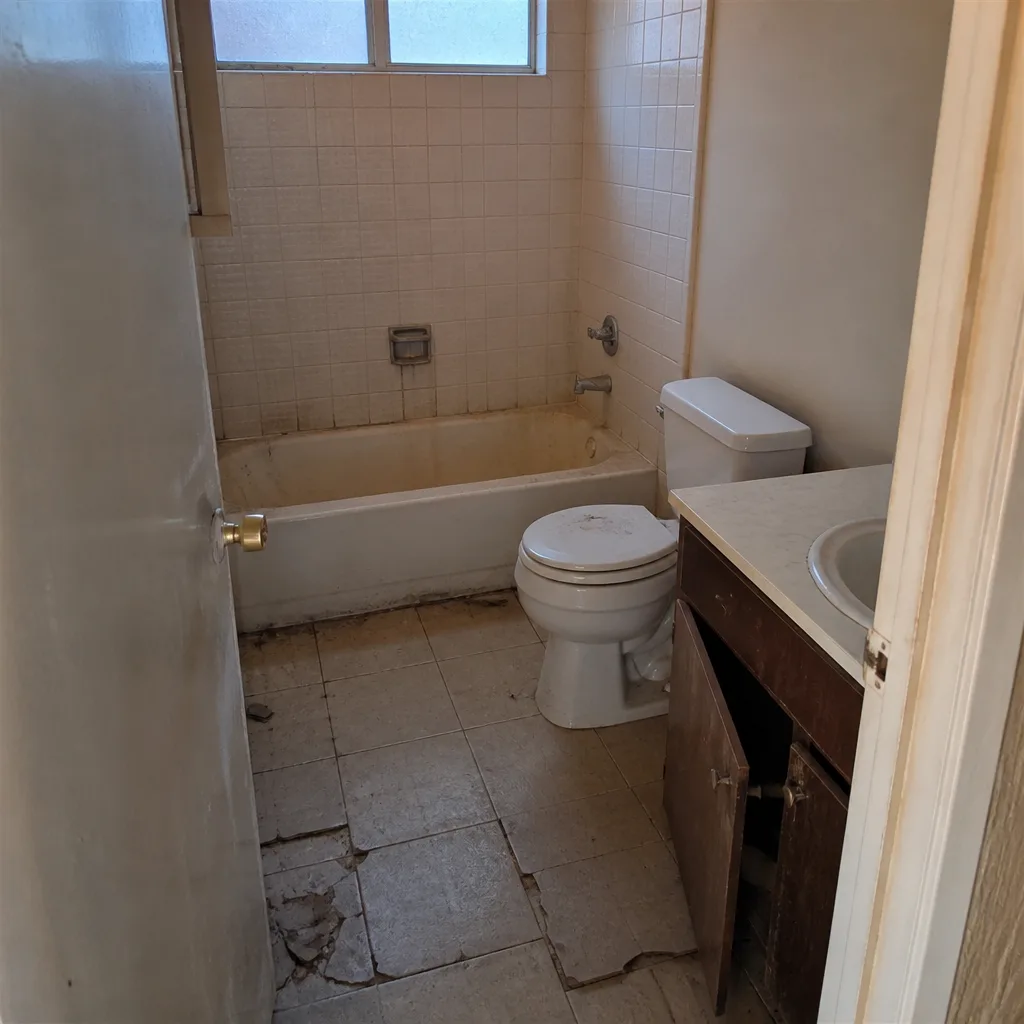
See the difference
 Before
 After
 Before
 After
 Before
 After
When to Call a Professional
Call a professional when you see water staining on a ceiling, a crack that’s widening between inspections, a breaker that trips repeatedly, a smell of burning at an outlet or panel, a door that’s shifted enough to be out of square, or any failure in a component that’s still under a written guarantee. Don’t attempt a repair on a guaranteed item; call the contractor and let them correct it. Call immediately for anything involving an electrical panel, a gas line, or standing water near wiring. Those are not wait-and-see situations.
For a professional walkthrough of your post-remodel maintenance items, Bradford Remodeling Co Winchester offers free estimates in Winchester. Call (844) 972-4839 to schedule a visit. A live person answers, not a voicemail, and we’ll put any recommended work in writing before a tool comes out.
Frequently Asked Questions

In Winchester’s dry climate, plan on inspecting exterior caulk every six months and fully re-caulking sun-exposed joints every two to three years. Standard caulk loses flexibility fast under high heat and low humidity, and a failed bead lets water in during the rare winter storm. Check it before summer and again before winter, and call (844) 972-4839 if you want a professional inspection with a written cost in hand.
At 12 months, check for widening drywall cracks, doors out of square, water staining under the addition tie-in, attic duct joints, GFCI function, and any change in plumbing pressure or water bills. The 12-month mark is also usually the end of the first-year guarantee window, so document what you find with dated photos. Call (844) 972-4839 to schedule a free estimate if anything needs correction.
Minor homeowner maintenance like replacing caulk, re-sanding paver joints, or cleaning gutters won’t void a guarantee. Touching a component the contractor installed, like a shower assembly, electrical work, or a roofing detail, can void coverage on that component. When in doubt, call first. Bradford’s 365-Day Done Right Promise returns and corrects covered work at no charge, and that’s simpler than a DIY repair that costs you the guarantee.
A hairline crack at a corner or above a door frame is usually cosmetic settling and worth monitoring. A crack wider than a credit card, one that grows between checks, or one that follows a diagonal from a window or door corner is worth a professional look. Take dated photos and compare. Call (844) 972-4839 for a free estimate if the crack is growing.
Yes. High desert conditions, low humidity, and large daily temperature swings accelerate caulk shrinkage, stucco cracking, and HVAC duct separation compared with humid climates. A caulk bead rated for three years near the coast may need replacement in 12 to 18 months on a sun-exposed wall in Winchester. Plan the exterior items first and the interior items second.
Keep the written scope of work, the written price, final invoice, product specification sheets, manufacturer warranty documents, a dated maintenance log with photos, and invoices for any professional service. Those documents prove you maintained the work as required. If your project is with Bradford Remodeling Co Winchester, the written guarantee and documented scope are handed to you at job close, so the folder is complete from day one.
The Bottom Line
Your home is a working system after a remodel, and the parts wear at different rates. In Winchester, the exterior items come first: inspect caulk every six months, re-seal sun-exposed joints every two to three years, and check the roofing tie-in at every heavy rain. Interior items follow the calendar: doors, drywall, GFCI outlets, plumbing under sinks, and attic duct joints at 6 and 12 months. Document everything with dated photos, keep your written scope and guarantee in one place, and leave electrical, roofing, plumbing, and structural work to a professional. Ten minutes a year, done consistently, is the difference between a house that holds and one that keeps you on the phone.
For a maintenance walkthrough or a new project planned with the same discipline, call Bradford Remodeling Co Winchester at (844) 972-4839 for a free estimate. We’ll give you a written price before any work starts and stand behind it for a full year. If you’re thinking about a kitchen, our Kitchen Remodeling in Winchester page covers how a documented scope and a written guarantee come together on a project.
Written by the team at Bradford Remodeling Co Winchester.