Last updated November 18, 2026








Free written scope consultation - allowances, timeline, and change-order rules on paper before a single trade is scheduled
Home Remodeling Troubleshooting: Common Problems and How to Fix Them
When a homeowner says the new flooring is uneven and the contractor says it’s within tolerance, one of them is right. But without a written spec naming the TCNA or ANSI flatness standard, neither can prove it. That’s the real failure point in most remodeling disputes, and it has nothing to do with whether the work got done. It’s about whether “done” was ever defined. In Winchester, where the dry air and big seasonal temperature swings push materials hard, the gap between what a homeowner expects and what the crew built shows up fast. This guide covers the five most common defects we see, the actual industry benchmarks behind them, and where your recourse sits when a fix stalls.
Quick Answer
Most home remodeling problems trace back to a missing written spec, not bad craftsmanship alone. Fix paint adhesion, floor flatness, door and window operation, grout and caulk failure, and trim gaps by first identifying the applicable standard (ANSI A108, TCNA flatness specs, manufacturer cure times), then requiring the contractor to correct the work against that benchmark in writing. In Winchester, low humidity and rapid temperature shifts accelerate caulk failure and wood movement, so those two categories account for a large share of callbacks.
Styles & brands we work with
- Kitchen remodeling
- Bathroom remodeling
- Home additions & ADU
- Roofing
- Windows & doors
- Driveway & pavers
- Fence
Table of Contents
- Why Most Remodeling Disputes Are a Standards Problem
- Defect 1: Paint Adhesion Failure
- Defect 2: Floor Flatness Issues
- Defect 3: Doors and Windows That Won’t Operate Right
- Defect 4: Grout and Caulk Failure
- Defect 5: Trim and Millwork Gaps
- “It’ll Settle” – When That’s True and When It’s a Deflection
- Substantial Completion and the Punchlist
- Your Recourse in Nevada: Licensing Board, Bond Claims, Documentation
Why Most Remodeling Disputes Are a Standards Problem
Ask a homeowner what went wrong on a remodel and you’ll hear “it’s not what I agreed to.” Ask the contractor and you’ll hear “it meets code.” Both statements can be true at once, because code is a floor for safety, not a ceiling for finish quality. The gap between them is where trouble lives.
Contractors work to published tolerances. Tile flatness is governed by ANSI A108 and TCNA methods. Paint finish quality is defined by sheen uniformity and adhesion, not by whether you can see a brush stroke from across the room under raking light. When those benchmarks are written into the scope before work starts, a homeowner has something to point at. When they aren’t, every complaint becomes an opinion and every opinion becomes a negotiation.
That’s the core of how we operate in Winchester. A written price before work starts sounds like a pricing promise. It’s also a scope promise. The number and the standard sit in the same document, and the document is what carries the 365-Day Done Right Promise. If the work fails within that year, we come back and correct it at no charge. That’s a written guarantee, not a verbal handshake.
Here’s the practical takeaway: before you start a remodel anywhere in the Winchester valley, get three things in writing – the flatness tolerance for any tile or flooring, the paint product and sheen spec by name, and the manufacturer cure times for caulk and grout. Those three items resolve a surprising share of disputes before they start.
Defect 1: Paint Adhesion Failure
Paint that peels, blisters, or flakes within months of a job close usually comes down to surface prep and moisture, not the paint itself. In Winchester, the dry climate creates its own problem: we regularly see exterior paint fail on the south and west elevations because afternoon sun bakes the substrate and drives off the moisture the paint needed to cure properly. Interior failures cluster around bathrooms where a bath fan was undersized or vented into the attic.
What to check, in order:
- Substrate moisture. New drywall holds water. Painting over joint compound before it’s dry traps moisture and causes peeling.
- Prep and primer. Bare wood, patched drywall, and glossy surfaces all need a specific primer. Skipping it is a defect, not a shortcut.
- Adhesion test. Press a strip of tape to a dry patch and pull. If paint lifts with the tape, adhesion failed.
- Moisture source. If a bath fan isn’t moving air, no paint will hold. Fix the source before repainting.
Once adhesion fails, spot repair rarely holds. The correct fix is to scrape or sand back to sound substrate, prime, and repaint the full wall plane – not a touch-up patch. Sheen variation shows under window light, and a partial repaint will read as a defect even when the paint is sound. If the failure is inside a guarantee window, that repaint is the contractor’s responsibility.
Defect 2: Floor Flatness Issues
An uneven floor is the most common complaint we hear, and it’s also the one most often misdiagnosed. There are two different problems: flatness and level. Level means the floor sits on a true horizontal plane. Flatness means there are no dips or humps that would make tile wobble or laminate rock. Most flooring specs care about flatness, not level, and that distinction matters when you’re holding a contractor to a standard.
TCNA and ANSI A108 reference flatness tolerances – typically no more than 1/4 inch in 10 feet, or 1/16 inch in 12 inches for large-format tile. Before you argue about a floor, decide which benchmark applies to your product:
- Tile: TCNA flatness spec governs. Large-format tile needs an even tighter tolerance than smaller tile.
- Hardwood and laminate: Manufacturer spec, usually a flatness tolerance rather than level.
- Luxury vinyl plank: Manufacturer spec is strict – most reject more than 1/8 inch in 10 feet.
- Level: Rarely required unless you specified it or the product requires it.
The fix depends on where the low spots are. A self-leveling underlayment corrects a slab. A plywood build-up or float corrects a wood subfloor. Either is a real cost, so get the flatness spec in the scope. In Winchester we get a lot of calls about flooring in newer construction where the slab wasn’t flat to begin with. The flooring contractor can’t fix what the framer left behind – but a written spec tells everybody whose problem it is.
Defect 3: Doors and Windows That Won’t Operate Right
Doors that stick, windows that won’t latch, and gaps that appear after framing changes almost always point to structural movement, not hardware. When an interior wall is opened up, a header gets added, or a load path changes, the framing settles into its new configuration. Sometimes that’s normal. Sometimes it’s a defect. The difference is whether the opening was framed, shimmed, and fastened to spec in the first place.
Run this sequence before you call anyone:
- Check the reveal. The gap between the door slab and the jamb should be even on all sides. Uneven means the frame is out of square.
- Open and close the window. A window that latches smoothly through the full travel is fine. One that rubs, drags, or needs a shove is not.
- Look at the hinge screws. Loose or stripped screws in a door hinge means the frame has moved or the screws missed framing.
- Check the weatherstrip and sill. Daylight or air leaks at a window mean the install or the rough opening has a problem.
The fix can be as simple as re-shimming a hinge or as involved as re-framing an opening. In Winchester we see a lot of window calls in late spring, right after the first big temperature swings, because thermal movement exposes an installation that was already marginal. Windows installed without proper flashing and backer also show up at the first cold snap. If the install itself was wrong, that’s warranty territory, and it’s why we document the window brand and flashing method on every scope. Therma-Tru and similar brands back their products with manufacturer specs and warranties that sit alongside our own guarantee.
Defect 4: Grout and Caulk Failure
Grout cracking and caulk pulling away from a joint are the two most predictable callbacks in any bathroom or kitchen, and both are worse in Winchester’s climate than in coastal markets. Indoor air here runs dry. The bathroom runs wet. Joints move back and forth through that cycle, and caulk with no movement capability fails first. Grout on a floor with any deflection fails next.
Common causes, in order of frequency:
- Wrong product: Rigid grout in a joint that needs a flexible caulk. Corners, plane changes, and the seam between tile and a tub or shower pan should always be caulk, never grout.
- Cure time ignored: Caulk applied to a wet substrate or over uncured grout fails early. Manufacturer cure times exist for a reason.
- Substrate movement: A floor with lateral deflection will crack grout no matter how good the installer is. Fix the structure, not the grout.
- No backer rod: Caulk applied into a joint with no backer rod has nothing to bond across, so it peels from one side.
The correct fix: cut out the failed material fully, dry the joint, install backer rod where the gap warrants it, and re-caulk with a product rated for the joint’s movement. Re-grouting over failed grout doesn’t hold. For renovated bathrooms, the fix is often worth a full re-set on the affected wall rather than a spot repair, because the rest of the joint is on the same clock. If you’re weighing that against a full bathroom remodel, our team can walk you through the scope and put a written price in front of you before anything gets torn out – see our bathroom remodeling in Winchester services for the full picture.
Defect 5: Trim and Millwork Gaps
Gaps at baseboard corners, between casing and wall, or between a door jamb and the drywall read as sloppy work, and sometimes they are. But the honest answer is that walls are rarely flat, and millwork has to accommodate. A typical track-home wall in Winchester can be off plumb by a quarter inch over an eight-foot run. Trim installers either scribe the material to fit or caulk the gap. Both are legitimate methods – if the spec says which to use and at what gap width.
What separates a defect from normal construction:
- Gap at the top of baseboard: Should be caulked tight. If the gap is wide enough to see the wall color, it’s out of tolerance.
- Corner separation: Coped or mitered joints that separate within weeks mean the material wasn’t acclimated or the fasteners didn’t grab.
- Wood expansion and contraction: Solid wood trim in a dry, heated house will shrink slightly in the first heating season. Minor caulk-line cracks are expected. Wide gaps are not.
- Door head casing: Gaps here suggest the rough opening is out of square or the casing was cut short.
Fixing millwork gaps is a finish problem, not a structural one – re-caulk, re-nail, or in severe cases replace the affected piece. What matters is that the contractor owns the fix inside the guarantee window. On any whole-home project, that’s the standard every piece of millwork should be held to at closeout, not a courtesy you have to argue for. For a look at how whole-home scope gets documented on our side, the Bradford Remodeling Co Winchester home page lays out the approach.
“It’ll Settle” – When That’s True and When It’s a Deflection
“It’ll settle” is the most overused sentence in remodeling, and both the honest contractor and the corner-cutter will say it. Here’s how to tell which one you’re talking to.
Some movement is genuinely normal:
- New wood framing: Green or damp lumber will shrink and check in the first heating season. Minor cracks in drywall seams and caulk lines are expected during that window.
- Seasonal thermal movement: Doors and windows often operate differently in July than in January, especially in Winchester’s dry heat. That’s physics, not a defect.
- Concrete slab curing: Hairline cracks in a new slab are normal. Cracks wider than a hairline, or vertical displacement, are not.
Movement that is not normal, no matter what anyone tells you:
- Doors that won’t latch after the first 30 days with no impact damage
- Tile that sounds hollow when tapped
- Grout cracking along a straight line the full length of a floor, repeatedly
- Gaps wider than 1/8 inch at trim, walls, or ceilings
- Floor flatness out of spec after a full cure time has passed
The rule of thumb: settling is a legitimate explanation for movement inside the first year, only in the specific areas where the product or framing moves. If the response is “it’ll settle” and the problem is outside that category, or the same explanation is still coming in year two, you’ve got a defect dressed up as physics. In Winchester, dry heat and big temperature swings mean the “settle” window is real but short. If it hasn’t happened within the manufacturer’s cure time, it isn’t going to.
Substantial Completion and the Punchlist
Substantial completion is a legal concept with teeth. It’s the point in a project when the work is usable for its intended purpose and the owner can take possession. Contractors are entitled to final payment at substantial completion. Many homeowners assume that final payment means the job is done and their punchlist is optional. It doesn’t.
Here’s the standard structure, whether or not your contract spells it out:
- Substantial completion triggers the final payment window. A small holdback, often 5-10%, is typically held for punchlist items. That final payment isn’t leverage to withhold over cosmetic disagreements – it’s for the specific written items still open.
- The punchlist is a contractual obligation, not a favor. Once you’ve signed off on substantial completion with a written punchlist, the contractor is still obligated to complete it. Walk the site with the crew chief, write every item down, and both parties keep a copy.
- Approval happens when the punchlist is closed. Not before. If the punchlist is long, negotiate a final inspection date into the sign-off.
- Your guarantee clock starts at substantial completion. On our projects the 365-Day Done Right Promise is a written guarantee attached to that sign-off, not a verbal promise thrown into a handshake.
What a squared-away job close looks like: clean site, documented scope, and a signed written guarantee in your hand. If a contractor calls the job done and hands you nothing but a bill, the paperwork gap is the first thing to fix. In Winchester, the homeowner’s contract is enforceable against the contractor’s license and bond, so the paper trail is your protection.
Your Recourse in Nevada: Licensing Board, Bond Claims, Documentation
If a contractor won’t fix a defect and the guarantee has gone verbal, Nevada gives homeowners two concrete paths: a licensing board complaint and a bond claim. Both require written documentation, and neither works without it.
The documentation you need to have collected from day one:
- The written contract with the scope, the price, and the finish standards
- Every change order, signed, with its own price and scope
- Photos of the defect, taken with a date stamp, from at least two angles
- The punchlist signed at substantial completion
- Correspondence – emails, text threads, written notices – showing you raised the issue
The licensing path runs through the Nevada State Contractors Board, which handles complaints against licensed contractors. It responds to formal complaints with documented evidence of defective work. The bond path moves through the surety that issued the contractor’s license bond. That process also requires written proof that the work falls outside the agreed standard. Neither process compensates for the absence of a written spec, because neither can enforce a standard that was never agreed to.
The lesson runs in the other direction too. When a contractor gives you the written price, the documented scope, and the written guarantee before a tool comes out, you’re starting from a position of leverage. That’s the reasoning behind The Garrison Standard, and it’s why we don’t start work without it. For the homeowner wondering when to replace the crew that won’t do this, that’s the answer – before the first permit is pulled.
Common Mistakes to Avoid
- Starting without a written scope. A verbal “we’ll fix anything” is unenforceable. Get the standards named in writing before the first day.
- Treating substantial completion as the end of the job. Sign off on the punchlist, hold the final payment for it, and confirm the guarantee clock start date.
- Accepting “it’ll settle” past the first heating season. In Winchester’s dry climate, movement that’s real resolves within the product’s cure time. Anything after that is a defect.
- Repainting a spot instead of the full wall plane. Sheen shows. Partial repaints read as defects even when the paint itself is fine.
- Caulking over failed caulk. New material won’t bond to old, and the joint fails again inside the same year.
- Skipping the moisture check before repainting a bathroom. If the source is the bath fan, no paint product holds.
- Not documenting the defect the day you find it. Both Nevada recourse paths require dated evidence, and dated evidence gets harder to assemble after the punchlist is signed.
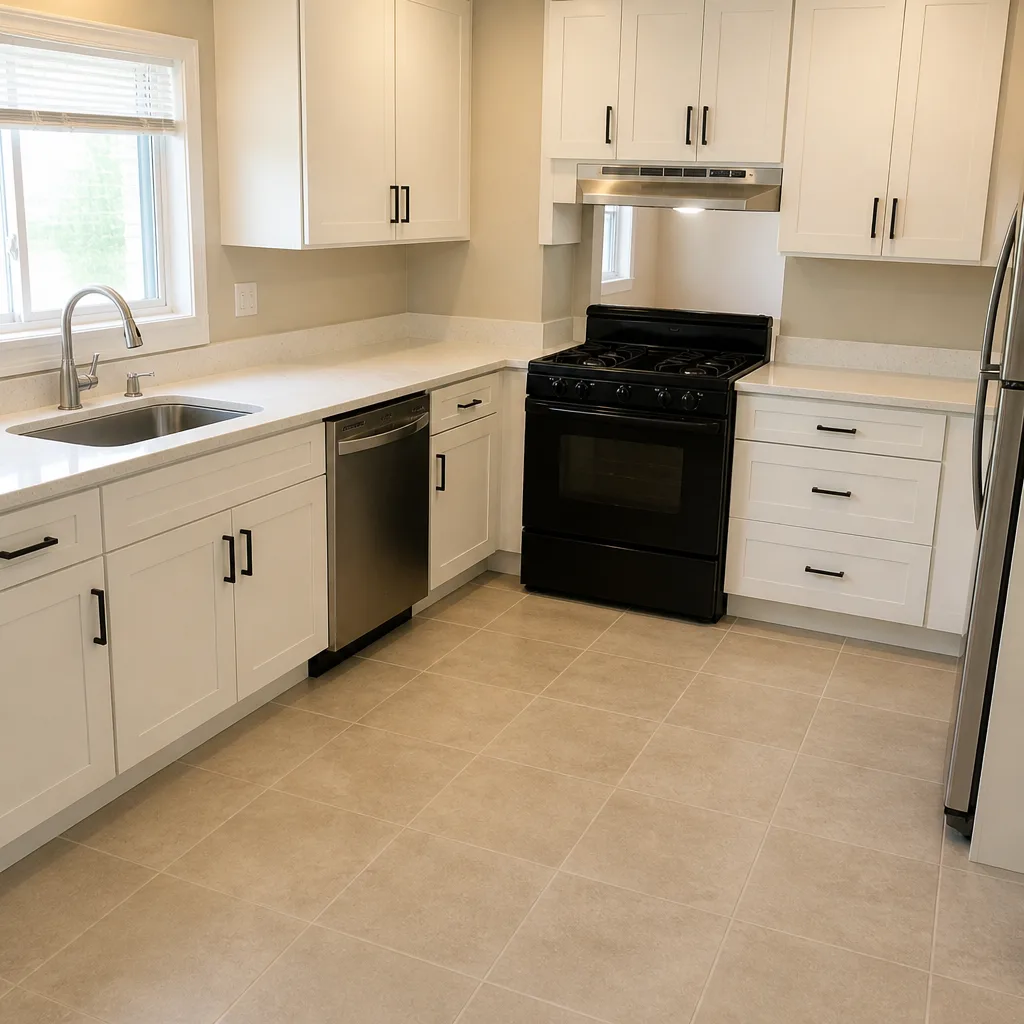
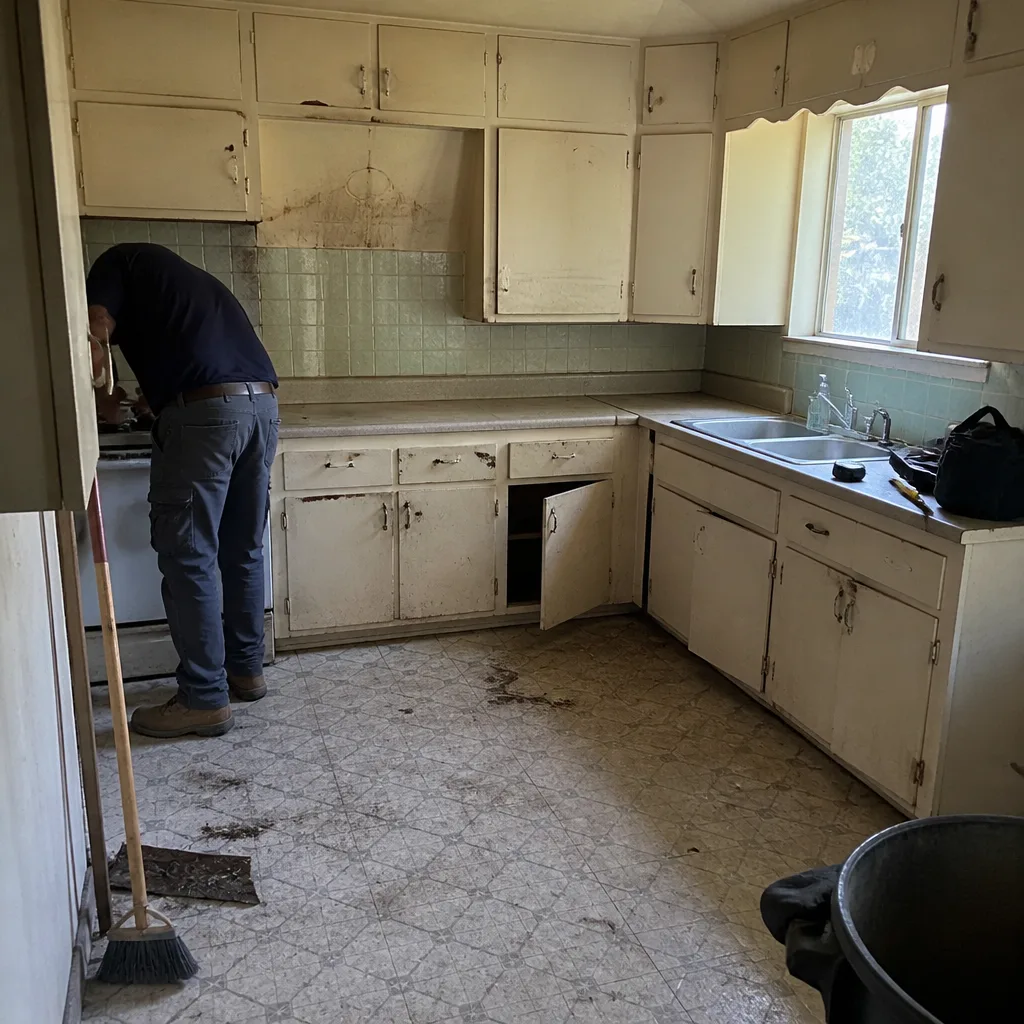
See the difference
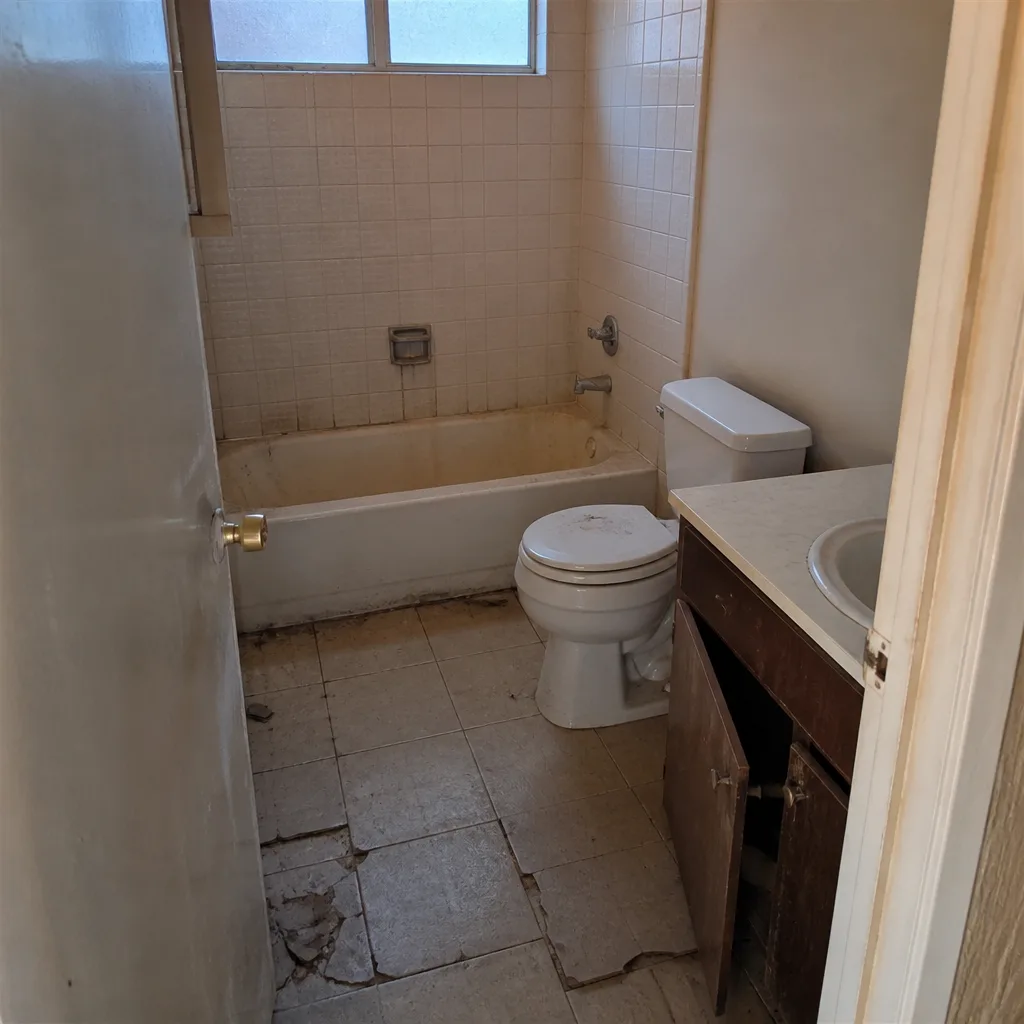 Before
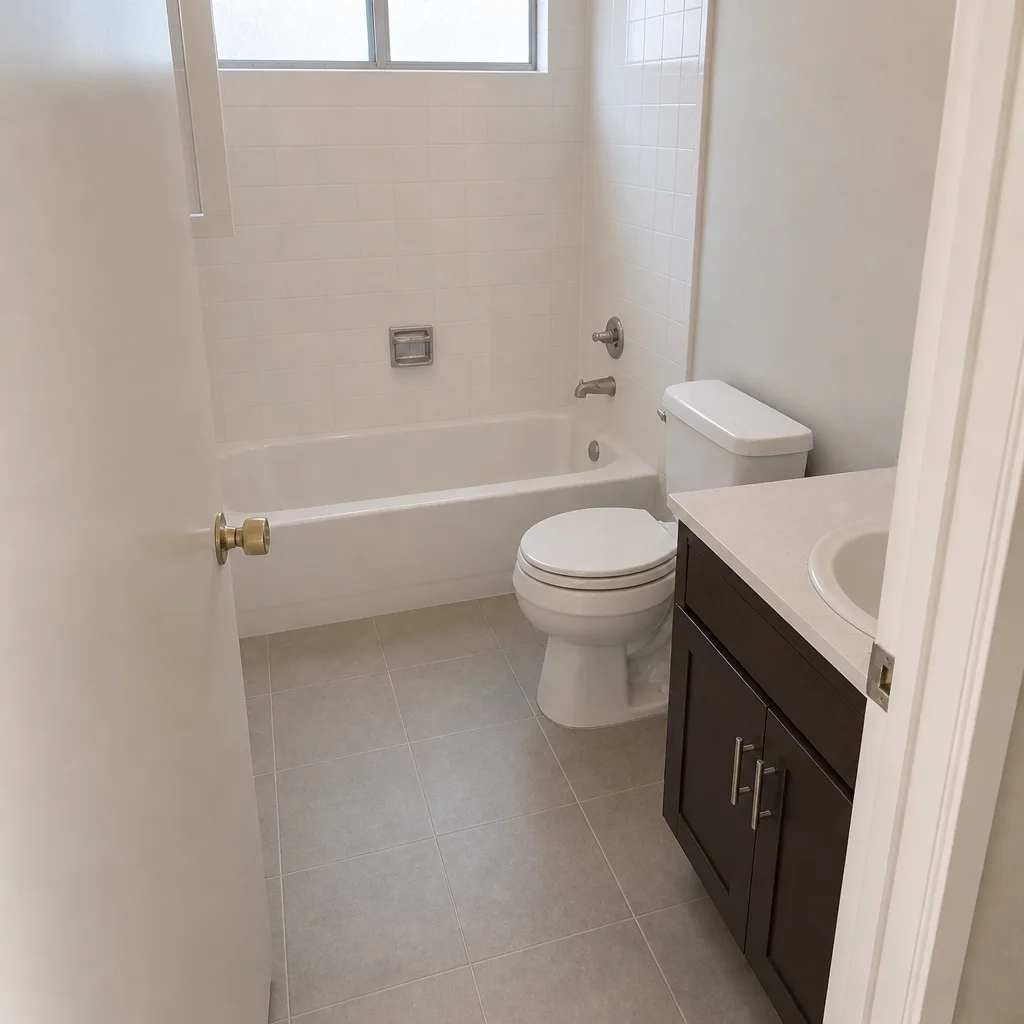 After
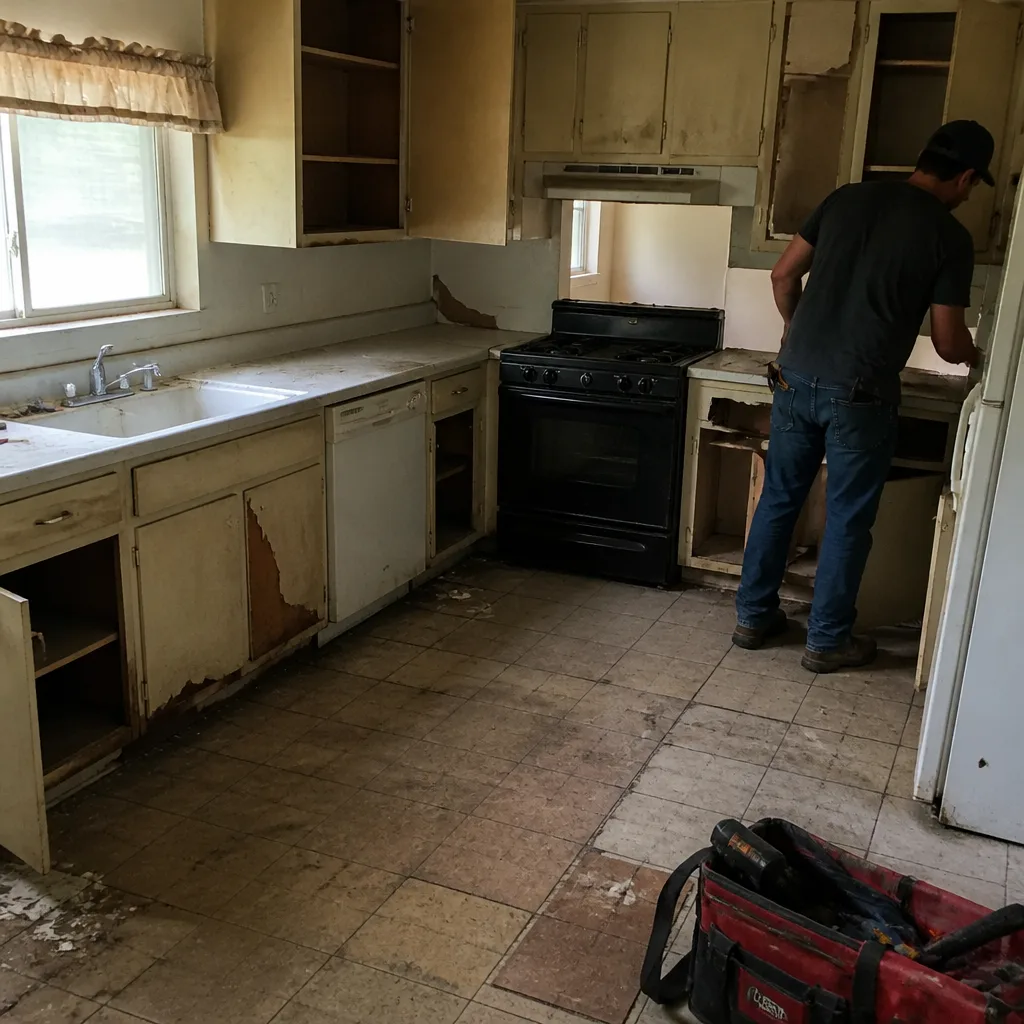 Before
 After
 Before
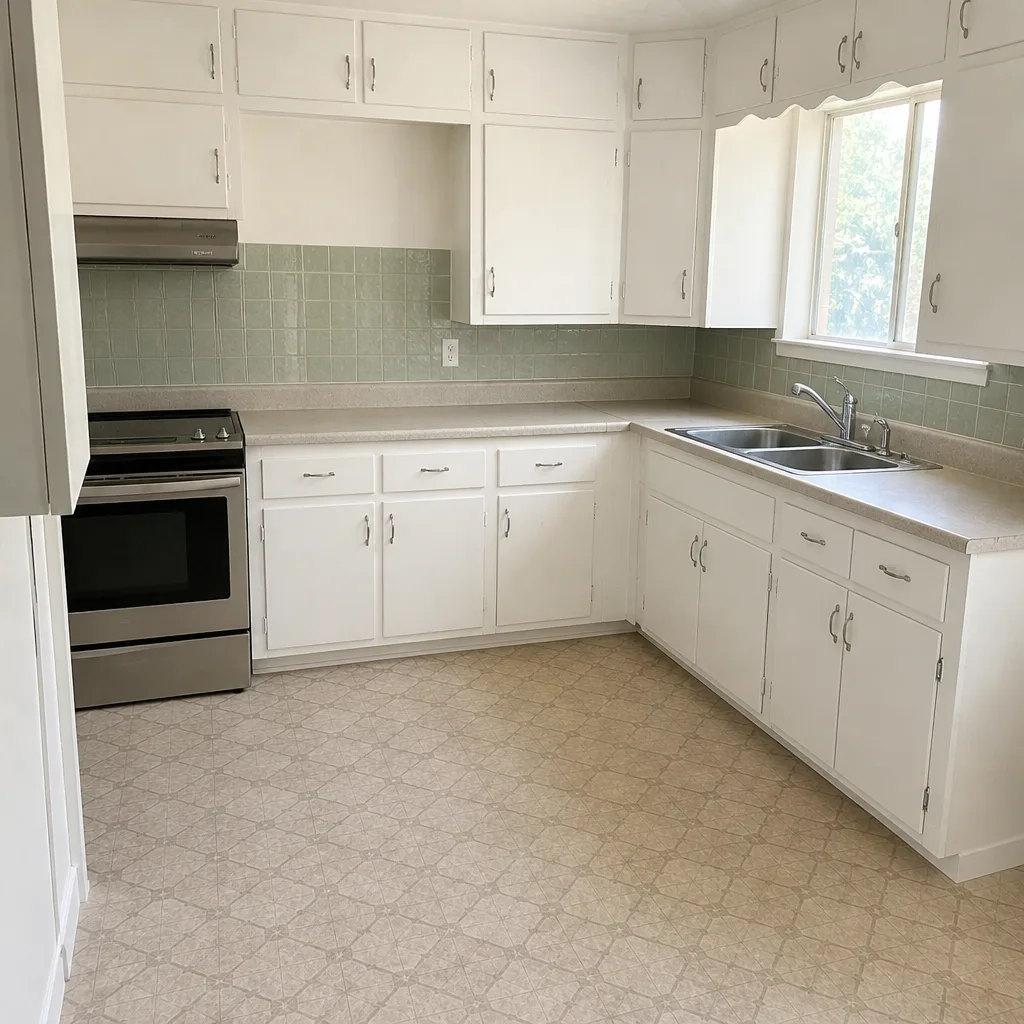 After
When to Call a Professional
Some of these defects are homeowner-fixable. Caulking a plane change, touching up a trim gap, re-hanging a door on a misfit hinge – those are Saturday morning jobs. The ones that call for a trained crew are the ones with structural or compliance stakes: paint adhesion failure that keeps returning after a repaint, floor flatness out of TCNA spec, door and window operation that follows a framing change, grout failure across a full floor, and any defect where the guarantee should be triggered. Those need a licensed contractor who can correct the work against a named standard and put the fix in writing. Bradford Remodeling Co Winchester offers free estimates in Winchester – call (844) 972-4839 and we’ll walk your job with you.
Frequently Asked Questions
Floor flatness and paint adhesion failure top the list, in that order. Across our Winchester jobs, uneven flooring accounts for a large share of callbacks, and paint failures cluster around wet areas and sun-baked exterior elevations. Both are diagnosable against a named standard – TCNA flatness for floors, product adhesion and primer spec for paint – but only if those standards were written into the original scope.
Measure flatness, not level. TCNA and ANSI A108 typically set the tolerance at 1/4 inch in 10 feet for most tile, and tighter for large-format. A 10-foot straightedge and a tape measure will show you where you stand in five minutes. If you’re over the tolerance, the fix is self-leveling underlayment or a subfloor build-up, not a flooring rip-out. Call (844) 972-4839 for a free estimate if you want a second set of eyes on it.
The legitimate settling window is the first heating season and the manufacturer’s cure time, whichever is longer – typically 6 to 12 months. After that, movement doesn’t stop being movement, it becomes a defect. If a doorway still won’t latch, or grout is still cracking on a straight line after that window, the settling explanation no longer holds. Call (844) 972-4839 if you’re in that spot and want a written answer.
At substantial completion, yes – the contractor is entitled to most of the final payment. But a typical holdback of 5-10% covers the open punchlist items, and the punchlist isn’t optional just because substantial completion happened. Sign a written punchlist at the walk-through, keep a copy, and confirm the guarantee clock start date. Call (844) 972-4839 if you want a written price and guarantee on the punchlist work before you sign.
Permits are required for structural, electrical, plumbing, and mechanical changes in Winchester, and they matter a great deal on a defect claim – a permit history establishes who did the work and when. If work was done without a permit, the licensing board complaint path gets harder. Ask your contractor to pull the permits before work starts, and keep copies of the inspection cards. When we run a job, every permit is pulled and every inspection is documented on the scope. Call (844) 972-4839 to schedule a free estimate.
Our 365-Day Done Right Promise covers all completed work for a full year from substantial completion. If the work fails within that window – paint that peels, grout that cracks on a defect line, trim that separates outside tolerance, flooring out of spec – we return and correct it at no charge. It’s a written guarantee, not a verbal one, and it’s backed by our position inside the Garrison Partners family, where every location is held to The Garrison Standard. Call (844) 972-4839 for a free estimate and the written scope that goes with it.
The Bottom Line
Most remodeling disputes aren’t about whether the work happened. They’re about whether it met a standard, and homeowners without a written spec have no standard to enforce. Paint adhesion, floor flatness, door and window operation, grout and caulk failure, and trim gaps all have published benchmarks – ANSI A108, TCNA flatness specs, manufacturer cure times. Name them in the scope, hold final payment to a written punchlist, and document everything. In Winchester, where dry heat accelerates caulk failure and thermal movement, that paper trail is what separates a normal defect call from a fight. Call (844) 972-4839 for a free estimate, a written price, and the full-year guarantee in writing – before the first tool comes out.
Written by the team at Bradford Remodeling Co Winchester.