Last updated November 18, 2026
Free written scope consultation - allowances, timeline, and change-order rules on paper before a single trade is scheduled
Construction Cost Breakdown: The Winchester Homeowner’s Reference for 2026
Two bids land on your table for the same kitchen. One reads $60,000. The other reads $85,000. The cabinets are the same line, the layout is the same, the scope sheet looks identical at a glance. They are not the same bid. The difference usually lives in the allowance lines, in whether demolition and hauling are included or excluded, and in how much material-volatility buffer each contractor buried in the numbers. In Winchester, where remodeling demand has stayed hot and material pricing has kept moving, those buried lines are wider than they’ve been in years. This guide breaks down what each line item actually costs by trade, so you can tell a fair bid from a padded one.
Quick Answer
A realistic 2026 construction budget in Winchester runs roughly $9,500 to $14,500 for a bathroom remodel, $28,000 to $55,000 for a mid-grade kitchen, and $85,000 to $200,000+ for a whole-home remodel, depending on scope and finish level. Labor, permits, and insurance should total 30% to 45% of a typical project, and any bid with a contingency line above 15% or allowances you can’t trace to a specific product needs a hard second look.
Styles & brands we work with
- Kitchen remodeling
- Bathroom remodeling
- Home additions & ADU
- Roofing
- Windows & doors
- Driveway & pavers
- Fence
Table of Contents
- Labor Rates by Trade in Winchester for 2026
- How to Read an Allowance Line in a Bid
- Material Volatility Buffers: Legitimate or Padding?
- The Real Cost of Permits, Inspections, and Insurance
- Cost Ranges by Project Category
- How to Compare Bids With Different Scope Inclusions
- Common Mistakes to Avoid
- Frequently Asked Questions
Labor Rates by Trade in Winchester for 2026
Labor is the line most homeowners under-read. In the Las Vegas valley, labor carries a premium over national averages because the trades compete with steady commercial and hospitality work, and the summer heat pushes schedules into earlier morning starts and shorter productive windows. That shows up in the hourly line. Here’s what we’re seeing in Winchester right now, rough numbers for residential remodel work:
- Framing: $65 to $95 per hour, or $12 to $20 per square foot for a standard partition or addition.
- Electrical: $80 to $120 per hour, or $120 to $180 per device for new circuits, outlets, and switches.
- Plumbing: $85 to $130 per hour, or $300 to $900 per fixture for rough-in and set, with slab work costing more.
- Tile: $12 to $28 per square foot installed, with large-format and mosaic work at the top of that band.
- Finish carpentry: $70 to $110 per hour, or $200 to $600 per door for trim, casing, and built-ins.
Those numbers assume licensed, insured trades working under a general contractor. If a bid comes in dramatically under this range, ask who is actually performing the work and whether that crew carries its own insurance. If it comes in dramatically over, ask what the line covers that the range doesn’t. The answer tells you whether you’re paying for overhead you want or overhead you don’t. Our own technicians have up to 22 years of experience in this market, which is one reason we can price Winchester jobs with confidence rather than padding the labor line against unknowns.
How to Read an Allowance Line in a Bid
An allowance line is a placeholder: a dollar figure the contractor sets aside for a product or finish that hasn’t been chosen yet. The trap is that once the number is set, the homeowner bears the overrun, and some bids set allowances artificially low to keep the headline total attractive. A tile allowance of $4 per square foot means you’re picking from builder-grade porcelain no matter how nice the design presentation looked. A $30 per square foot allowance means you’re picking from a real selection.
What an allowance line should obligate the contractor to provide:
- A named brand and product line at that dollar figure, so the number is traceable to something you can actually buy.
- A labor rate tied to that allowance, not a separate labor figure that shifts depending on which product you choose.
- A written overage rule, stating what happens if your chosen product exceeds the allowance and whether the contractor’s markup applies to the overage.
- A list of quantities, so nobody discovers mid-job that the allowance covered half the square footage.
When you see KraftMaid or Wellborn cabinetry named in an allowance line, that’s a good sign. It means the contractor is working from a documented product catalog with published specs, not a “builder-grade” abstraction. The same goes for naming Kohler or Moen in the plumbing allowances, and Cambria or Caesarstone in the counter lines.
Material Volatility Buffers: Legitimate or Padding?
Material prices have not sat still. Lumber has swung, cabinetry lead times have moved, and imported finishes have been subject to tariffs and freight surcharges off and on since 2020. A contractor who bids a 6-month job without any allowance for material movement is either taking on risk he doesn’t mention (and will recover when he changes the invoice) or pricing the job too thin to finish well.
So some buffer is honest. The question is how much and where it sits.
- Legitimate: a line item labeled “Material cost buffer” or “Price escalation allowance” of 3% to 8% of materials, disclosed on the bid, with a stated rule for how unused buffer returns to the homeowner.
- Legitimate: a fixed-price contract with a stated validity window (“price holds for 30 days”) that puts the volatility risk on the contractor after signing.
- Padding: a “Contingency” line of 15% or more on top of completed design decisions, with no statement of what it covers or where the remainder goes.
- Padding: allowance lines set artificially low, combined with a “Market adjustment” percentage applied to the final invoice.
In our experience, the honest structure is a written price that doesn’t move once you’ve signed, backed by a fair buffer inside the number rather than an asterisk attached to it. That’s the whole point of the Garrison Standard: every price goes in writing before a tool comes out. If a contractor can’t put the buffer’s rule on paper, the buffer is working for him, not you.
The Real Cost of Permits, Inspections, and Insurance
Permits, inspections, and general liability coverage are not incidentals. They’re line items that should total 5% to 10% of a typical Winchester remodel budget, and any bid that lumps them into “miscellaneous” or omits them altogether deserves a question. Clark County permit fees scale with valuation and scope, with structural and MEP work adding review cycles. Plan-check turnaround can run 2 to 4 weeks depending on scope complexity and current workload, and that time belongs in the schedule.
What should show up as a distinct line or line group:
- Permit fees: the actual Clark County charge, itemized, not a lump “permitting” charge with a markup hidden inside.
- Plan review and inspection time: often built into the labor line, but disclosed as a schedule item so you know the job stops for a city inspector, not lunch.
- General liability and workers’ comp: typically 3% to 8% of contract value, sometimes shown as an overhead percentage, sometimes in the labor rates. Ask which. Either is fine if it’s disclosed.
Insurance is not optional. A contractor with no general liability coverage is not a budget contractor; he’s an uninsured contractor whose problems become your problems. Any trade on your property should be able to provide a current certificate of insurance, and the general contractor should be willing to name the sub’s coverage in writing before work starts. If a bid lacks that, the price isn’t comparable no matter what the total reads.
Cost Ranges by Project Category
These are working numbers for Winchester in 2026, mid-grade finishes, licensed trades, permits and inspections included. They are not the cheapest possible number and they are not luxury. Use them to sense-check any bid.
- Bathroom remodel: $9,500 to $14,500 for a hall bath with new tile, vanity, plumbing fixture swap, and paint. $20,000 to $40,000 for a primary bath with a shower rebuild, custom tile, and moved plumbing.
- Kitchen remodel: $28,000 to $55,000 for a mid-grade kitchen with new cabinets, counter, appliances, and flooring. $60,000 to $110,000 for a larger kitchen with a reconfigured layout.
- Whole-home remodel: $85,000 to $200,000+ depending on square footage and how much of the structure moves.
- Room addition: $280 to $450 per square foot, permitted, connected to existing structure and mechanical systems.
- Flooring replacement: $8 to $18 per square foot installed for LVP or tile, more for natural stone or custom patterns.
Windows deserve their own line, and they’re worth naming manufacturers for. In Winchester, the sun exposure is brutal and the summer heat drives real cooling loads. Homeowners who shop windows hear brand names like CWS, ES Windows, and ECO Window Systems, and each has slightly different performance data for this climate. Tell your contractor what matters to you (UV rating, frame material, noise reduction), then get a written spec for the window on the bid, not a generic “energy-efficient windows” line. Our general contractor in Winchester work covers this kind of trade coordination, and it’s worth reading if you’re planning more than one scope at once.
How to Compare Bids With Different Scope Inclusions
The only way to compare two bids fairly is to normalize them: strip both down to the same line-item format, then add or subtract to make the scopes match. This is the sheet that stops an $85,000 bid from looking expensive because it happens to include the demo and the hauling that the $60,000 bid left out. Here’s the procedure:
- List every cost category on a single sheet: demo, framing, electrical, plumbing, HVAC, insulation, drywall, tile, cabinetry, counter, appliances, plumbing fixtures, lighting, paint, trim, flooring, windows, exterior, permits, inspections, insurance, cleanup, dumpsters, contingency.
- Mark what each bid covers in its column. Where a bid is silent, assume excluded unless the contractor confirms in writing.
- Add the missing scope to the low bid, using the same rates. A bid that’s $25,000 cheaper but excludes $28,000 of scope is the more expensive bid.
- Convert every allowance to a real product spec. If bid A allows $4 per square foot for tile and bid B allows $12, price both at $12.
- Read the contingency and buffer lines. A high contingency with no return rule is padding; a disclosed 5% buffer with a return rule is honest risk management.
- Read the guarantee terms. A bid with a written 365-day guarantee and a bid with a verbal promise are not the same product. Value the written one.
Run this on any two bids and the numbers will usually land within 10% of each other once scopes match. If they still don’t, one bid has a problem the contractor hasn’t named. Read our kitchen remodeling in Winchester guide if you want the scope sheet pre-built for your kitchen project.
See the difference
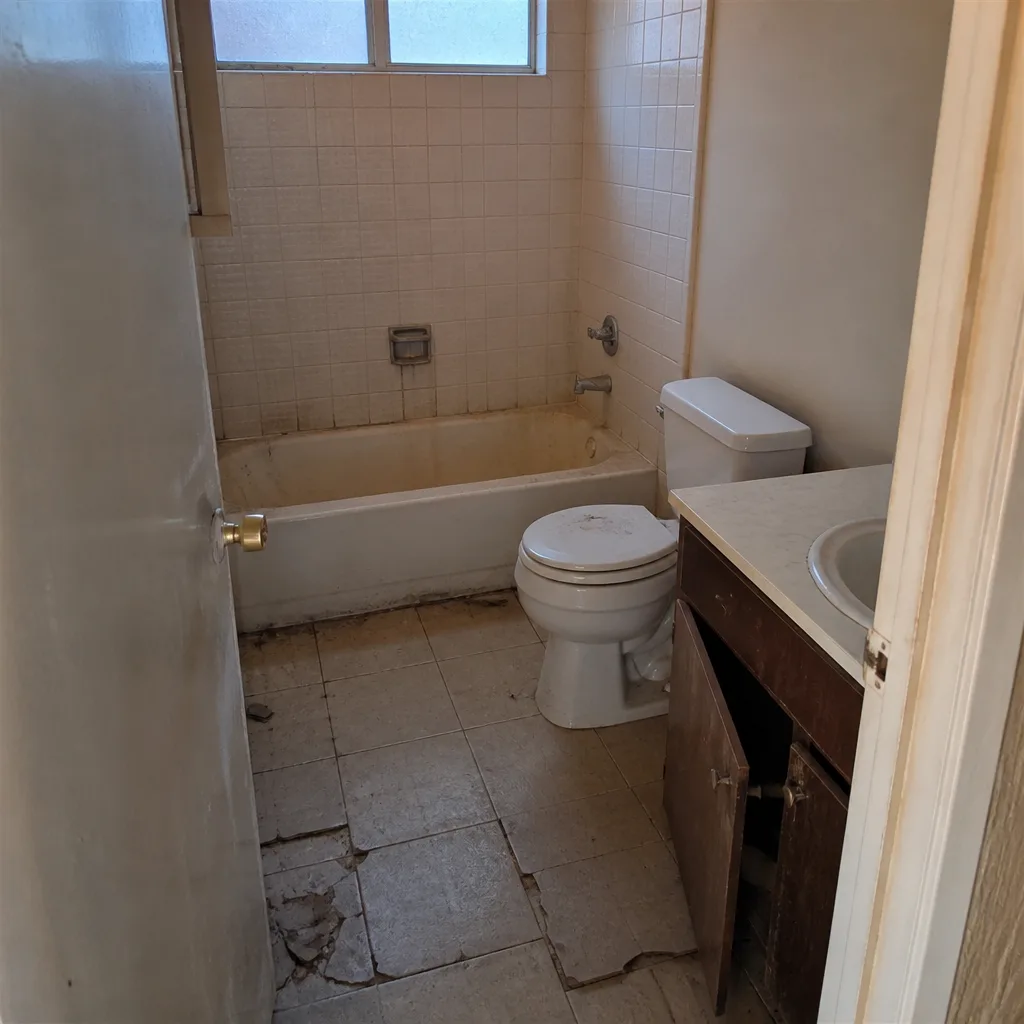 Before
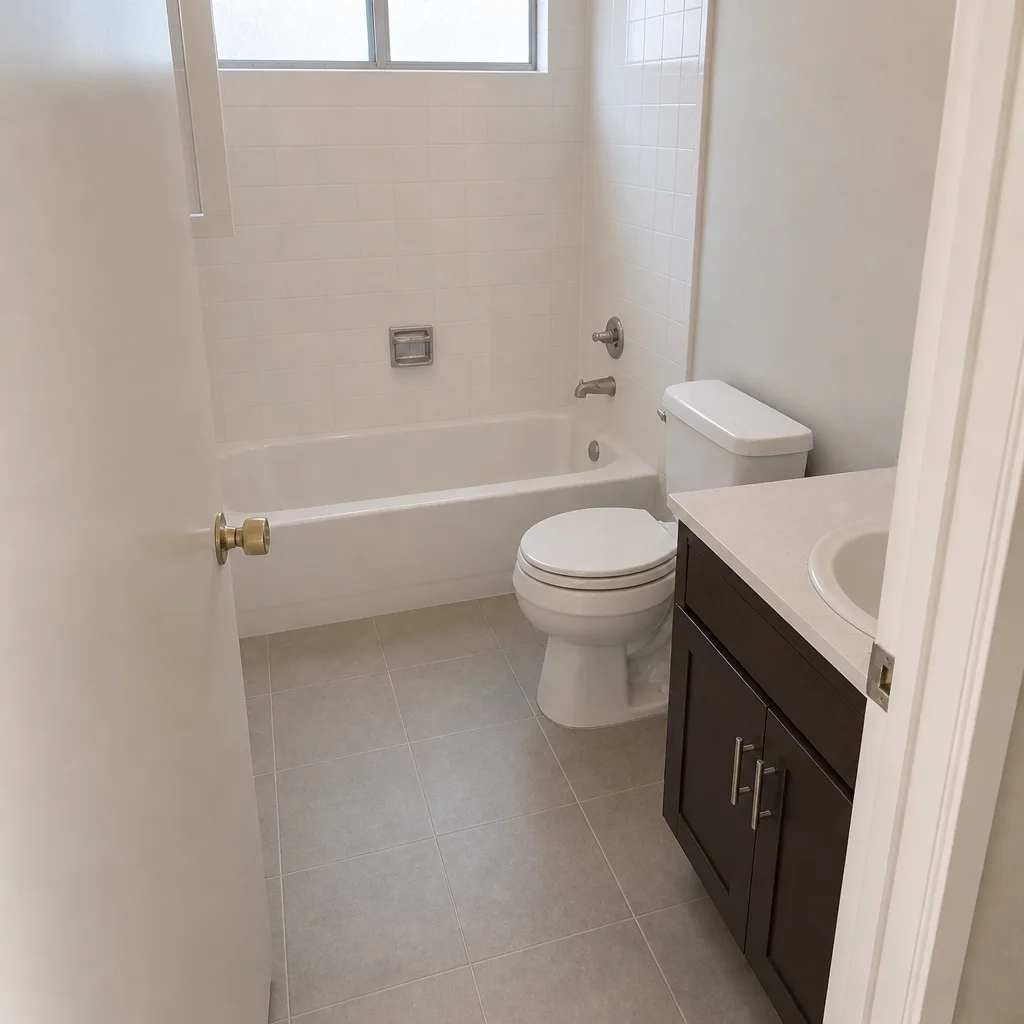 After
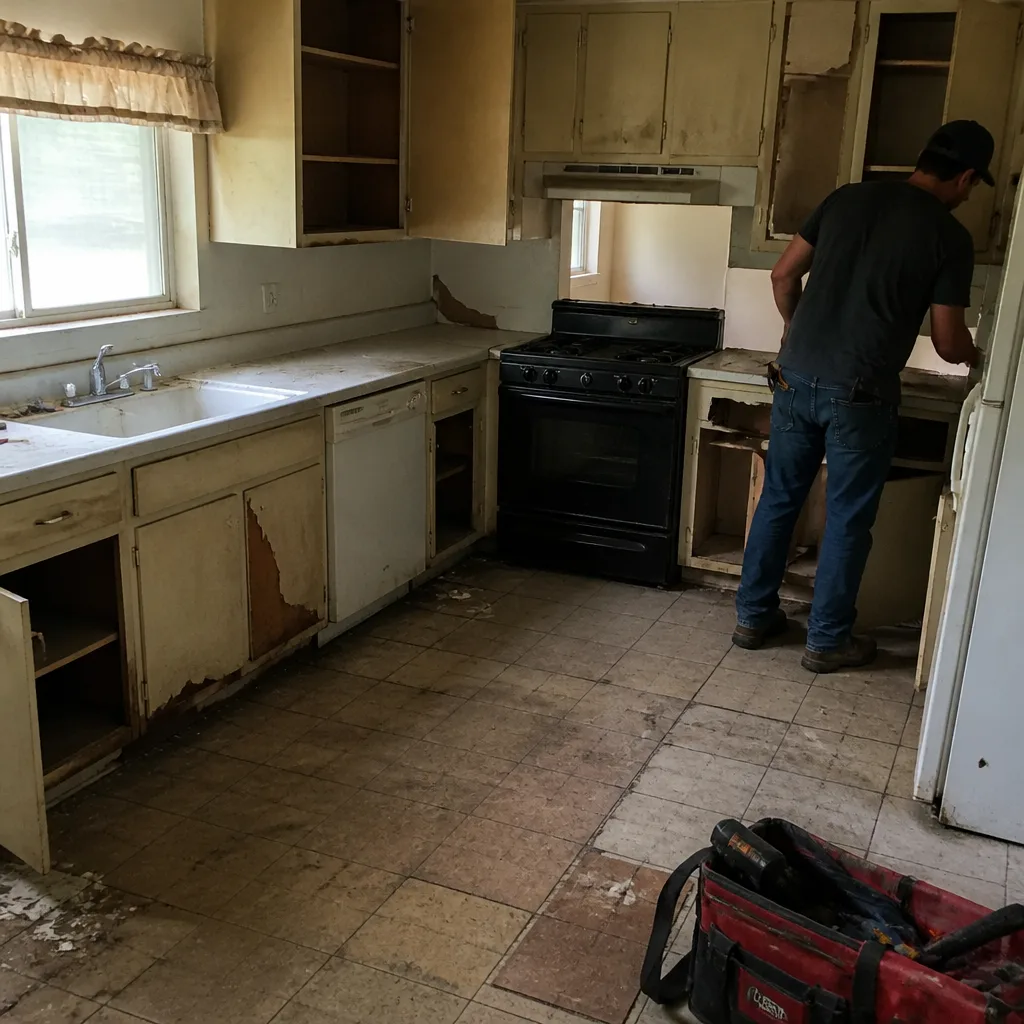 Before
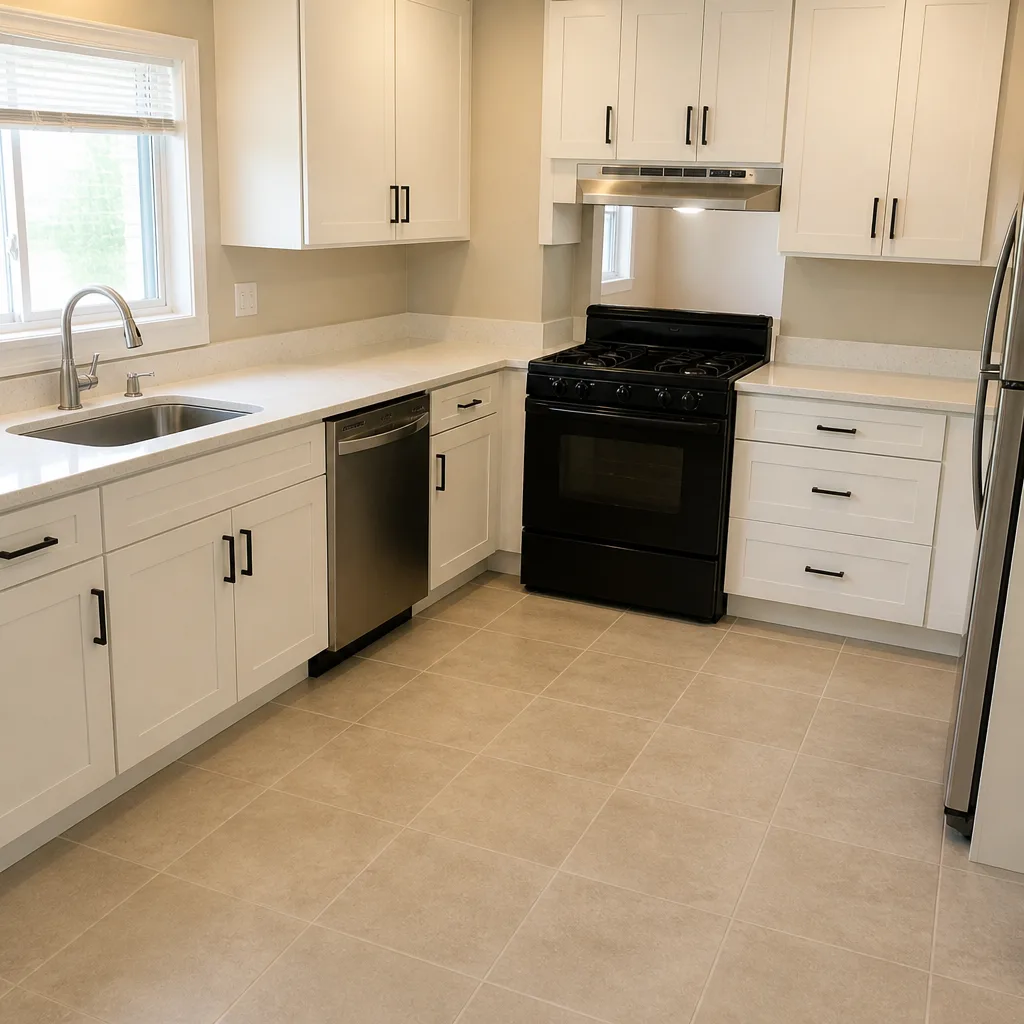 After
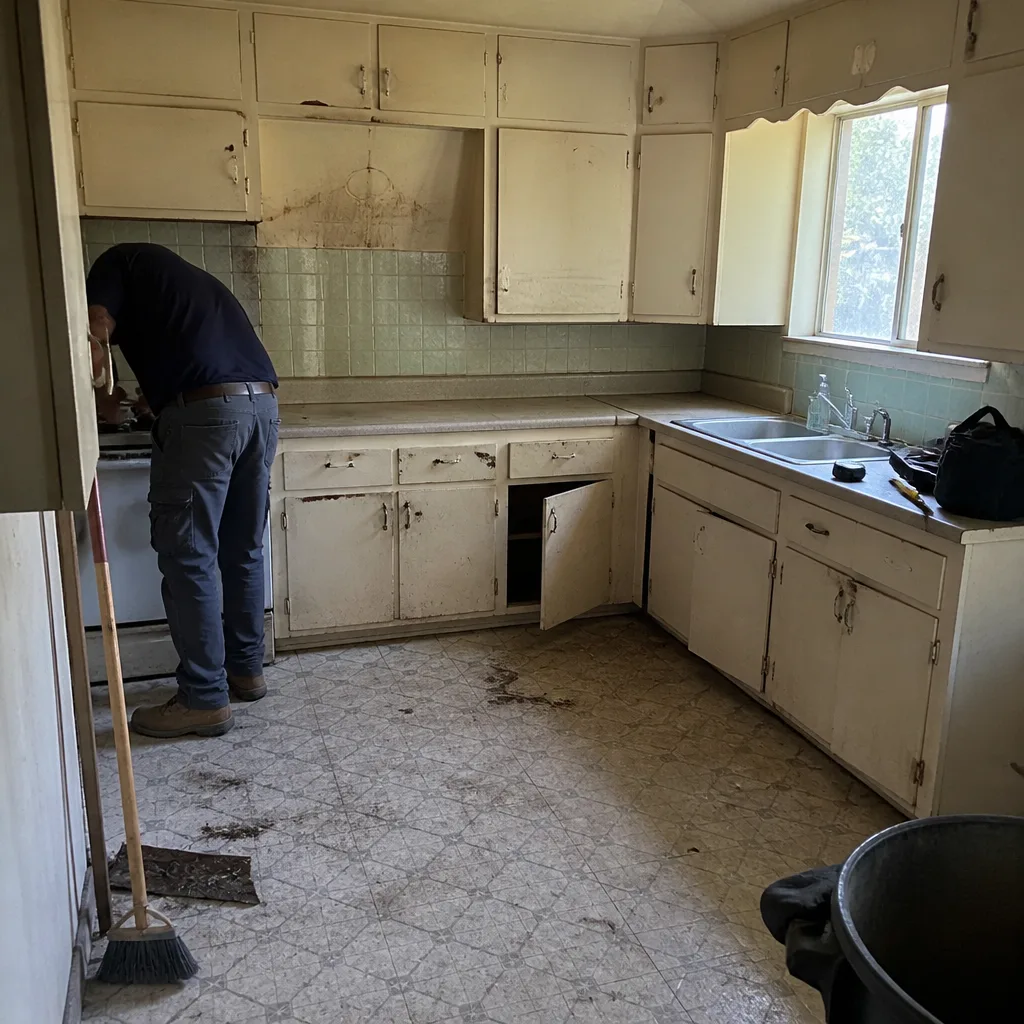 Before
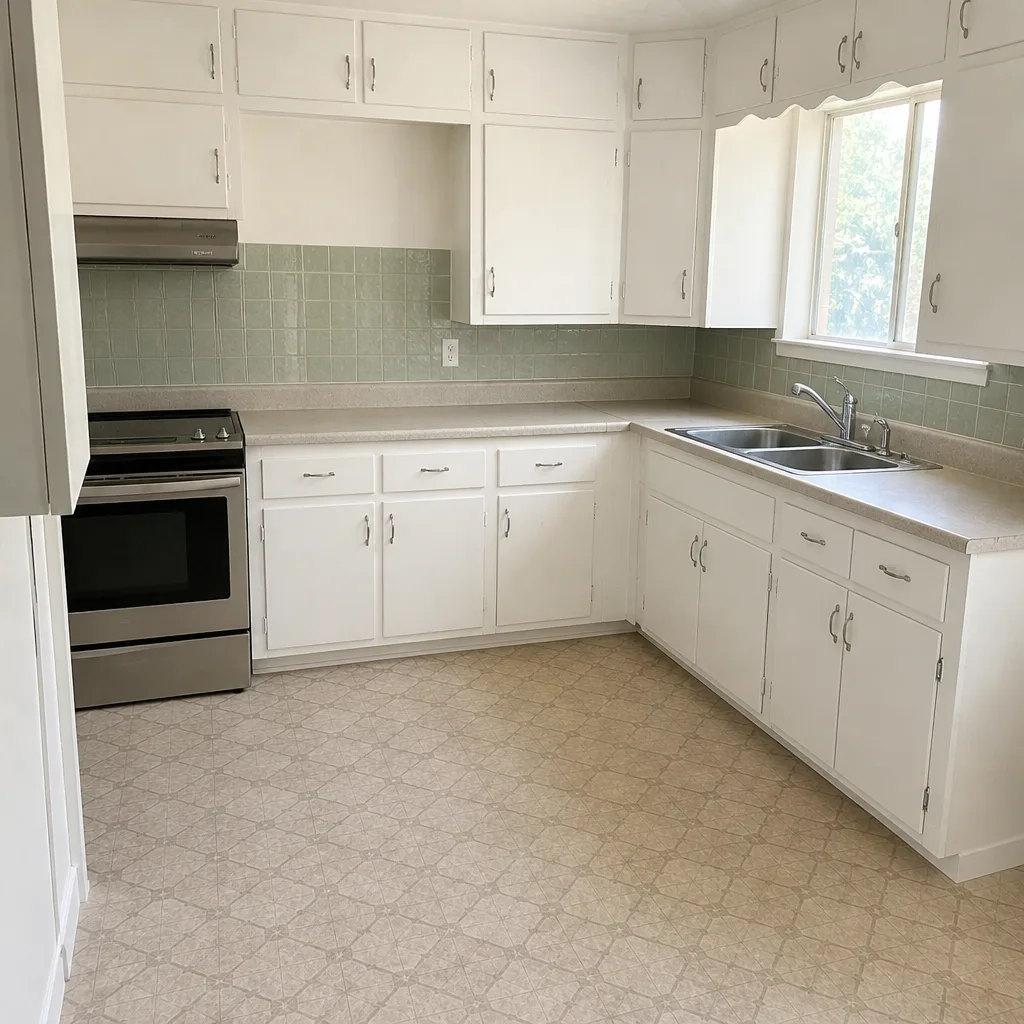 After
Common Mistakes to Avoid
- Choosing the low bid without normalizing scope. In Winchester, we regularly see bids $20,000+ apart on identical scope sheets where the lower one quietly excludes demo, dumpsters, and permits. Add the exclusions back in and the “cheap” bid disappears.
- Accepting a verbal allowance adjustment. If your contractor says “we’ll figure out the tile later,” get the adjustment in writing or you’re accepting an open-ended invoice at the end.
- Paying a deposit before you have a written price. No written price, no deposit. That rule alone eliminates half the headaches homeowners call us about.
- Ignoring the schedule risk from permit review. Clark County plan review can take 2 to 4 weeks. If a bid promises a completion date with no room for plan review, the schedule is fiction.
- Assuming “insurance” means the workers are covered. General liability covers the property; workers’ comp covers the crew. Ask for both. In Nevada, a crew without comp is your liability exposure.
- Treating the 3% buffer as padding and negotiating it to zero. Zeroing the buffer in a rising-materials year is how change orders show up 90 days in. Negotiate the buffer’s rule, not its existence.
- Skipping the final walk and the written guarantee. A squared-away close means clean site, documented scope, signed written guarantee in your hand. If a bid ends before that, it ends too early.
When to Call a Professional
Some work you can scope yourself. Some you shouldn’t bid at all. If your project moves plumbing, adds or relocates electrical circuits, touches the panel, involves gas service, moves a structural wall, or adds square footage, the work belongs to a licensed general contractor and licensed trades. The same goes for anything that pulls a Clark County permit. High-tension garage door work, electrical panel work, and roof work at height should always go to a trained professional, not a weekend project, because the injury risk outweighs the savings.
If you’re staring at two bids that don’t match up, or a scope sheet that has more blank lines than filled ones, that’s also the point to call. Bradford Remodeling Co Winchester offers free estimates in Winchester with a written, line-item price before any work starts, and a live person answers the phone at (844) 972-4839 any time of day. You’ll know the number before you sign, and you’ll know exactly what it covers.
Frequently Asked Questions
A mid-grade kitchen remodel in Winchester runs $28,000 to $55,000, and a larger kitchen with a reconfigured layout runs $60,000 to $110,000. The swing comes down to cabinetry line, counter material, whether plumbing moves, and whether walls come down. Call (844) 972-4839 for an exact written quote; estimates are free.
Because they aren’t the same job. The gap almost always traces to different allowance lines, excluded demo and hauling, different contingency percentages, and different insurance and permit treatment. Normalize both bids onto one scope sheet and the gap usually shrinks to under 10%. If it doesn’t, one bid has a hole in it the contractor hasn’t named.
Yes, up to 10% is normal for projects with open scope or older-home conditions in Winchester; above 15% with no stated return rule is a red flag. Ask what the contingency covers and what happens to the unused remainder. Call (844) 972-4839 and we’ll walk through any bid you’re holding, ours or someone else’s.
Permits, inspections, and general liability insurance together should land between 5% and 10% of the total project cost. Clark County permit fees scale with project valuation, and plan review typically runs 2 to 4 weeks depending on scope. Any bid that folds these into a vague “miscellaneous” line deserves a question.
No. Estimates are free, and every one arrives as a written, line-item price before any work starts, with the 365-Day Done Right Promise spelled out on paper. If something we built fails within the 365-day window, we come back and correct it at no charge. Call (844) 972-4839 to schedule.
Real product lines, not categories. Window bids should name the actual window manufacturer (CWS, ES Windows, ECO Window Systems, and Mr-Glass are all brands homeowners ask about in this market), cabinets should name KraftMaid or Wellborn, counters should name Cambria or Caesarstone, and fixtures should name Kohler or Moen. If a bid says “builder-grade” with no brand, you’re pricing a mystery. Call (844) 972-4839 and we’ll give you a written bid with every product named.
The Bottom Line
Construction pricing in Winchester in 2026 is legible if you know where to look. The labor rate, the allowance line, the volatility buffer, and the permit-and-insurance total are the four places bids diverge. Get all four onto paper before you sign anything. A written price that doesn’t move at the door, a disclosed contingency rule, insurance certificates for every trade, and a written guarantee are what separate a professional bid from a padded one. Bradford Remodeling Co Winchester prices every Winchester job in writing, backs it with the 365-Day Done Right Promise, and answers the phone at (844) 972-4839. Call for a free estimate and put your scope on paper. Whether you’re pricing a bath or a whole-home remodel, our bathroom remodeling in Winchester and Bradford Remodeling Co Winchester home pages have the same treatment for adjacent projects.
Written by the team at Bradford Remodeling Co Winchester.